Eric Adams, Democratic candidate for New York City mayor, announced a proposal to convert existing hotel rooms to supportive and affordable housing. The plan faces obstacles in statewide building codes and local zoning regulations.


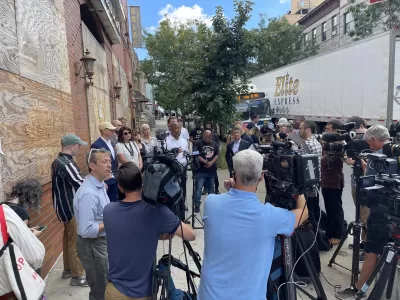
Eric Adams, the Democratic nominee for mayor of New York City, "unveiled a plan that would rehabilitate and convert 25,000 derelict hotel rooms into permanent supportive and affordable housing," reports David Cruz.
The proposal was met with support from housing advocates and elected officials, according to Cruz. "The plan would also fill a need for a reeling hotel industry whose supply of room outnumbers demand, particularly during the pandemic."
According to the article, the proposal faces numerous obstacles to speedy, efficient delivery, namely in the multiple dwelling laws written at the state level, "which mandate the size of apartment units that include bathrooms and kitchens," according to Cruz.
"The city can't circumvent the state's multiple dwelling law—unless the legislature makes changes—which means any nonprofit that seeks to purchase a hotel is required to carve out adequate space for a kitchen. Some of those hotels can be transformed since several were initially built as residential apartment buildings."
Zoning also presents an obstacle. Under the city's current zoning, "hotels in manufacturing districts that are converted to housing must be changed to a residential zone. And those changes would undergo a public review process that could last take six months to a year," explains Cruz.
FULL STORY: Eric Adams' Plan To Create 25,000 Supportive Housing Units Is Doable, But Hurdles Lie Ahead, Say Experts

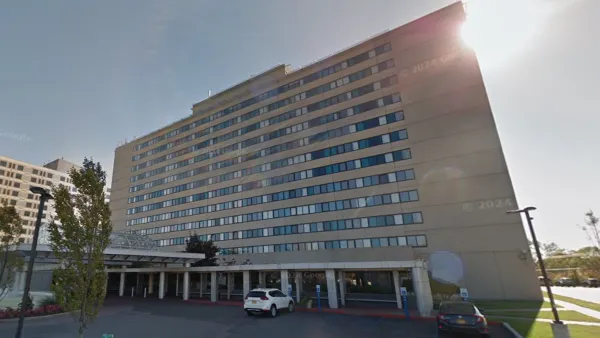
First NYC Hotel Conversion Completes Construction
A 2021 state law aimed at promoting hotel conversions has had a rocky start, only now yielding its first completed project.
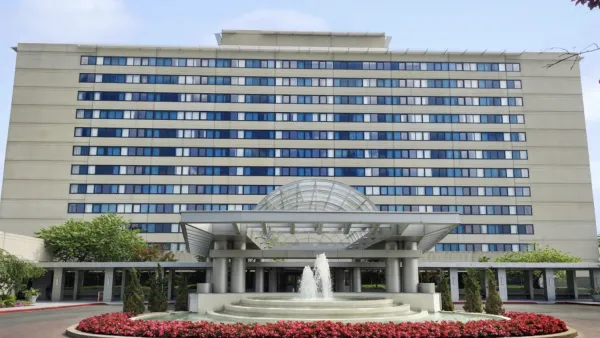
First Hotel Conversion to Begin in New York
A pandemic-era program designed to streamline the conversion of hotels into housing stalled, with the first project just now making its way through the pipeline.
New York Hotels to Housing Program at a Standstill
The much-vaunted pledge to turn vacant hotel rooms into supportive housing units has failed to materialize as hoteliers see tourism rebound and developers find regulations too onerous and expensive.

Planetizen Federal Action Tracker
A weekly monitor of how Trump’s orders and actions are impacting planners and planning in America.

The state-sanctioned urbicide of Austin
People don’t kill cities. Freeways do.

US to reduce Colorado River water deliveries to Mexico
A new Colorado Treaty amendment reduces Mexico’s Colorado River water allocation by 250,000 acre feet.

5 New England states march closer to 800 megawatt wind energy project
Securing federal approval for the project may be complicated under the Trump administration, which has historically been hostile towards domestic wind power.

Baltimore to break ground on $50 million Transit Priority Project
The project will bring faster bus trips, safer streets and better bike connections to Baltimore.

Airbnb launches $250 million 'last-dollar financing' housing accelerator, makes first investment in Austin
The company will put $6.4 million towards affordable housing development in Texas’ capital.

FREE Course: Walkable City 1: Why Walkability?
After describing his path towards focusing on walkability as the essence of good planning, Jeff Speck marches through his five principal reasons for making more walkable places.
Reinventing Malls: Planning Alchemy—Turning Gray Fields Into Gold
The course focuses on the opportunities and imperatives that shape reinvention of mall sites.

Eagle County Government
Harvard University Graduate School of Design
Nashville Planning Department
The Architects Foundation
University of Cincinnati Online
The Pocatello Development Authority
The Urban Renewal Agency of the City of Pocatello
Journal of the American Planning Association