One of Southwest Ohio's most urgent infrastructure projects would move forward if the SORTA board approves a recent proposal to allocate Issue 7 funding to the replacement plan for the Western Hills Viaduct.


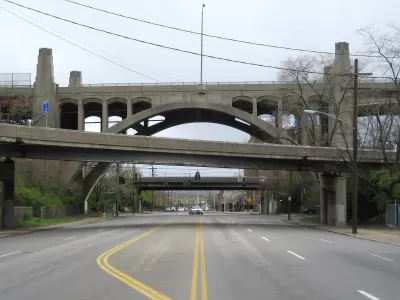
The Southwest Ohio Regional Transit Authority (SORTA) has proposed a plan that would cover the unfunded portion of the Western Hills Viaduct, which Scott Wartman calls "one of the region's largest infrastructure needs." The $205 million needed would come from a 0.8% sales tax approved by voters last May, known as Issue 7. "The infrastructure committee also approved the plan for 30 other projects throughout Hamilton County, including new roads and sidewalks that would be done over the next two years."
"The sales tax raises about $100 million annually for the bus system and another $30 million each year for roads and bridges." The largest of these projects, the deteriorating viaduct "is one of the main entrances to Cincinnati's West Side, crossing Mill Creek and a large railyard." Local officials have been discussing ways to fund a replacement since 2009, a project that gained urgency when a piece of concrete fell on a car in 2017.
According to State Rep. Bill Seitz, "it wasn't just the sales tax that made the viaduct happen. He also credited the Ohio General Assembly for allowing counties to raise the vehicle license fee $5 for infrastructure projects. This allowed Hamilton County in 2017 to raise an additional $33 million for the project."
Read the full story: Fully funded.' SORTA would pay for new Western Hills Viaduct with sales tax money under plan proposed Tuesday.

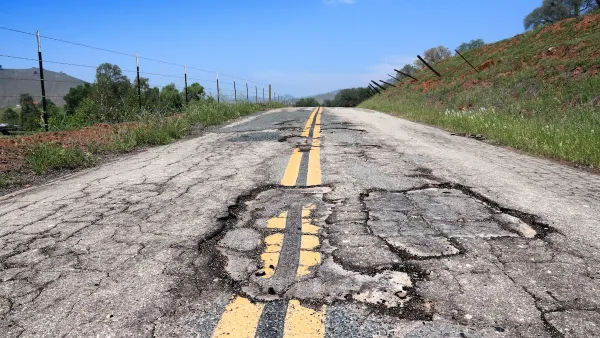
Engineers Gave America's Roads an Almost Failing Grade — Why Aren't We Fixing Them?
With over a trillion dollars spent on roads that are still falling apart, advocates propose a new “fix it first” framework.
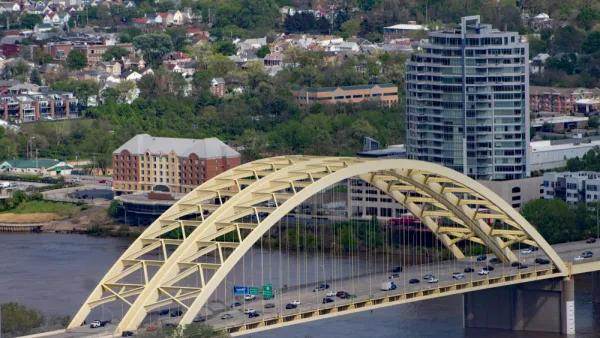
Transit Improvements Coming to Cincinnati Area After Voters Approve New Sales Tax
Hamilton County, Ohio, home to Cincinnati and the Southwest Ohio Regional Transit Authority, has a new coffer of money to fund public transit improvements.
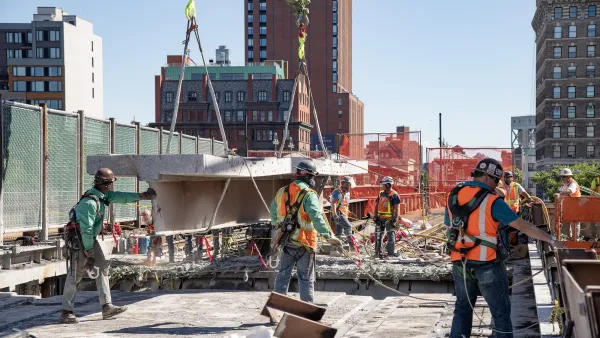
New York completes Park Avenue viaduct 5 years early, $200M under budget and with no delayed trains
The MTA was able to keep trains running on time while working to replace a key viaduct.

Planetizen Federal Action Tracker
A weekly monitor of how Trump’s orders and actions are impacting planners and planning in America.

The state-sanctioned urbicide of Austin
People don’t kill cities. Freeways do.

Colorado’s Largest Data Center Could Rise Next to Homes — Without a Public Hearing
The proposed campus would consume 11 times the power of Denver International Airport; as it has across the country, opposition mounts.

Nation's most wind-powered state turns to coal as data centers increase energy demand
For the first time in decades, Iowa has increased its generation of coal power.

NYC cools commuters with city's first rain garden above a bus stop
New York City officials say the plants in the rain garden can absorb 16 gallons of rainwater during heavy storms.

Brightline West’s future may rely on $6 billion federal loan
The company has until Nov. 2 to make a $400 million equity investment into its proposed high-speed rail line.

FREE Course: Walkable City 1: Why Walkability?
After describing his path towards focusing on walkability as the essence of good planning, Jeff Speck marches through his five principal reasons for making more walkable places.
Reinventing Malls: Planning Alchemy—Turning Gray Fields Into Gold
The course focuses on the opportunities and imperatives that shape reinvention of mall sites.


Greater Baltimore Committee
Eagle County Government
Harvard University Graduate School of Design
The Architects Foundation
University of Cincinnati Online
The Pocatello Development Authority
The Urban Renewal Agency of the City of Pocatello
Journal of the American Planning Association