The Biden administration must combine increased funding with policies that mandate and encourage transit-oriented planning.


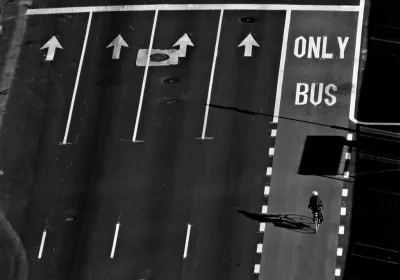
The public transit funding included in the Biden administration's American Jobs Plan "would almost double the annual federal contribution to public transportation, which currently accounts for 17% of total transit spending," writes Simon Berrebi for Bloomberg CityLab, but increased oversight and guidance are required to maximize the effects of the spending, increase access and equity, and fight climate change. The plan, which proposes an $85 billion investment in public transit, recognizes that "to expand access to jobs, health care, schools and other destinations that keep the economy running, the key is public transportation, which provides mobility for all while minimizing congestion, pollution and energy consumption."
The new administration's infrastructure package, writes Berrebi, provides "a momentous opportunity to fully integrate transit in a new paradigm of infrastructure planning" and shift emphasis to public transit by prioritizing bus lanes, signal priority, and bike and pedestrian infrastructure as integral parts of transportation projects. "Planning for a transit-oriented future would multiply the social, environmental, and economic benefits of this historic investment."
According to Berrebi, "successful transportation and land-use policies must be planned together," and "the American Jobs Plan is an opportunity to do just that on a national scale." In addition to channeling funding to local transit systems, the administration should also ensure that housing funding is used to "build and preserve units near transit" and that new projects and initiatives "integrate public transportation deeper into the fabric of society."
FULL STORY: The Case For a Transit-First Infrastructure Plan

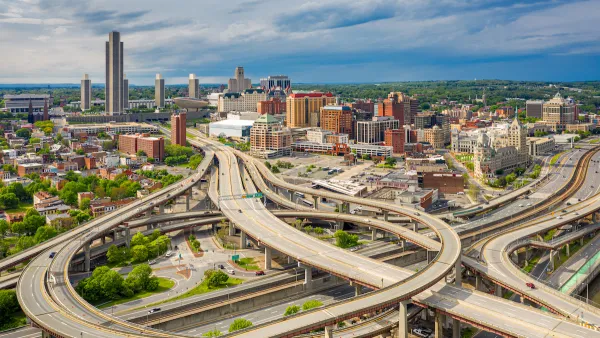
New York State DOT Invests Heavily in Highways Over Transit
So far, the department has allocated 90 percent of its federal transportation funding to road projects and less than 1 percent to transit.
How Locals Are Planning to Spend $2.2 Billion in RAISE Transportation Grants, Part Two
Part two of a series of post providing specific information for 164 of the 166 projects recently awarded funding by the U.S. Department of Transportation's RAISE grant funding program.
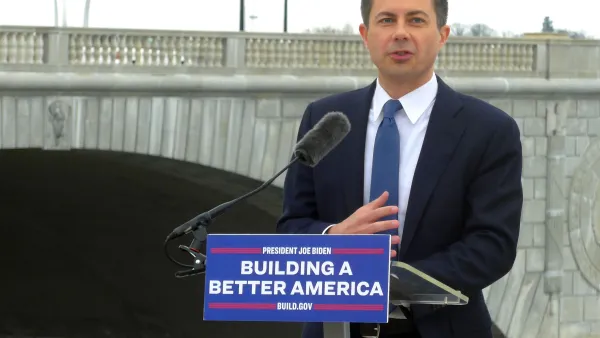
How Locals Are Planning to Spend $2.2 Billion in RAISE Transportation Grants
The U.S. Department of Transportation earlier this month announced $2.2 billion in RAISE grants. The Biden administration has promised that the RAISE grant program will improve equity and sustainability in the nation's transportation systems.

The state-sanctioned urbicide of Austin
People don’t kill cities. Freeways do.

US to reduce Colorado River water deliveries to Mexico
A new Colorado Treaty amendment reduces Mexico’s Colorado River water allocation by 250,000 acre feet.

New Jersey’s second-largest city bans standalone data centers
Jersey City will continue to allow co-location facilities, such as those meant for research institutions that store their own data.

Amtrak not solely to blame for New Jersey commuter rail's unreliability, report finds
A new study from the Garden State Initiative found that NJ Transit’s budget grew 20% across a 4 year period, but reliability declined significantly over the same period.

EPA erases limits on planet-warming pollution from power plants
Under Monday’s plan, power plants would still have some limits on how much mercury, arsenic and other contaminants they can emit.

Phoenix announces new on-demand transit service, more frequent RAPID buses
Both new services will launch in October, and are part of Phoenix's Project Effective Access Solutions for Easing Congestion.

FREE Course: Walkable City 1: Why Walkability?
After describing his path towards focusing on walkability as the essence of good planning, Jeff Speck marches through his five principal reasons for making more walkable places.
Reinventing Malls: Planning Alchemy—Turning Gray Fields Into Gold
The course focuses on the opportunities and imperatives that shape reinvention of mall sites.

Eagle County Government
Harvard University Graduate School of Design
Nashville Planning Department
The Architects Foundation
University of Cincinnati Online
The Pocatello Development Authority
The Urban Renewal Agency of the City of Pocatello
Journal of the American Planning Association