Any new affordable housing projects in NYC that receive city money must wire the building for high-speed internet and provide broadband at no cost to the tenants, new city rules say.


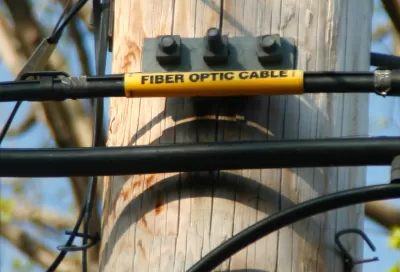
During the presidential campaign last summer, Joe Biden released a “Plan for Rural America” calling for an investment of $20 billion to expand broadband internet access in rural communities, where, the plan noted, residents are 10 times more likely than urbanites to live without a high-speed internet connection. But even in America’s biggest cities, broadband access is not universal. Nor is it equitably distributed.
In New York, according to a 2018 report, around 30 percent of residents had no broadband access at home, with steep disparities along income and racial lines. More than half of the lowest-income residents lacked broadband access, according to the report. A third of Black and Hispanic residents, 32% and 33% respectively, lacked broadband at home, compared with 21% for white residents and 23% for Asian residents, according to the report. The COVID-19 pandemic of the last year and subsequent virtual schooling and Zoom meetings only heightened the urgency of providing better internet access for everyone; a report from Deutsche Bank last year found that the racial disparities within the digital divide could worsen over time, leaving Black and Hispanic people especially ill-prepared for future jobs, according to CNBC.
Last year, as Next City reported, New York released an Internet Master Plan aimed at expanding broadband access more equitably. Now, the city is making broadband access a necessary component of new affordable-housing projects that use city funds. In March, the New York City Department of Housing Preservation and Development adopted a new set of Design Guidelines meant to “ensure newly constructed buildings promote equity, health, and sustainability,” the Department said in a press release. According to the new guidelines, whenever feasible, all new affordable housing that use city funds must be wired for high-speed internet and provide it to all tenants at no cost to them.
Read the full story: New NYC Affordable Housing Must Come With Internet Service, City Says

Housing Providers Build Bridges Over the Digital Divide
Internet connectivity has become as important as basic utilities, but millions of people who live in affordable housing still lack access to devices and connections. Housing managers are finding innovative ways to fix that.
Boston is hard to build housing in: its chief of planning wants to keep it that way
Chief of Planning Kairos Shen said she would not make changes to Boston’s affordability requirements for new housing, which critics say have slowed down development.
Will sprawl save California?
California residents will vote on Proposition 45 in November, which would make it easier to build large housing developments on the outskirts of the state’s cities.

Planetizen Federal Action Tracker
A weekly monitor of how Trump’s orders and actions are impacting planners and planning in America.

California plans to bury El Niño’s downpour
If the state plays its cards right, it may be able to store a billion acre-feet of El Niño’s water in aquifers.

Desperate measures: Advocates weigh draining Lake Powell to fill Colorado River
Draining the reservoir could reduce evaporation losses by a couple hundred thousand acre-feet.

US buildings threatened, destroyed by fires set to triple by 2060
Researchers found a high fire risk for socioeconomically vulnerable neighborhoods in the American West.

LA residents may be allowed to paint their own crosswalks
Councilwoman Katy Yaroslavsky put out a motion instructing the Los Angeles Department of Public Transportation to study the feasibility of allowing volunteers to paint crosswalks.

Dallas moves to overhaul its zoning code
The city's zoning reform will allow more multi-family and mixed-use developments.

FREE Course: Walkable City 1: Why Walkability?
After describing his path towards focusing on walkability as the essence of good planning, Jeff Speck marches through his five principal reasons for making more walkable places.
Reinventing Malls: Planning Alchemy—Turning Gray Fields Into Gold
The course focuses on the opportunities and imperatives that shape reinvention of mall sites.

City of Rosemead
Rutgers University, Edward J. Bloustein School of Planning and Public Policy
One Hundred Miles
Hunter College, City University of New York (CUNY)
The Architects Foundation
University of Cincinnati Online
City of Cambridge
Montrose County
The Pocatello Development Authority