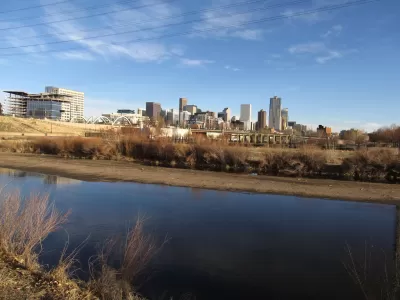
After a 14-year battle to bring the project to life, the Platte Farm Open Space brings much-needed green space to a north Denver neighborhood.


"This past summer, the Center for American Progress and the Hispanic Access Foundation released a report finding that communities of color experience 'nature deprivation' at three times the rate of white Americans," writes Ambika Chawla. "According to the report, 74% of communities of color live in nature-deprived areas, with Black communities experiencing the highest levels of deprivation." A 2019 study from the University of British Columbia that analyzed ten U.S. cities concluded that "the widespread green inequities uncovered by this research are serious issues in the context of the effects of urban vegetation on urban health and well-being." Urban residents with less access to green space "are also those who are most likely to experience poor public health outcomes that could potentially be mitigated by adequate exposure to urban vegetation."
In Denver, the Platte Farm Open Space provides an example of a successful community-led project that transformed a former brownfield site in a working-class neighborhood into a vibrant community amenity. "Through a process of remediation, contaminated land was replaced with fresh layers of topsoil, and is now home to prairie habitat that attracts foxes, rabbits, birds and butterflies." The project was "a collaborative effort between the community members of Globeville, the city of Denver, and Groundwork Denver, a nonprofit organization that works to create green spaces to help improve community health."
While several factors—including the city of Denver's recent commitment to create an open space within a 10-minute walk of all residents—came together over close to a decade and a half to make Platte Farm a reality, urban park advocates know they face a long uphill battle to achieving park equity in Denver and elsewhere. "Limited financial resources for environmental justice organizations, green gentrification, and redlining are among the many obstacles that have resulted in inequitable access to green space, worsening health disparities among urban communities."
Research increasingly shows that access to parks and urban vegetation have positive effects on physical and mental health. "Benefits may include improved cognitive development and functioning, reduced symptom severity of attention deficit hyperactivity disorder, reduced obesity, and positive impacts on mental health." Many of these are related to the opportunity for higher rates of physical activity in neighborhoods with more access to green spaces, signaling that park access, more than a pleasant amenity, is an essential component of healthy neighborhoods.
FULL STORY: Denver Shows What It Takes to Level the Park-Access Playing Field

How Local Parks Promote Equitable Outdoor Access
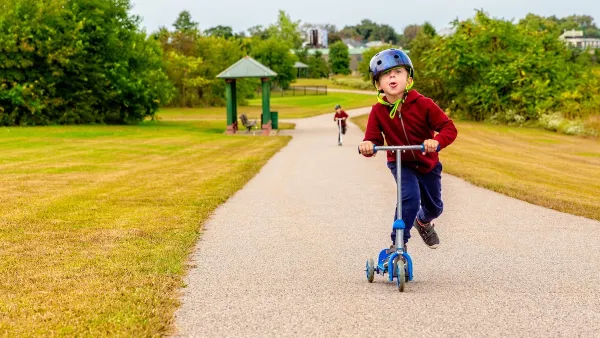
Targeted investments in local parks, improved infrastructure, and enhanced transit connectivity are essential strategies to close the nature gap and ensure equitable outdoor access for underserved communities.
Healing Neighborhoods Through Park Equity
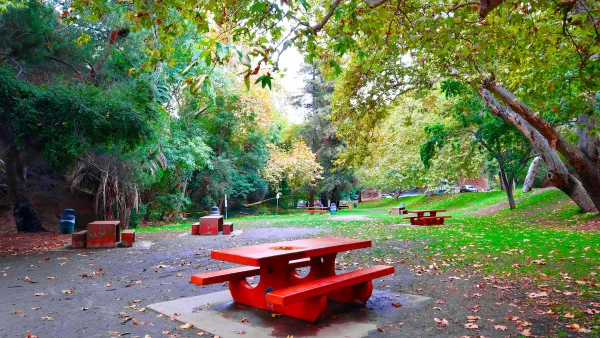
Learn more about ways to improve park equity with Norma García-González, the director of the Los Angeles County Department of Parks and Recreation, and Catherine Nagel, the executive director of the City Parks Alliance.
How to Avoid Green Gentrification
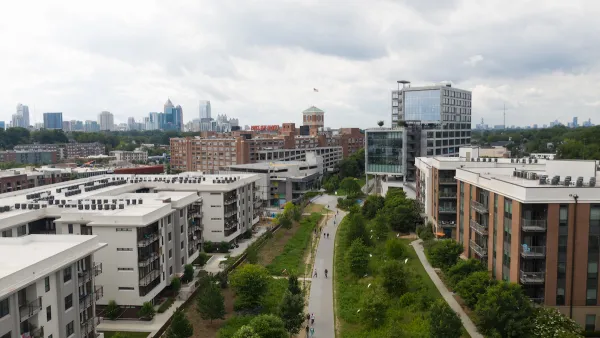
New parks are great—but some projects displace the very people the green spaces are meant to serve.

Planetizen Federal Action Tracker
A weekly monitor of how Trump’s orders and actions are impacting planners and planning in America.

The state-sanctioned urbicide of Austin
People don’t kill cities. Freeways do.

US to reduce Colorado River water deliveries to Mexico
A new Colorado Treaty amendment reduces Mexico’s Colorado River water allocation by 250,000 acre feet.

Mamdani overhauls NYC's Vision Zero plan with 100 new policy goals
The overhaul aims to reduce traffic deaths and make streets safer for pedestrians, cyclists and drivers through lower speed limits, new safety infrastructure and more.

Amtrak not solely to blame for New Jersey commuter rail's unreliability, report finds
A new study from the Garden State Initiative found that NJ Transit’s budget grew 20% across a 4 year period, but reliability declined significantly over the same period.

EPA erases limits on planet-warming pollution from power plants
Under Monday’s plan, power plants would still have some limits on how much mercury, arsenic and other contaminants they can emit.

FREE Course: Walkable City 1: Why Walkability?
After describing his path towards focusing on walkability as the essence of good planning, Jeff Speck marches through his five principal reasons for making more walkable places.
Reinventing Malls: Planning Alchemy—Turning Gray Fields Into Gold
The course focuses on the opportunities and imperatives that shape reinvention of mall sites.

Eagle County Government
Harvard University Graduate School of Design
Nashville Planning Department
The Architects Foundation
University of Cincinnati Online
The Pocatello Development Authority
The Urban Renewal Agency of the City of Pocatello
Journal of the American Planning Association