The Regional Transportation District sees an opportunity for affordable housing to be located on its under-utilized parking lots.


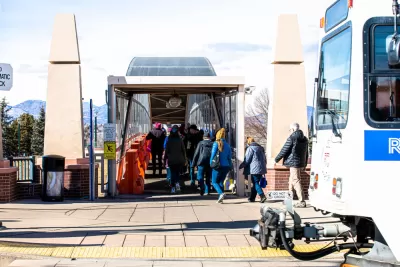
The Regional Transportation District (RTD) is on the cusp of approving a new "Equitable Transit-Oriented Development (TOD) Policy," reports Nathaniel Minor. The RTD Board of Directors is scheduled to take a final vote on the policy at its meeting next week.
According to Minor, the new policy is intended to encourage new housing development near the system's transit stations, on properties currently comprised mostly of park-and-ride facilities. Minor provides more detail and context:
Among the most important pieces of that new policy is a non-binding goal that 35 percent of all housing units built on RTD property be affordable. The new policy would also give RTD staff more flexibility to allow housing developments that don’t include a garage to replace every parking spot they use. The agency’s own research suggests that people that live in affordable housing need less parking and use transit more.
The article includes insights from local developers about how the new policy would alleviate some of the costs of development that have sunk transit oriented development proposals in the past. Transit oriented development has traditionally been a tough sell in Denver suburbs.
The deployment of the policy, should it pass (the preliminary vote was unanimous in support), will face unique challenges in the numerous jurisdictions housing RTD stations. While some park-and-ride facilities in the system are consistently full and will not be developed, at least a dozen RTD stations have some potential for denser development with less onerous parking requirement.
The city of Denver launched its own transit oriented development program, Transit Oriented Denver, in 2014.
FULL STORY: RTD Wants More Housing Near Stations. It May Sacrifice Unused Parking Spots To Make That Happen


Denver mayor pushes for cheap downtown parking, says promoting transit is 'not our strategy'
The 'Mayor's Park $5' program encourages local businesses to reduce their parking prices to bring more people downtown.
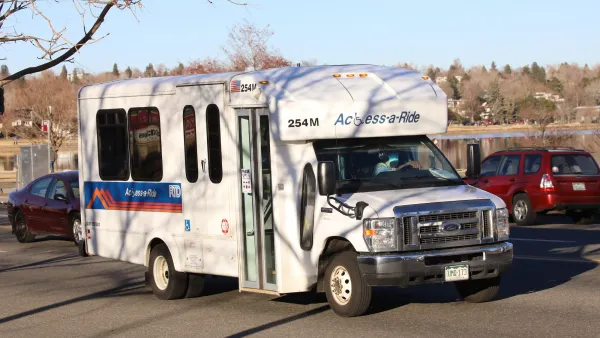
Denver Advocates Sue RTD for Charging People With Disabilities for On-demand Transit
The suit argues the agency is violating the rights of Americans with disabilities while lowering fares for other riders.
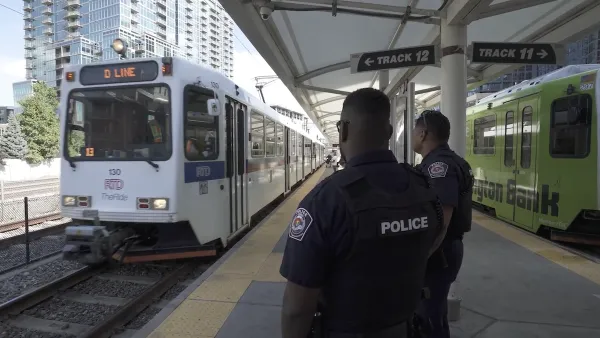
Denver Launches Transit Detective Bureau
The new transit detective bureau will investigate crimes that occur on RTD property.

The state-sanctioned urbicide of Austin
People don’t kill cities. Freeways do.

US to reduce Colorado River water deliveries to Mexico
A new Colorado Treaty amendment reduces Mexico’s Colorado River water allocation by 250,000 acre feet.

New Jersey’s second-largest city bans standalone data centers
Jersey City will continue to allow co-location facilities, such as those meant for research institutions that store their own data.

Amtrak not solely to blame for New Jersey commuter rail's unreliability, report finds
A new study from the Garden State Initiative found that NJ Transit’s budget grew 20% across a 4 year period, but reliability declined significantly over the same period.

EPA erases limits on planet-warming pollution from power plants
Under Monday’s plan, power plants would still have some limits on how much mercury, arsenic and other contaminants they can emit.

Phoenix announces new on-demand transit service, more frequent RAPID buses
Both new services will launch in October, and are part of Phoenix's Project Effective Access Solutions for Easing Congestion.

FREE Course: Walkable City 1: Why Walkability?
After describing his path towards focusing on walkability as the essence of good planning, Jeff Speck marches through his five principal reasons for making more walkable places.
Reinventing Malls: Planning Alchemy—Turning Gray Fields Into Gold
The course focuses on the opportunities and imperatives that shape reinvention of mall sites.

Eagle County Government
Harvard University Graduate School of Design
Nashville Planning Department
The Architects Foundation
University of Cincinnati Online
The Pocatello Development Authority
The Urban Renewal Agency of the City of Pocatello
Journal of the American Planning Association