As a class assignment, nearly 150 high school students shared their ideas for improvements to Sorensen Park in Lake Los Angeles, California.



In planning and designing new facilities, park and recreation agencies typically seek public input through a meeting or a series of meetings. However, such meetings may not be the most effective way to obtain input that reflects all segments of communities and their diverse viewpoints. Children (under 18 years of age), for example, are often underrepresented or not represented at all. This is certainly alarming but not entirely surprising, considering that the formal or rigid nature of most public meetings can intimidate and discourage kids of all ages from openly sharing their ideas and thoughts. Given that children are key park users and parks contribute significantly to their development and quality of life, we must be intentional and creative in how we engage them in the planning and design of parks, as explained in the article "Engaging Children in the Park Planning Process."
Local educators may serve as important partners in efforts to reach out to the youth, as explained in this Antelope Valley Press article. Recently, nearly 150 students from Littlerock High School in Southern California contributed their thoughts on proposed improvements to Stephen Sorensen Park as part of a writing assignment and survey completed in conjunction with Martin Luther King, Jr. Day. This is all thanks to teacher Joanie Haynes, who decided to get students involved and provide their input during a public comment period for various proposed improvements to Sorensen Park. The students responded to a survey with questions like whether they had ever visited the park, what improvements they would like to see, and what might encourage them to visit the park. Students then had to support their responses with short essays.
Read the full story: Students propose park improvements


Advancing Diversity, Equity and Inclusion for Parks and Recreation
A newly released report by the National Recreation and Park Association (NRPA) reveals the state of diversity, equity, and inclusion (DEI) activities at park agencies across the U.S.

A Historic Investment in LA County’s Parks and Open Spaces
Los Angeles County has launched its largest-ever competitive grant program, investing $58 million to expand park access, enhance climate resilience, and support community-driven projects in the areas that need them most.
Innovative Park Agencies Receive National Recognition
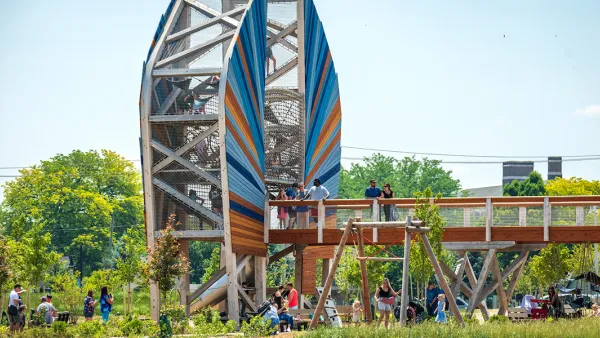
The National Recreation and Park Association (NRPA) recently announced the recipients of this year’s awards for innovation in health and wellness, equity, conservation, and park design.

Planetizen Federal Action Tracker
A weekly monitor of how Trump’s orders and actions are impacting planners and planning in America.

Amtrak, CN end decades-long dispute with eight-year agreement
The new operating agreement establishes an updated framework for the companies to work together, including processes to resolve disputes.

Judges permit Denver to divert 77,000 acre feet from the Colorado River for reservoir expansion
Overuse and climate change have caused the Colorado River’s water levels to plummet.

Maryland local governments examine if they should have more power to raise property taxes
Maryland’s housing market is out of reach for the majority of moderate-income residents.

Northwest rail fans eager for Sept. 30 debut of Amtrak’s Airo fleet
Get ready for that new train smell and more seats. But they won’t go faster or run more frequently on the Cascades route in Washington and Oregon.

NYC DOT wants faster, more permanent street upgrades
The city is examining ways to build more concrete infrastructure without getting entangled in 'decades-long' projects.

FREE Course: Walkable City 1: Why Walkability?
After describing his path towards focusing on walkability as the essence of good planning, Jeff Speck marches through his five principal reasons for making more walkable places.
Reinventing Malls: Planning Alchemy—Turning Gray Fields Into Gold
The course focuses on the opportunities and imperatives that shape reinvention of mall sites.

Harvard University Graduate School of Design
KFH Group Inc.
Greater Baltimore Committee
The Architects Foundation
University of Cincinnati Online
The Pocatello Development Authority
The Urban Renewal Agency of the City of Pocatello