The federal government, and even some automakers, seemed poised to nudge the country toward a future of electric vehicles. But the American preference for large trucks will be an obstacle to those plans.


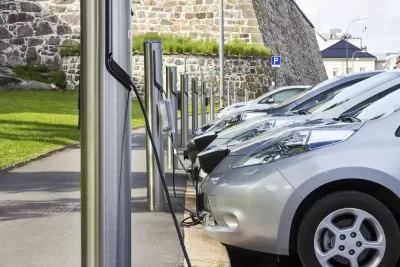
"After four years of bitter fighting, California and the federal government agree they need to set ambitious climate goals, and major automakers are increasingly betting that the future of their business lies with electric cars," reports Anna M. Phillips.
The discussion follows a groundbreaking executive order signed by California Governor Gavin Newsom in September 2020 committing the largest state in the nation to end sales of new gasoline powered cars by 2035.
Trends in the automotive market of recent years have been moving the needle the other direction, according to Phillips, as more Americans are increasingly buying larger SUVs and pickup trucks. An analysis published in January 2021 shows the market shift to SUVs and pickups has overwhelmed the potential carbon reductions from EV use. Some automakers have signaled a willingness to change direction. General Motors, for example, recently announced ambitions to achieve carbon neutrality in its fleet and its operations by 2040.
Other studies have also shown that switching to electric vehicles won't entirely remove emissions and pollution from private transportation in the United States.
The dilemma facing the Biden administration is how to calibrate electric vehicle policies relative to market preferences for larger, gas-powered vehicles. "This divide between the reality of America’s auto market and what the federal government and some automakers hope it will become is certain to create dilemmas for the Biden administration as it sets out to negotiate a new set of fuel-economy standards," writes Phillips.
The article includes a specific list of policy efforts the Biden might undertake to begin removing greenhouse gas emissions from the U.S. transportation sector, much of which will be devoted to undoing the deregulatory efforts of the Trump administration.
FULL STORY: Biden’s auto dilemma: How hard to push for electric cars?


Study: D.C. Region Must Take Aggressive Steps To Reach Climate Goal
To achieve its stated emissions reduction goal, the Greater Washington area must sharply reduce driving and speed up the adoption of electric vehicles.
Biden Commits Federal Government to Carbon Neutrality
President Biden signed an executive order on Wednesday that aims to cut 65 percent of the government's carbon emissions by the end of this decade and reach carbon neutrality by 2050.
Decarbonizing Transportation at the Federal Level
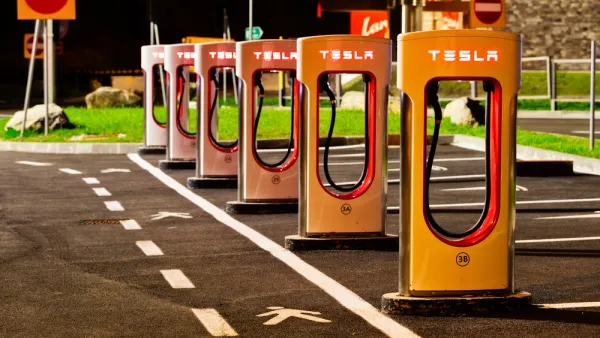
A new report shows that long-term federal investments in electric vehicles could promote significant growth in the sector as the nation moves toward reducing GHG emissions.

Planetizen Federal Action Tracker
A weekly monitor of how Trump’s orders and actions are impacting planners and planning in America.

The state-sanctioned urbicide of Austin
People don’t kill cities. Freeways do.

US to reduce Colorado River water deliveries to Mexico
A new Colorado Treaty amendment reduces Mexico’s Colorado River water allocation by 250,000 acre feet.

5 New England states march closer to 800 megawatt wind energy project
Securing federal approval for the project may be complicated under the Trump administration, which has historically been hostile towards domestic wind power.

Baltimore to break ground on $50 million Transit Priority Project
The project will bring faster bus trips, safer streets and better bike connections to Baltimore.

Airbnb launches $250 million 'last-dollar financing' housing accelerator, makes first investment in Austin
The company will put $6.4 million towards affordable housing development in Texas’ capital.

FREE Course: Walkable City 1: Why Walkability?
After describing his path towards focusing on walkability as the essence of good planning, Jeff Speck marches through his five principal reasons for making more walkable places.
Reinventing Malls: Planning Alchemy—Turning Gray Fields Into Gold
The course focuses on the opportunities and imperatives that shape reinvention of mall sites.

Eagle County Government
Harvard University Graduate School of Design
Nashville Planning Department
The Architects Foundation
University of Cincinnati Online
The Pocatello Development Authority
The Urban Renewal Agency of the City of Pocatello
Journal of the American Planning Association