A freelance writer for the Chicago Tribune airs his frustrations with urban planning, and tries to offer an alternative solution.


"What we do hear from urban 'reformers' is the same tired, nostrums about the need for 'smart growth,' a thinly disguised pleading for concentrating political, zoning, transportation planning and other powers that influence the urban form in the hands of a few....What we need is some truly original thinking by urbanologists, or as they like to say, a new paradigm. The cities of the 19th Century grew in compact, dense forms because of the economic and social requirements imposed on them--a face to face economy and horse-and-buggy transportation. The postwar period brought with it new requirements as well as preferences for mobility, safety and self-determination that reshaped the metropolitan form. Obviously, the city will never disappear, because spatial proximity of people always will be present....Widespread acceptance of the idea that production is more important than physical presence could have a huge, and beneficial, impact on urban form. Meanwhile, just let the rest of us, including immigrants, live where and how we want. It would be good for society."
Thanks to Connie Chung
Read the full story: Snubbing the benefits of sprawl


Planetizen Federal Action Tracker
A weekly monitor of how Trump’s orders and actions are impacting planners and planning in America.
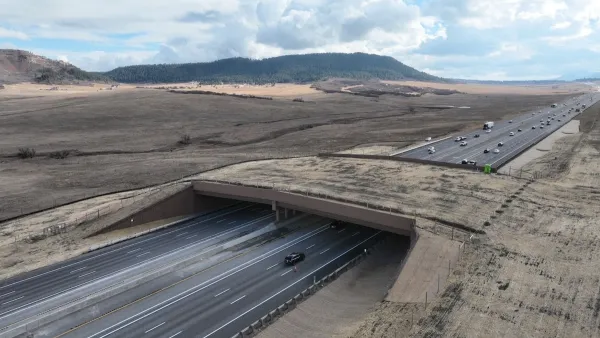
Record-breaking wildlife overpass in Colorado brings 91% reduction in animal collisions
Prior to the overpass, vehicles were hitting one deer per day on Colorado’s Interstate 25.

If Corpus Christi can’t revive desalination plant project, it may owe Texas $235 million
Earlier this month, city officials declined to pursue developing the plant for the second time in a year.

Mamdani sent nearly 6,000 pied-à-terre tax warnings to homes that didn’t qualify
A judge has ordered the administration to cancel thousands of pied-à-terre tax notices after it sent 35% of them erroneously.

Detroit to transform waterfront with $2.2 billion investment
Developers will convert about 18 acres of unused parking lot space into civic spaces.

‘Going backwards:’ Baltimore mayor, students rally against state's transit funding plan
Maryland's proposed six-year plan provides no funding for Baltimore’s BMORE bus program and reduces its road maintenance funding.

FREE Course: Walkable City 1: Why Walkability?
After describing his path towards focusing on walkability as the essence of good planning, Jeff Speck marches through his five principal reasons for making more walkable places.
Reinventing Malls: Planning Alchemy—Turning Gray Fields Into Gold
The course focuses on the opportunities and imperatives that shape reinvention of mall sites.

City of Thousand Oaks
City of Wisconsin Rapids
Harvard University Graduate School of Design
The Architects Foundation
University of Cincinnati Online
Northern Illinois Transit Authority (NITA)
The Pocatello Development Authority
The Urban Renewal Agency of the City of Pocatello