The Biden administration is announcing its intentions to overturn several controversial products of the Trump administration to weaken the the implementation of the Fair Housing Act of 1968 and the doctrine of disparate impact at its core.


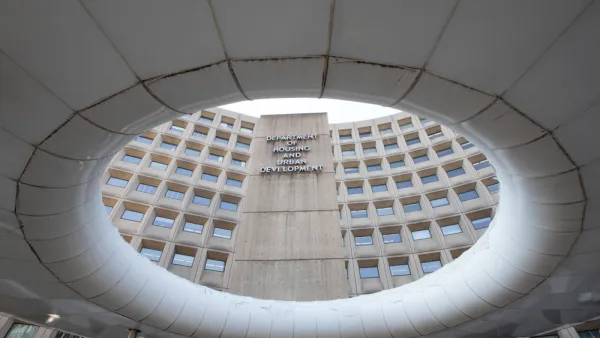
The White House released a memorandum for the Secretary of the U.S. Department of Housing and Urban Development (HUD) that would take the first steps toward undoing some of the fair housing actions of HUD under the Trump administration. The memo is part of a series of executive orders signed this week by President Joe Biden to address racial equity.
After providing a lengthy introduction that examines the persistent problems of housing affordability and the disparate impacts of the housing affordability crisis on communities and individuals of color, the memorandum announces specifically the Biden administration's intentions to bolster the Fair Housing Act by reversing some of the actions of the Trump administration to weaken the 2015 Affirmatively Furthering Fair Housing Rule.
Several news sources picked up the news of the Biden administration's actions on Fair Housing this week.
Writing for HousingWire, Alex Roha summarizes the news thusly:
In a memorandum, Biden called on HUD to examine changes the Trump administration made last year to several rules, including “Preserving Community and Neighborhood Choice” and “HUD’s Implementation of the Fair Housing Act’s Disparate Impact Standard.” The agency will examine whether the Trump administration’s rules harmed access to fair housing.
Under Biden’s directive, HUD will reassess its interpretation of the Fair Housing Act’s disparate impact standard, a rule initially enacted by HUD during the Obama administration and used as a mechanism to enforce the Fair Housing Act.
And for Bloomberg CityLab, Kriston Capps writes:
President Joe Biden signed an executive order on Jan. 27 directing his administration to end policies that enable discrimination in housing and lending, and acknowledging the federal government’s role in erecting systemic barriers to fair housing. It’s a blueprint for an agenda aimed at swiftly undoing the controversial efforts of his predecessor.
And for The Hill, Morgan Chalfant and Marty Johnson write:
Biden signed a memorandum directing the Department of Housing and Urban Development (HUD) to begin the process of rooting out systemic racism in the housing market by analyzing areas where the previous administration’s policies undermined fair housing laws, according to senior administration officials.
Much of the task of following President Biden's direction to align the work of HUD with the broader goals of the Fair Housing Act now fall to incoming HUD Secretary Marcia Fudge.
A noted by Capps, the Biden administration's work address racial inequality is already planning to go beyond the effort to undo Trump administration's changes to U.S. Fair Housing rules. "The president has pledged federal action to pursue environmental justice, lift restrictions on housing production and ease the racial gap in homeownership and homelessness alike," writes Capps.


Outrage Over Trump's Fair Housing Victory Lap
President Trump took to Twitter today to celebrate his administration's decision to rescind the Affirmatively Furthering Fair Housing rule, approved by the Obama administration to strengthen the Fair Housing Act of 1968.
Trump Administration Proposal Would Eliminate Fair Housing Protections
The Trump administration last week published its latest attempt to undermine a fair housing rule adopted during the Obama administration.

Planning Fair: How Fair Housing Intersects with Planning
The successful implementation of fair housing laws requires the active participation of urban planners, land use boards, elected officials, and the wider planning community.

Planetizen Federal Action Tracker
A weekly monitor of how Trump’s orders and actions are impacting planners and planning in America.

The state-sanctioned urbicide of Austin
People don’t kill cities. Freeways do.

US to reduce Colorado River water deliveries to Mexico
A new Colorado Treaty amendment reduces Mexico’s Colorado River water allocation by 250,000 acre feet.

Mamdani overhauls NYC's Vision Zero plan with 100 new policy goals
The overhaul aims to reduce traffic deaths and make streets safer for pedestrians, cyclists and drivers through lower speed limits, new safety infrastructure and more.

Amtrak not solely to blame for New Jersey commuter rail's unreliability, report finds
A new study from the Garden State Initiative found that NJ Transit’s budget grew 20% across a 4 year period, but reliability declined significantly over the same period.

EPA erases limits on planet-warming pollution from power plants
Under Monday’s plan, power plants would still have some limits on how much mercury, arsenic and other contaminants they can emit.

FREE Course: Walkable City 1: Why Walkability?
After describing his path towards focusing on walkability as the essence of good planning, Jeff Speck marches through his five principal reasons for making more walkable places.
Reinventing Malls: Planning Alchemy—Turning Gray Fields Into Gold
The course focuses on the opportunities and imperatives that shape reinvention of mall sites.

Eagle County Government
Harvard University Graduate School of Design
Nashville Planning Department
The Architects Foundation
University of Cincinnati Online
The Pocatello Development Authority
The Urban Renewal Agency of the City of Pocatello
Journal of the American Planning Association