Age-Friendly Columbus and Franklin County, a program of The Ohio State University College of Social Work, celebrated five years of community engagement and advocacy aimed at improving quality of life for older adults.



With Central Ohio's senior population set to double in the next 35 years, planning for age-friendly cities now can have a powerful impact on the region's livability for a growing segment of its population. The Age-Friendly Columbus program spent the last five years surveying older adults, cataloging community assets, and identifying and implementing possible solutions that make cities more livable for seniors.
Age-Friendly Columbus used World Health Organization and AARP guidelines to assess community needs and produce suggestions for improvements in transportation, public space and land use, housing, and other key areas that affect quality of life for the elderly. The project's organizers sought extensive community input and piloted a number of projects that they hope will pave the way to future improvements. Their suggested interventions address mobility challenges, housing affordability and accessibility, and emergency preparation. One project already underway offers free transportation for senior citizens to key locations including a local library, the YMCA, and pharmacy. From relatively simple fixes like providing informational resources in more languages to policy changes such as tax credits for accessible home modifications, the group's findings suggest a variety of ways that cities can adapt to the needs of an aging population.
FULL STORY: Age Friendly Columbus Looks Back At Its First 5 Years


Building Age-Friendly Homes
Designing for the unique needs of elderly people can help them maintain social connections and mental acuity.
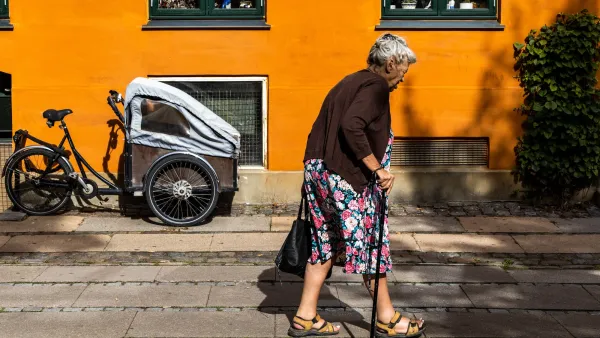
Great Cities Don’t Just Acknowledge That We Age In Them — They Build For It. We Can Too.
We age in sidewalks, public spaces, transit stops, and community centers — not in hospitals. As populations age, the built environment will determine whether our cities thrive or struggle in the decades ahead.

Preparing Transportation Systems for the ‘Silver Tsunami’
More Americans than ever will age beyond their safe ability to drive. How will they meet their mobility needs in a car-centric society?

The state-sanctioned urbicide of Austin
People don’t kill cities. Freeways do.

US to reduce Colorado River water deliveries to Mexico
A new Colorado Treaty amendment reduces Mexico’s Colorado River water allocation by 250,000 acre feet.

New Jersey’s second-largest city bans standalone data centers
Jersey City will continue to allow co-location facilities, such as those meant for research institutions that store their own data.

Amtrak not solely to blame for New Jersey commuter rail's unreliability, report finds
A new study from the Garden State Initiative found that NJ Transit’s budget grew 20% across a 4 year period, but reliability declined significantly over the same period.

EPA erases limits on planet-warming pollution from power plants
Under Monday’s plan, power plants would still have some limits on how much mercury, arsenic and other contaminants they can emit.

Phoenix announces new on-demand transit service, more frequent RAPID buses
Both new services will launch in October, and are part of Phoenix's Project Effective Access Solutions for Easing Congestion.

FREE Course: Walkable City 1: Why Walkability?
After describing his path towards focusing on walkability as the essence of good planning, Jeff Speck marches through his five principal reasons for making more walkable places.
Reinventing Malls: Planning Alchemy—Turning Gray Fields Into Gold
The course focuses on the opportunities and imperatives that shape reinvention of mall sites.

Eagle County Government
Harvard University Graduate School of Design
Nashville Planning Department
The Architects Foundation
University of Cincinnati Online
The Pocatello Development Authority
The Urban Renewal Agency of the City of Pocatello
Journal of the American Planning Association