A report from the U.S. Environmental Protection Agency's Office of Inspector General calls out state environmental agencies for a lack of civil rights enforecement and makes recommendations for resolving shortcomings.


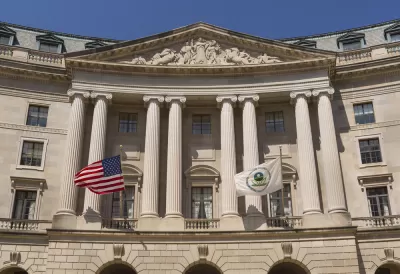
A new report from the Environmental Protection Agency's (EPA) Office of Inspector General scrutinized the agency's enforcement of Title VI of the 1964 Civil Rights Act and found that the majority of state environmental agencies fail to prevent discrimination, and "the EPA is not fulfilling its obligation to get them in line," reports Naveena Sadasivam.
According to the inspector general's report, 43 state agencies failed to meet at least one of the criteria set forth by the EPA to avert discrimination. "The checklist requires, in part, that funding recipients post nondiscrimination notices in prominent locations in the office, that they provide language assistance services for those with limited proficiency in English, and that they hire a nondiscrimination coordinator," Sadasivam says.
The EPA investigated complaints to be filed as a catalyst to investigate compliance with the nondiscrimination rules rather than proactively confirming that states were adhering to the nondiscrimination criteria checklist.
Last week’s report is hardly the first time that the EPA has come under fire for accepting few civil rights complaints for investigation, spending years — and sometimes decades — resolving them, and almost never making findings of discrimination," writes Sadasivam, noting a 2015 investigation by Center for Public Integrity finding that the EPA dismissed 95% of submitted complaints.
The inspector general's report makes six recommendations to remedy these instances of neglect.
FULL STORY: Report: Environmental agencies are violating civil rights laws — and the EPA is letting them


Judge Halts EPA Action in ‘Cancer Alley’ Civil Rights Case
EPA investigations into violations of the Civil Rights Act in Louisiana’s “Cancer Alley” were ruled as “federal overreach.”
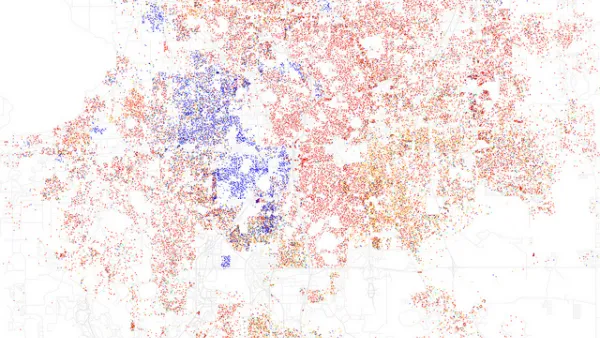
Pollution Does Discriminate in Orlando’s Parramore Neighborhood
Poor air quality has decimated the health of residents in this predominantly black community ringed by highways.
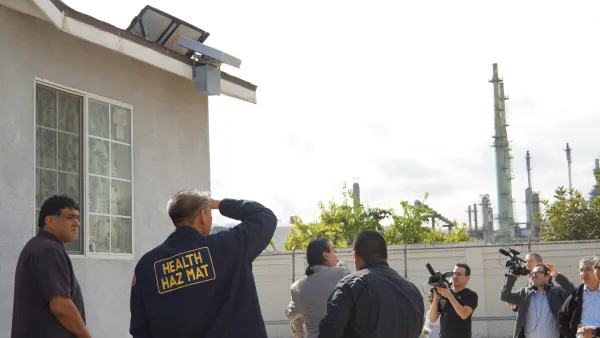
The EPA's Lackluster Environmental Justice Record
The Center for Public Integrity has released a report criticizing the EPA's environmental justice competence. In only 12 cases has the agency taken official action on behalf of communities affected disproportionately by polluters.

Planetizen Federal Action Tracker
A weekly monitor of how Trump’s orders and actions are impacting planners and planning in America.

The state-sanctioned urbicide of Austin
People don’t kill cities. Freeways do.

US to reduce Colorado River water deliveries to Mexico
A new Colorado Treaty amendment reduces Mexico’s Colorado River water allocation by 250,000 acre feet.

5 New England states march closer to 800 megawatt wind energy project
Securing federal approval for the project may be complicated under the Trump administration, which has historically been hostile towards domestic wind power.

Baltimore to break ground on $50 million Transit Priority Project
The project will bring faster bus trips, safer streets and better bike connections to Baltimore.

Airbnb launches $250 million 'last-dollar financing' housing accelerator, makes first investment in Austin
The company will put $6.4 million towards affordable housing development in Texas’ capital.

FREE Course: Walkable City 1: Why Walkability?
After describing his path towards focusing on walkability as the essence of good planning, Jeff Speck marches through his five principal reasons for making more walkable places.
Reinventing Malls: Planning Alchemy—Turning Gray Fields Into Gold
The course focuses on the opportunities and imperatives that shape reinvention of mall sites.

Eagle County Government
Harvard University Graduate School of Design
Nashville Planning Department
The Architects Foundation
University of Cincinnati Online
The Pocatello Development Authority
The Urban Renewal Agency of the City of Pocatello
Journal of the American Planning Association