Residents of Chicago will soon see some of the fruits of the controversial tax increment financing for the Lincoln Yards project in Chicago's North Side.


"Lincoln Yards’ developer plans to start building a bridge across the Chicago River by next summer that will help connect the site to the planned eastward extension of The 606 recreational trail," reports Ryan Ori.
The $35 million bridge is part of a nearly mile-long extension of Dominick Street between Webster and North avenues, according to Ori. Developers are planning to start construction in mid-2021, with "one driving lane and a pedestrian sidewalk in each direction, as well as a north-south bike lane."
The Lincoln Yards project attracted controversy throughout the approvals process for its heavy reliance on tax increment financing (TIF), but was approved with $490 in TIF funding by the city in August. That initial funding included enough for the full cost of the bridge, according to Ori.
Read the full story: Lincoln Yards' $35 million bridge, with bike and pedestrian lanes, moves closer to reality


Lincoln Yards, Chicago's Controversial $6 Billion Mega-Project, Set to Break Ground
Groundbreaking for the first component of Chicago's massive Lincoln Yards redevelopment project has been scheduled for early 2021.
Lincoln Yards Mega-Development Clears Final Legislative Hurdle
A Chicago City Council vote to approve tax increment financing for the massive Lincoln Yards redevelopment proposal scored a surprising reversal and a big win for outgoing Mayor Rahm Emanuel, with an assist from Mayor-elect Lori Lightfoot.
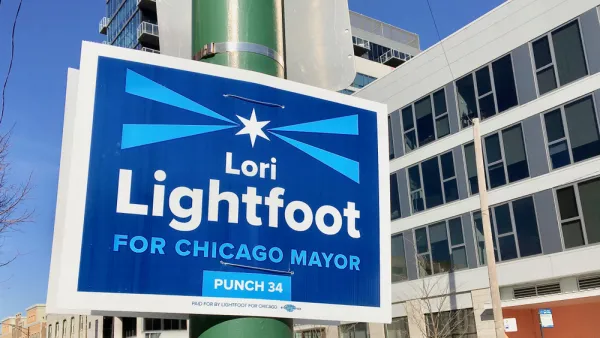
Mayoral Election Likely to Have Consequences for Chicago Mega-Development
The most recent citywide election in Chicago was considered a referendum on the old way of operating the city. The $6 billion Lincoln Yards project, on the brink of approval, could be included in that referendum.

Planetizen Federal Action Tracker
A weekly monitor of how Trump’s orders and actions are impacting planners and planning in America.

California plans to bury El Niño’s downpour
If the state plays its cards right, it may be able to store a billion acre-feet of El Niño’s water in aquifers.

Chicago breaks ground on $3 billion megadevelopment
The new neighborhood, titled Foundry Park, will one day host 3,700 residences.

Satanic Place Names
From streams and lakes to valleys and canyons, I mapped more than 1,000 places named after the Devil.

California High-Speed Rail Authority CEO resigns after $600,000 scandal
Under Ian Choudri, the authority used taxpayer dollars to fund first class flights and trips to nightclubs.

Want to study the Missouri River? Soon, you may need unanimous approval from 10 states
Legislation would require 10 governors’ permission to study or build projects moving water outside the basin.

FREE Course: Walkable City 1: Why Walkability?
After describing his path towards focusing on walkability as the essence of good planning, Jeff Speck marches through his five principal reasons for making more walkable places.
Reinventing Malls: Planning Alchemy—Turning Gray Fields Into Gold
The course focuses on the opportunities and imperatives that shape reinvention of mall sites.

City of Rosemead
Rutgers University, Edward J. Bloustein School of Planning and Public Policy
One Hundred Miles
Hunter College, City University of New York (CUNY)
The Architects Foundation
University of Cincinnati Online
City of Cambridge
Montrose County
The Pocatello Development Authority