Data collected from 13 million tree planting records in 473 urban areas across 73 countries provides insight into the role of urban trees in biodiversity conservation.


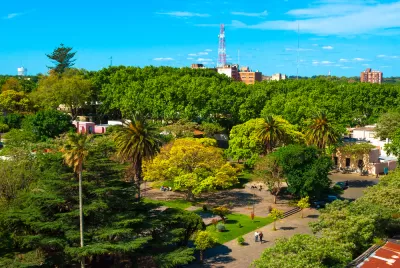
Alessandro Ossola, lead author of a new study tracking plant diversity among urban trees, says that the study of trees in cities is a missed opportunity for those making efforts to conserve biodiversity.
"To understand which trees are planted in cities around the world, and the climates and natural habitats they face, his team conducted an ambitious inventory as part of their Which Plant Where project. They discovered a wealth of data on trees in cities and towns, systematically mining nearly 13 million tree planting records from 2010," writes Natalie Parletta.
Ossola's team reported on the conservation status and potential of a given tree to become an invasive species with help from the International Union for Conservation of Nature (IUCN) and the Global Register of Introduced and Invasive Species (GRIIS). The research is the most comprehensive catalog of trees to date with data from 473 urban areas across 73 countries.
We can expect some tree species might be lost in the future due to high temperatures and a lack of rainfall, says Parletta. "Results suggest other tree species could thrive, even under future climates. The researchers note the database could help inform appropriate species selection and avoid potential invaders in efforts to green cities and conserve biodiversity" writes Parletta reassuringly.
Read the full story: The importance of urban trees

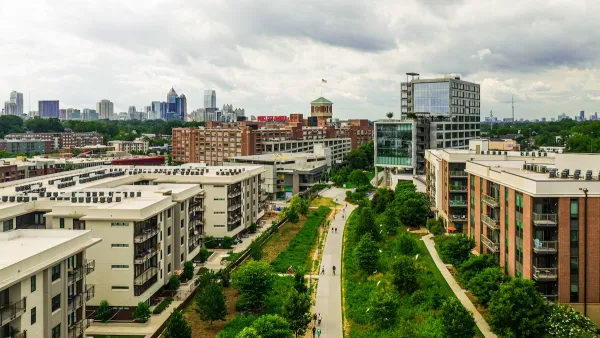
Mapping Georgia’s Urban Forests
Georgia Tech’s latest urban canopy assessment for Atlanta uses high-resolution mapping and a Potential Planting Index to guide data-driven tree preservation.
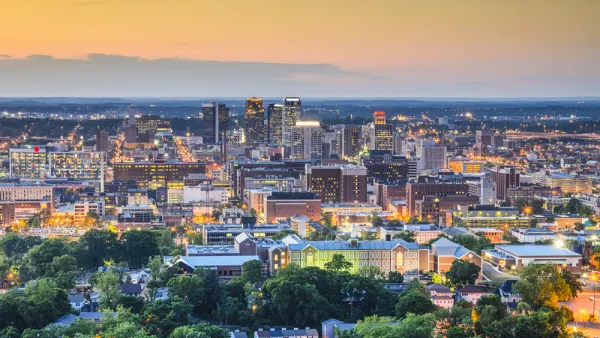
How Data is Helping Protect Campus Trees
The University of Alabama at Birmingham is using GIS technology, student engagement, and sustainability-driven planning to manage and protect its nationally recognized urban forest.
‘Smart Surfaces’ Policy Guide Offers Advice for Building and Maintaining Urban Tree Canopies
Healthy, robust tree canopies can reduce the impacts of extreme heat and improve air quality.

Planetizen Federal Action Tracker
A weekly monitor of how Trump’s orders and actions are impacting planners and planning in America.

Data reveals that NYC’s bet on congestion pricing has paid off
After almost two years of the program, reports show positive impacts on traffic and air quality and no disruptions to parking.
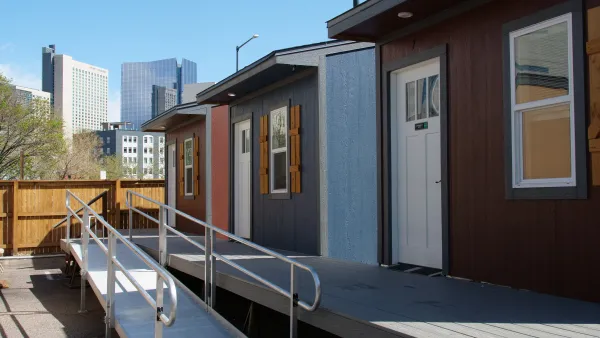
Denver is solving homelessness. Why aren't the rest of us?
Since 2023, Denver's street homeless population has decreased by 64%, proving that effective tools exist to support those in need of housing.

Michigan needs billions to save its water infrastructure. The state won't fund it
Michigan needs to invest $2.8 billion per year over the next 20 years to fix its water infrastructure. The FY 2027 budget allocates only $27.9 million.

Trump asks Supreme Court to allow border wall through Texas national park
Judge Kathleen Cardone previously blocked the Big Bend border wall project, and Texas’ Land Commissioner has spoken out against it as well.

This MA town is drowning in its own sewage — and residents like it that way
Susan Murcott, a waste water expert, said if Carlisle didn't address their leaking sewage, the problem could turn “deadly.”

FREE Course: Walkable City 1: Why Walkability?
After describing his path towards focusing on walkability as the essence of good planning, Jeff Speck marches through his five principal reasons for making more walkable places.
Reinventing Malls: Planning Alchemy—Turning Gray Fields Into Gold
The course focuses on the opportunities and imperatives that shape reinvention of mall sites.

City of Rosemead
Rutgers University, Edward J. Bloustein School of Planning and Public Policy
One Hundred Miles
The Architects Foundation
University of Cincinnati Online
Montrose County
Northern Illinois Transit Authority (NITA)
The Pocatello Development Authority