A law passed in March allowing people on bikes to treat stop signs as yield signs when conditions permit takes effect today in Washington State.


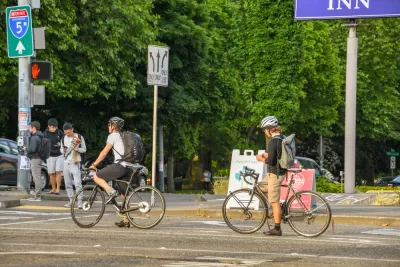
People riding in bikes in Washington State can no legally treat stop signs as yield signs, reports Eilis O'Neill.
The Idaho Stop, as the move as popularly known because it's already legal in Washington's neighboring state. "People riding bikes will still have to slow down at stop signs, look around, and yield to any pedestrians and cars that have already reached the intersection," explains Eilis. "But, if there’s no one around, the bike can roll on through."
The law, SB 6208 was approved by the Washington State Legislature and signed by the governor in March, but it goes into effect today. Tom Fucoloro was providing in depth coverage as the law made its final rounds through the legislature.
O'Neill provides a summary of the controversy surrounding the legalization fo the common practice, and provides supporters of the new law a chance to explain the reasoning behind the law. The ability to treat stop signs as yield signs for people on bikes is already legal in Arkansas, Delaware, Oregon and Idaho, according to the article.
Read the full story: No more stop signs for Washington's bike riders ... sort of
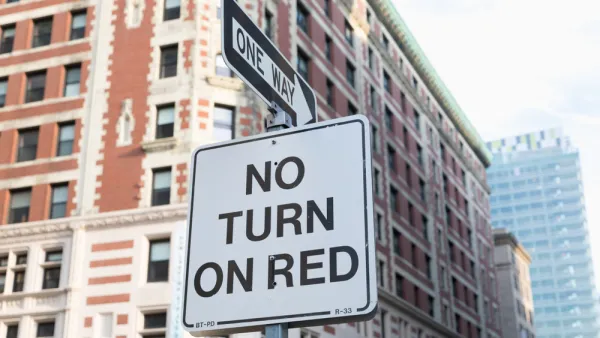
D.C. Could Legalize ‘Idaho Stop,’ Ban Right Turns on Red
Proposed legislation would allow cyclists to treat stop signs as yield signs and eliminate right turns on red in an effort to reduce cyclist and pedestrian fatalities.
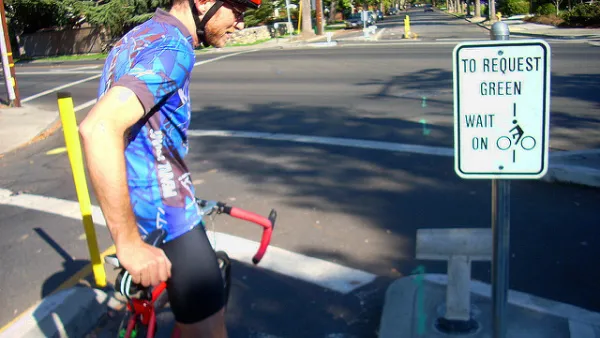
‘Idaho Stop’ Now Legal in Colorado
Colorado is the latest state to make it legal for people on bikes to treat stop signs like yield signs when no cars are in the intersection.
Colorado Legislature Approves 'Idaho Stop' Bill
Pending Gov. Polis's signature on a bill approved recently by the Colorado State Legislature, Colorado will become the latest state to allow people on bikes to yield at stop signs.

Planetizen Federal Action Tracker
A weekly monitor of how Trump’s orders and actions are impacting planners and planning in America.

California plans to bury El Niño’s downpour
If the state plays its cards right, it may be able to store a billion acre-feet of El Niño’s water in aquifers.

Desperate measures: Advocates weigh draining Lake Powell to fill Colorado River
Draining the reservoir could reduce evaporation losses by a couple hundred thousand acre-feet.

Chicago voters approve permanent festival grounds, penalty for vacant property owners
Currently, major summer and fall festivals take over public parks for weeks at a time, drawing criticism from nearby residents

NYC votes to cut outdoor dining red tape, speed up permitting
New York City also voted to allow the Department of Transportation to begin work on urgent projects before notifying elected officials.

California appears to reject Prop. 45
The proposition would have expanded the projects that qualify for a streamlined environmental review, effectively paring down the California Environmental Quality Act.

FREE Course: Walkable City 1: Why Walkability?
After describing his path towards focusing on walkability as the essence of good planning, Jeff Speck marches through his five principal reasons for making more walkable places.
Reinventing Malls: Planning Alchemy—Turning Gray Fields Into Gold
The course focuses on the opportunities and imperatives that shape reinvention of mall sites.

City of Rosemead
Rutgers University, Edward J. Bloustein School of Planning and Public Policy
One Hundred Miles
Hunter College, City University of New York (CUNY)
The Architects Foundation
University of Cincinnati Online
City of Cambridge
Montrose County
The Pocatello Development Authority