The seven states of the Colorado River Compact usually stay out of each other's business once the water is divvied up, but in a surprising move, six of the compact states have signed a letter to raise concerns about Utah's pipeline plans.


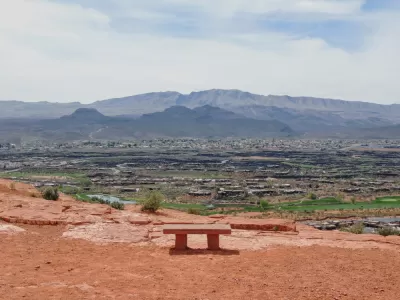
Following a few months after the release of the Environmental Impact Statement for the Lake Powell Pipeline project, six of the seven states that rely on water from the Colorado River have asked federal regulators at the U.S. Department of the Interior to slow down the process.
An on-air feature, transcribed for the KJZZ site, digs into the implications of the letter sent by six states to oppose the actions of he state of Utah in seeking to build a pipeline for shipping Colorado River water to the fast growing community of St. George, Utah. Lauren Gilger and Mark Brodie host the show, speaking with John Fleck, author and director of the University of New Mexico Water Resources Program, for insight into the significance of the kerfuffle. Fleck explains:
The letter was really surprising to a lot of us and really striking because we have a tradition in the Colorado River Basin that states don't mess in other states' business — that what a state does with the water within its boundaries is that, is each state's business. And the letter, there's a kind of a remarkable breakdown of that bargain. This is six states getting together and saying, "We have a problem with what Utah is doing and the way Utah is doing it with its share of its Colorado River water."
Fleck elaborates:
Well, the problem with what Utah is doing, and in a sense, you know, we could have a blame game going on here, but essentially what the states are, are arguing is that Utah, in charging ahead with the Lake Powell Pipeline, without engaging in consultation and collaboration with the other states, is acting in a way that poses a lot of risk to the sort of seven-state collaboration that we've seen more and more over the last 20 years. There are a number of concerns that states have had for a long time about the Lake Powell Pipeline. And rather than working with the states to come up with a shared understanding of how to go forward with this pipeline, Utah has decided to just charge ahead. And the other states are saying, "Whoa, we need to put the brakes on here.
Fleck and Brodie speak at much greater length, including a discussion about the likelihood that the federal government might heed the warnings of the six other states.
The Kaibab Band of Paiute Indians raised alarms about the pipeline project in June, when the U.S. Bureau of Reclamation released the environmental impact statement for the proposed pipeline. Planetizen has been tracking the Lake Powell Pipeline Project since March 2018.
FULL STORY: 'Really Surprising And Really Striking' — 6 Colorado River Basin States Tell Feds To Slow Down Utah Project

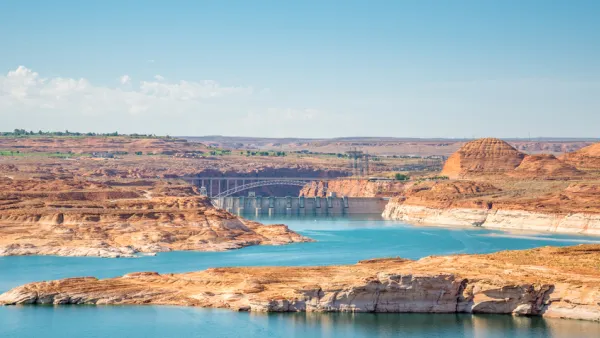
Environmental Impact Statement for Lake Powell-to-Utah Water Pipeline Released
Paiute Indians in Arizona oppose a plan to pipe Colorado River water from Lake Powell in Arizona to St. George in Utah, according to documents released by the U.S. Bureau of Reclamation.
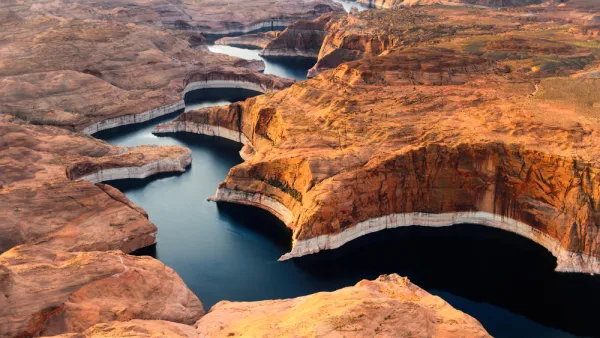
Utah Wants to Build Water Pipeline Amid Historic Shortages
As water supplies around the West dwindle, one Utah county is moving ahead with plans for a new Colorado River pipeline.
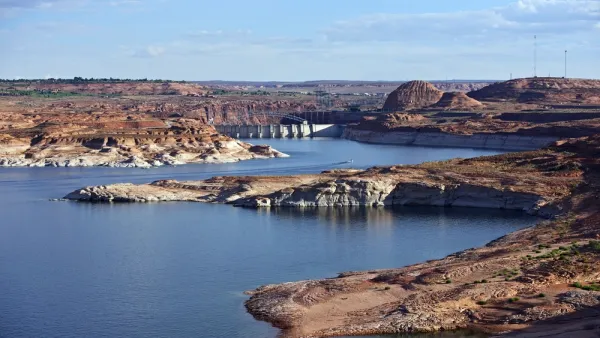
New Drought Contingencies Triggered for Upper Colorado River States
The latest Bureau of Reclamation report on water levels in Lake Powell and Lake Mead trigger new drought contingencies in Colorado, New Mexico, Utah, and Wyoming.

Planetizen Federal Action Tracker
A weekly monitor of how Trump’s orders and actions are impacting planners and planning in America.

The state-sanctioned urbicide of Austin
People don’t kill cities. Freeways do.

US to reduce Colorado River water deliveries to Mexico
A new Colorado Treaty amendment reduces Mexico’s Colorado River water allocation by 250,000 acre feet.

Mamdani overhauls NYC's Vision Zero plan with 100 new policy goals
The overhaul aims to reduce traffic deaths and make streets safer for pedestrians, cyclists and drivers through lower speed limits, new safety infrastructure and more.

Amtrak not solely to blame for New Jersey commuter rail's unreliability, report finds
A new study from the Garden State Initiative found that NJ Transit’s budget grew 20% across a 4 year period, but reliability declined significantly over the same period.

EPA erases limits on planet-warming pollution from power plants
Under Monday’s plan, power plants would still have some limits on how much mercury, arsenic and other contaminants they can emit.

FREE Course: Walkable City 1: Why Walkability?
After describing his path towards focusing on walkability as the essence of good planning, Jeff Speck marches through his five principal reasons for making more walkable places.
Reinventing Malls: Planning Alchemy—Turning Gray Fields Into Gold
The course focuses on the opportunities and imperatives that shape reinvention of mall sites.

Eagle County Government
Harvard University Graduate School of Design
Nashville Planning Department
The Architects Foundation
University of Cincinnati Online
The Pocatello Development Authority
The Urban Renewal Agency of the City of Pocatello
Journal of the American Planning Association