Monocle's The Urbanist podcast explores urban acoustic ecology to unveil the sonic signature of the coronavirus pandemic, the Greek island of Corfu, and Vienna streetscapes.


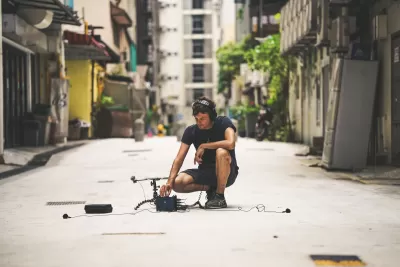
Close your eyes and listen to a city street.
Depending on the setting, you may hear a lush acoustic environment or the everpresent lulling hum of resting infrastructure. Each city soundscape is a unique, capricious aural footprint.
A recent episode of Monocle's The Urbanist podcast looks at soundscapes in the built environment, exploring what there is to learn from the sounds of cities.
John Levack Drever, professor of acoustic ecology and sound art at Goldsmiths, University of London, is interested in drawing insight from city soundscapes and understanding the effects of urban sound on living beings both inside and outside of cities. Drever considers acoustic ecology and the study of soundscapes to be more holistic than the study of acoustics, allowing for a more qualitative understanding of sounds and sound-makers.
"Disciplines like acoustics are very focused on sound pressure levels and issues of noise. Acoustic ecology is interested in the quality of sounds, what they mean, all the sounds in a space, and also the hearers—all the people who are listening and sound-making," explains Drever.
Listen to the podcast to hear a series of recordings from the same location in London's Beauchamp Place from 1928 as well as before and after the coronavirus lockdown. Also featured are sounds from Erimitis on the Greek island of Corfu, "a 500 acre biodiverse spot of land with its own sound identity," and Vienna's shifting soundscape.
Read the full story: Sound and the City
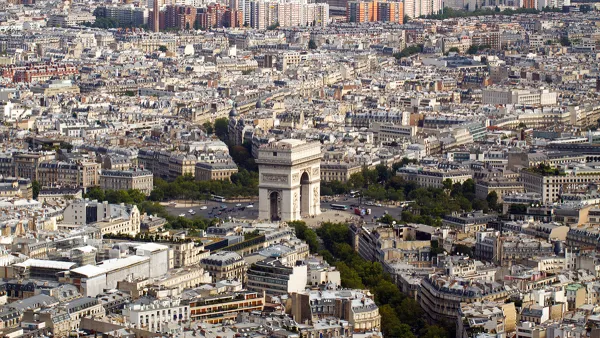
From Paris to Portland: The 15-Minute City Goes Mainstream
Raising the bar on the 20-minute neighborhood model, cities around the world are embracing the appeal of the 15-minute city during the coronavirus pandemic.

How the Pandemic Is Reshaping Ideas of the 'Smart City'
Accelerated investment in smart city technologies presents increased opportunity for connection and data-driven decision making, so long as cities can avoid the common pitfalls of implementation.
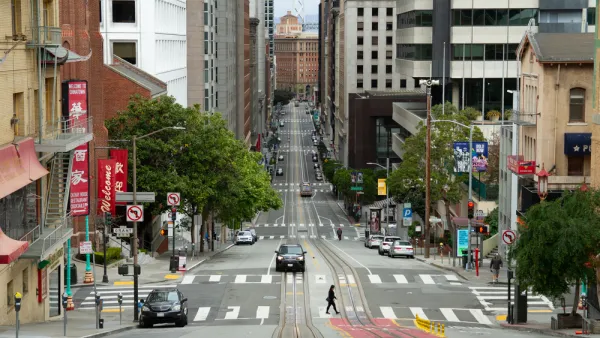
Recording the Quiet of Cities During the Pandemic
The usual sounds of the city have subsided, replaced by birds and quiet that at times can be eery and unsettling.

Planetizen Federal Action Tracker
A weekly monitor of how Trump’s orders and actions are impacting planners and planning in America.

Eastern Nebraska is running out of electricity
Data centers and electrification are straining eastern Nebraska’s grid, throttling economic development.

Study reveals best places in the U.S. for cycling, walking
New research from Streetlight Data examines bicycle and pedestrian miles per capita in the 100 largest U.S. cities by population.

Next-generation nuclear reactors are coming to Texas
The reactors will not require towering containment structures thanks to new safety features.

California distributes $1.3 billion to prevent transit service cuts, bolster projects
Twenty-eight projects across California received a portion of the funding.

Pennsylvania Democrats have 15 affordability, clean energy bills for flipped state Senate
Bills in consideration include a bill supporting geothermal energy and a bill supporting solar on warehouses.

FREE Course: Walkable City 1: Why Walkability?
After describing his path towards focusing on walkability as the essence of good planning, Jeff Speck marches through his five principal reasons for making more walkable places.
Reinventing Malls: Planning Alchemy—Turning Gray Fields Into Gold
The course focuses on the opportunities and imperatives that shape reinvention of mall sites.

City of Charlotte
City of Rosemead
Rutgers University, Edward J. Bloustein School of Planning and Public Policy
University of Michigan School for Environment and Sustainability (SEAS)
Hunter College, City University of New York (CUNY)
The Architects Foundation
City of Cambridge
The Pocatello Development Authority
The Urban Renewal Agency of the City of Pocatello