In the past, owning a car in New York City made little sense for most people. But the pandemic has many residents reconsidering their transportation options.


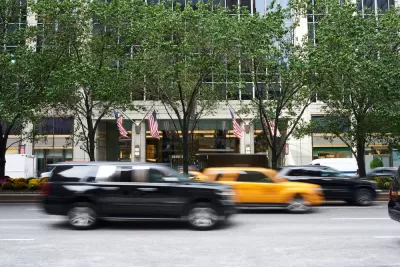
"Car ownership in New York was once generally reserved for those who worked in transit deserts, those who use 'summer' as a verb, those with second homes (these last two often being the same person), who could afford garages, or those who lived in the more suburban parts of the outer boroughs, with actual driveways. Not owning a car, not knowing how to drive, or doing so poorly was a point of pride," writes Foster Kamer.
The pandemic has dramatically changed car ownership trends in New York, says Kamer. A variety of factors have contributed to an increase in demand for cars, including the desire to travel by a mode perceived to be safer, the ability to leave the city, and more disposable income as people forgo activities such as dining out and traveling.
Car registrations in June and July were up 18 percent compared to the same time last year. "Many of these New Yorkers are finding one of the most valuable quantities money can buy right now: peace amid a pandemic, relief in actual escapism," notes Kamer.
Read the full story: The Great Gotham Vroom Boom of 2020

California's Hospital Crisis: What Lies Ahead
As COVID infections and hospitalizations mount in California, ICU availability dropped to zero in Southern and Central California. Demand for hospital care is also outstripping supply in New Mexico.
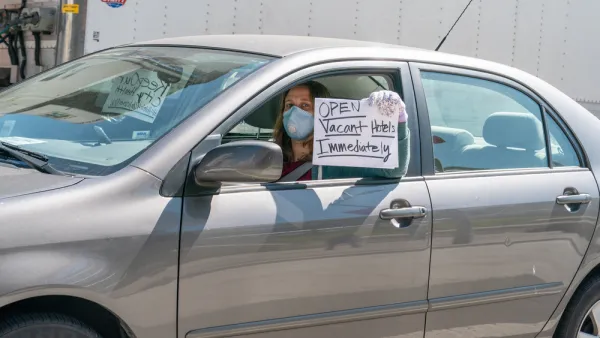
Hotels Could Play a Critical Role in Containing Coronavirus in Crowded Cities
Some cities are leasing entire hotels to provide rooms for people who have tested positive for COVID-19 or been exposed to infected people, to allow for safe and supportive isolation away from family or household members who risk being infected.
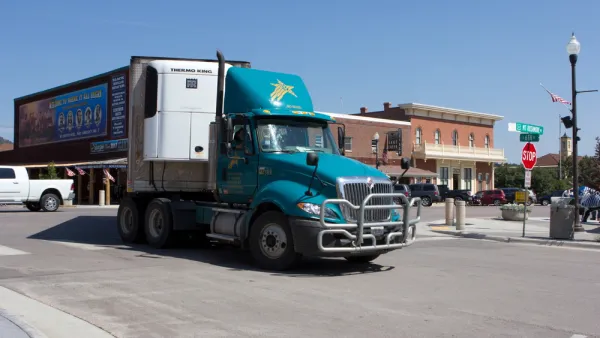
Coronavirus Shuts Down Food Processing Plant as President Pushes Reopening Economy
As President Donald Trump eyes May 1 for "opening up states," he might want to look at states that never shut down businesses to understand his public health advisor's warning that "the virus makes the timeline."

Planetizen Federal Action Tracker
A weekly monitor of how Trump’s orders and actions are impacting planners and planning in America.

California plans to bury El Niño’s downpour
If the state plays its cards right, it may be able to store a billion acre-feet of El Niño’s water in aquifers.

Desperate measures: Advocates weigh draining Lake Powell to fill Colorado River
Draining the reservoir could reduce evaporation losses by a couple hundred thousand acre-feet.

In Texas, data centers are swallowing promised parkland
Residents who moved to Taylor, Texas for a rural community now have to contend with three data centers in their backyard.

How a Chicago-sized wind farm beat the odds and powered on
The project spanned five presidential administrations and a standoff with a U.S. military base.

MTA gives itself 30 days to transform pit into basketball court
The site has been under construction since 2022; the city originally estimated it would finish the court in 2024.

FREE Course: Walkable City 1: Why Walkability?
After describing his path towards focusing on walkability as the essence of good planning, Jeff Speck marches through his five principal reasons for making more walkable places.
Reinventing Malls: Planning Alchemy—Turning Gray Fields Into Gold
The course focuses on the opportunities and imperatives that shape reinvention of mall sites.

City of Rosemead
Rutgers University, Edward J. Bloustein School of Planning and Public Policy
One Hundred Miles
Hunter College, City University of New York (CUNY)
The Architects Foundation
University of Cincinnati Online
City of Cambridge
Montrose County
The Pocatello Development Authority