In Manhattan, the space devoted to cars and car-related infrastructure takes up an area four times larger than Central Park. What would New York City look like if it divested from cars?


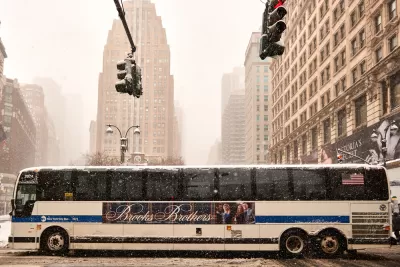
Farhad Manjoo has a vision for a car-free Manhattan. Manjoo's recent New York Times piece features scrolling animations that artfully elucidate the borough's dependence on cars as a personal means of transportation. Also included: a 45-minute long video of Manjoo discussing all things cars in the recent past, the present, and the future.
Streets fell silent at the onset of the coronavirus lockdown. "Rather than stumble back into car dependency, cities can begin to undo their worst mistake: giving up so much of their land to the automobile," writes Mandoo. Mandoo's piece presents a vision of walkable, biker friendly Manhattan streets with illustrations courtesy of the Practice for Architecture and Urbanism, answering the question, "What if we gave that space back to New Yorkers?"
FULL STORY: I’ve Seen a Future Without Cars, and It’s Amazing

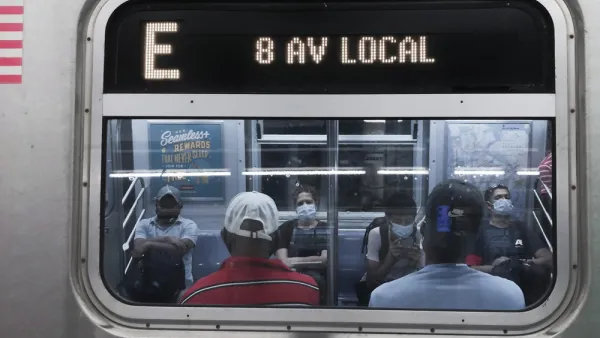
New York Subway Sets Pandemic Ridership Record
With school back in session and Broadway shows open to the public, subway ridership is surging in New York City, but still well below pre-pandemic levels.
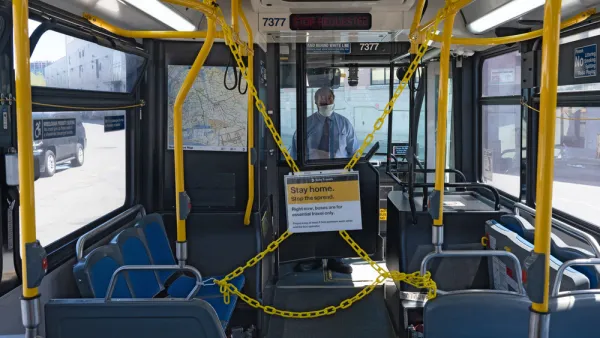
Will Cuomo Save Transit in New York?
Assuming that Congress isn't going to act, does New York Gov Cuomo have the political will to save the New York MTA from sweeping layoffs and service cuts?
Report: New York MTA Facing 'Greatest Crisis' in its History
A new report on the finances of the New York Metropolitan Transportation Authority (MTA) makes a desperate plea for assistance from the federal government.

The state-sanctioned urbicide of Austin
People don’t kill cities. Freeways do.

US to reduce Colorado River water deliveries to Mexico
A new Colorado Treaty amendment reduces Mexico’s Colorado River water allocation by 250,000 acre feet.

New Jersey’s second-largest city bans standalone data centers
Jersey City will continue to allow co-location facilities, such as those meant for research institutions that store their own data.

Amtrak not solely to blame for New Jersey commuter rail's unreliability, report finds
A new study from the Garden State Initiative found that NJ Transit’s budget grew 20% across a 4 year period, but reliability declined significantly over the same period.

EPA erases limits on planet-warming pollution from power plants
Under Monday’s plan, power plants would still have some limits on how much mercury, arsenic and other contaminants they can emit.

Phoenix announces new on-demand transit service, more frequent RAPID buses
Both new services will launch in October, and are part of Phoenix's Project Effective Access Solutions for Easing Congestion.

FREE Course: Walkable City 1: Why Walkability?
After describing his path towards focusing on walkability as the essence of good planning, Jeff Speck marches through his five principal reasons for making more walkable places.
Reinventing Malls: Planning Alchemy—Turning Gray Fields Into Gold
The course focuses on the opportunities and imperatives that shape reinvention of mall sites.

Eagle County Government
Harvard University Graduate School of Design
Nashville Planning Department
The Architects Foundation
University of Cincinnati Online
The Pocatello Development Authority
The Urban Renewal Agency of the City of Pocatello
Journal of the American Planning Association