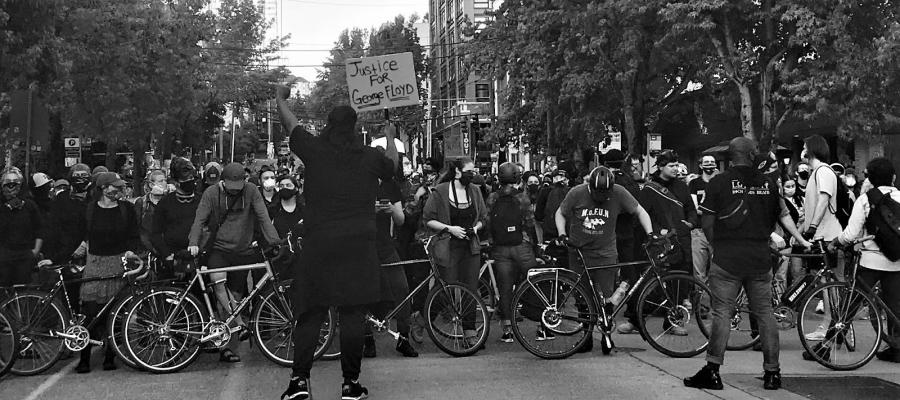
It's no geographic accident that so many of the images emerging from nationwide protests have featured numerous protestors on bikes. These forces have been coalescing for years.


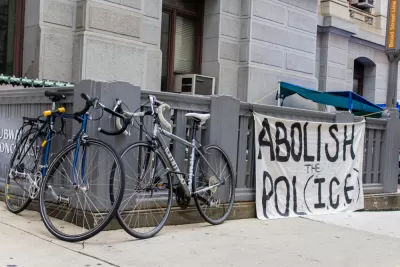
Recent images of New York Police Department officers focusing brutal tactics on people on bikes during protests in New York are in keeping with a long history of "hostility to cyclists, especially cyclists who are also left-leaning activists," according to an article by Jody Rosen.
And the cyclist-police nexus of conflict hasn't been unique to New York in recent weeks. "Bicycles have played a starring role in the nationwide uprising that has followed George Floyd’s death at the hands of Minneapolis police officers two weeks ago," writes Rosen. "In Los Angeles, San Francisco, Portland, Chicago, Atlanta, Miami, and dozens of other cities, protesters have pedalled and marched with their bicycles, facing off with police who, in many cases, are also mounted on bikes."
The visibility of bicycles during the recent weeks of protests in support of Black Lives Matter and police reform reflects an ongoing boom in popularity for bikes, according to Rosen, with backing from planners and politicians. "In an ecologically imperiled, rapidly urbanizing, traffic-shackled twenty-first century, the zero-emissions two-wheeler has reëmerged as a darling of urbanists, policymakers, and commuters."
Since the growing popularity of bikes has only accelerated, rapidly, during the pandemic, and now, with these protests and the response implemented by police departments and the Trump administration alike, the bike is emerging as a much more prominent symbol of freedom and social justice, according to the article. As Rosen notes, however, the bike as an emblem of freedom and justice is easily manipulated and appropriated by the other side.
FULL STORY: The Bicycle as a Vehicle of Protest

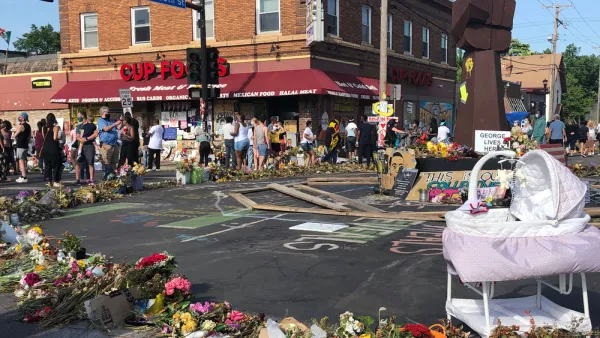
Oklahoma House Approves Protections for Drivers Who Hit Protestors
A heated debate and a party line vote in Oklahoma.
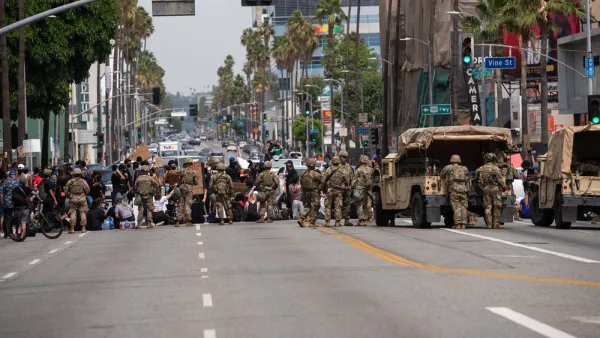
Opposing the Militarization of Police in Urban Areas
An impassioned plea for police not to escalate the violent and angry scenes that have punctuated the peaceful protests of the past week, as desired by key figures in the Trump administration as well as the president himself.
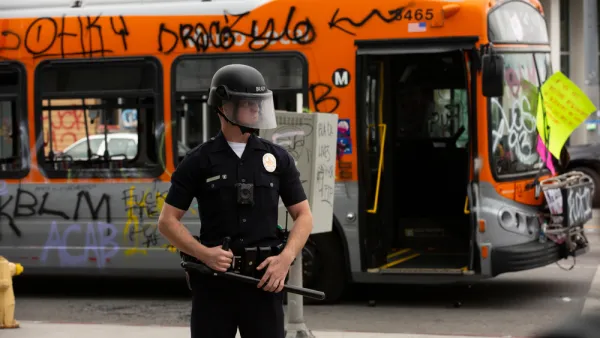
Advocates Respond to the Role of Public Transit in Protests and Arrests
The commandeering of buses for police to transport arrested protestors is raising questions about the allegiances of transit agencies in the United States.

Planetizen Federal Action Tracker
A weekly monitor of how Trump’s orders and actions are impacting planners and planning in America.

The state-sanctioned urbicide of Austin
People don’t kill cities. Freeways do.

US to reduce Colorado River water deliveries to Mexico
A new Colorado Treaty amendment reduces Mexico’s Colorado River water allocation by 250,000 acre feet.

5 New England states march closer to 800 megawatt wind energy project
Securing federal approval for the project may be complicated under the Trump administration, which has historically been hostile towards domestic wind power.

Baltimore to break ground on $50 million Transit Priority Project
The project will bring faster bus trips, safer streets and better bike connections to Baltimore.

Airbnb launches $250 million 'last-dollar financing' housing accelerator, makes first investment in Austin
The company will put $6.4 million towards affordable housing development in Texas’ capital.

FREE Course: Walkable City 1: Why Walkability?
After describing his path towards focusing on walkability as the essence of good planning, Jeff Speck marches through his five principal reasons for making more walkable places.
Reinventing Malls: Planning Alchemy—Turning Gray Fields Into Gold
The course focuses on the opportunities and imperatives that shape reinvention of mall sites.




Eagle County Government
Harvard University Graduate School of Design
Nashville Planning Department
The Architects Foundation
University of Cincinnati Online
The Pocatello Development Authority
The Urban Renewal Agency of the City of Pocatello
Journal of the American Planning Association