A proposal for the development of a mass timber high-rise in First Hill is under community review in Seattle. The project, which adjusted plans to add an additional 6 floors, proposes the tallest mass timber building in Seattle.


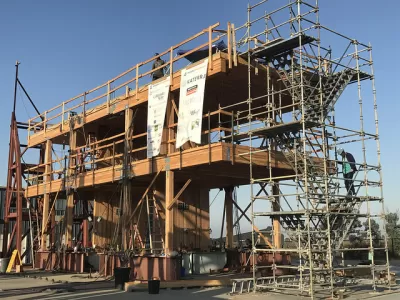
Despite uncertainty about the future to development projects in Seattle, one proposal is moving forward with hopes of an increase in scale.
"Developer Pryde Development and the architects at Clark Barnes have revised plans for a 'mass timber' high-rise planned for First Hill to grow the design to 18 stories — adding six more floors to an already ambitious project," reports Justin Carder.
The project is currently in a restructured public development process to review comments on the proposal and expansion. The building is planned to add 68 small efficiency dwelling units and 67 apartment units to the First Hill housing market.
Mass timber, the material touted for reducing construction times due to prefabrication requires a modular structure where the cross-laminated timber is covered with gypsum wallboard. Changes in building code in the state of Washington make possible what could be Seattle's tallest mass timber building.
Read the full story: Proposal for First Hill mass timber high-rise seeks to reach even higher

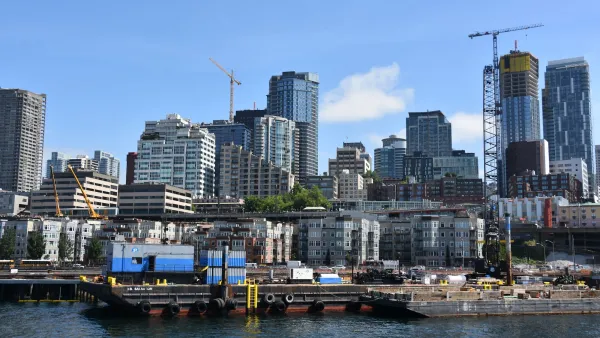
Seattle upzoning proposal seeks to boost density, support eco-friendly building materials
A city committee advanced the plan to target areas already open to multifamily development for additional density and encourage passive house and mass timber construction.
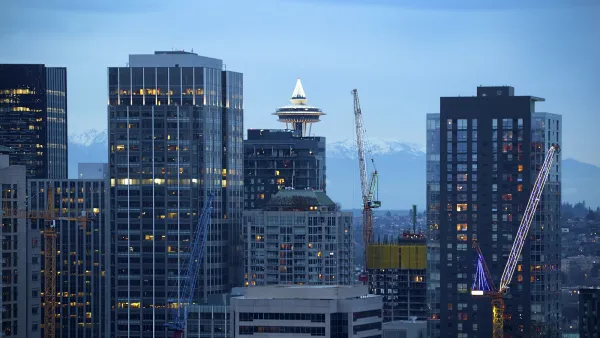
Seattle has Built Over 14,000 Affordable Units Since 2020 — More Than Any Other US Metro
Despite being ahead of other cities, Seattle is still short more than 150,000 affordable units.
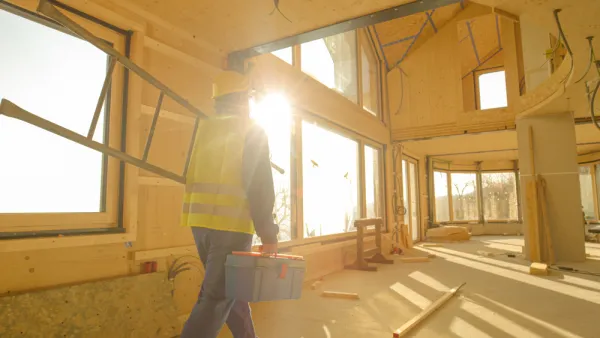
A Bipartisan Case for Mass Timber—Combating Wildfires and Developing Local Economies
What’s good for our forests and planet can also be good for our jobs, communities, and the economy. That’s why we’re writing this together—an ex-Democratic political operative and an ex-Republican staff member who want to see mass timber flourish.

Planetizen Federal Action Tracker
A weekly monitor of how Trump’s orders and actions are impacting planners and planning in America.

The state-sanctioned urbicide of Austin
People don’t kill cities. Freeways do.

US to reduce Colorado River water deliveries to Mexico
A new Colorado Treaty amendment reduces Mexico’s Colorado River water allocation by 250,000 acre feet.

Brightline West’s future may rely on $6 billion federal loan
The company has until Nov. 2 to make a $400 million equity investment into its proposed high-speed rail line.

LA Metro’s ultimatum: no extra buses for LA28 if federal funding isn’t imminently secured
If Metro does not provide additional buses, LA28 organizers will have to find a new way to manage Olympic traffic. LA28’s budget does not include a line item for transit.

Colorado’s Largest Data Center Could Rise Next to Homes — Without a Public Hearing
The proposed campus would consume 11 times the power of Denver International Airport; as it has across the country, opposition mounts.

FREE Course: Walkable City 1: Why Walkability?
After describing his path towards focusing on walkability as the essence of good planning, Jeff Speck marches through his five principal reasons for making more walkable places.
Reinventing Malls: Planning Alchemy—Turning Gray Fields Into Gold
The course focuses on the opportunities and imperatives that shape reinvention of mall sites.

Eagle County Government
Harvard University Graduate School of Design
Nashville Planning Department
The Architects Foundation
University of Cincinnati Online
The Pocatello Development Authority
The Urban Renewal Agency of the City of Pocatello
Journal of the American Planning Association