Avoiding the effects of climate change should not be a privilege for the wealthy.


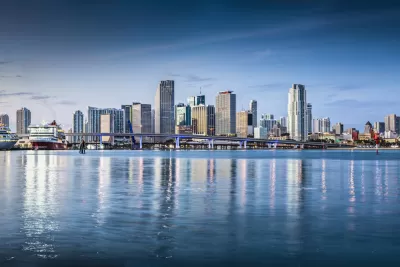
Resilience as a response to climate is inadequate, argues Matt Shaw. "Instead, we should focus on equity-minded climate adaptation, on structural changes that will reimagine new urban futures under climate change. Effective adaptation will protect both the physical environment and the social fabric of neighborhoods."
An approach that focuses on pushing back against nature instead of adapting to it will leave vulnerable communities facing the worst consequences. "The real challenge comes not from the environment but from wealth-vested interests, both public and private, that use the language of resilience to fortify themselves at the expense of lower-income and vulnerable populations," says Shaw.
Equity needs to be part of a broader strategy that does not depend on fortifying and protecting the privileged. "Rather than systemic change and a path toward cities and communities adapted for new climate realities, we risk building a green-washed version of what is already not working: a built environment that is both environmentally and socially unjust," adds Shaw.
Read the full story: This Luxury Tower Has Everything: Pools. A Juice Bar. And Flood Resilience.
The Built Environment in 2022: Challenges and Opportunities
As climate change, the pandemic, and a historic housing crisis continue to impact the nation, experts weigh in on the issues that could shape the future of the built environment in 2022.
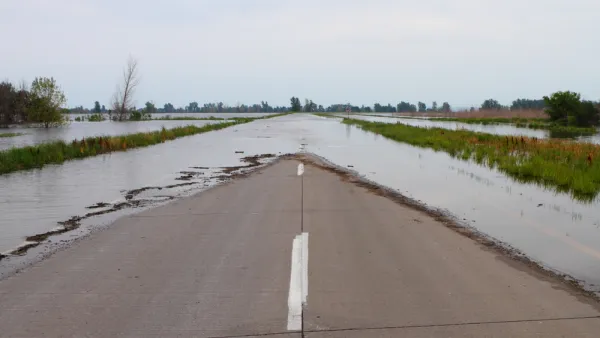
Rural Areas Left Behind in Climate Adaptation Plans
While resources pour in for urban climate resilience projects, smaller communities often bear the brunt of extreme weather events.
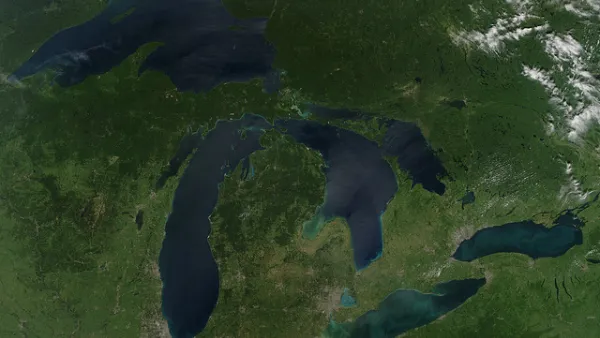
Opinion: Climate Change Has Brought the 'Era of Extreme' to the Great Lakes
Severe flooding in these coastal areas will become the norm, but how to best address the environmental challenges is not entirely clear.

Planetizen Federal Action Tracker
A weekly monitor of how Trump’s orders and actions are impacting planners and planning in America.

California plans to bury El Niño’s downpour
If the state plays its cards right, it may be able to store a billion acre-feet of El Niño’s water in aquifers.

Desperate measures: Advocates weigh draining Lake Powell to fill Colorado River
Draining the reservoir could reduce evaporation losses by a couple hundred thousand acre-feet.

Mamdani’s pied-à-terre tax survives legal challenge
A panel of judges found that the plaintiffs failed to demonstrate injury as a result of New York City's implementation of the tax.

Eastern Nebraska is running out of electricity
Data centers and electrification are straining eastern Nebraska’s grid, throttling economic development.

Seattle passes record-breaking transit services expansion
Proposition 1 will double the city’s transit tax to add 95,000 more bus trips and preserve 180,000 bus trips annually.

FREE Course: Walkable City 1: Why Walkability?
After describing his path towards focusing on walkability as the essence of good planning, Jeff Speck marches through his five principal reasons for making more walkable places.
Reinventing Malls: Planning Alchemy—Turning Gray Fields Into Gold
The course focuses on the opportunities and imperatives that shape reinvention of mall sites.

City of Rosemead
Rutgers University, Edward J. Bloustein School of Planning and Public Policy
One Hundred Miles
University of Michigan School for Environment and Sustainability (SEAS)
Hunter College, City University of New York (CUNY)
The Architects Foundation
City of Cambridge
Montrose County
The Pocatello Development Authority