Another month, another rental payment crisis for millions of Americans.


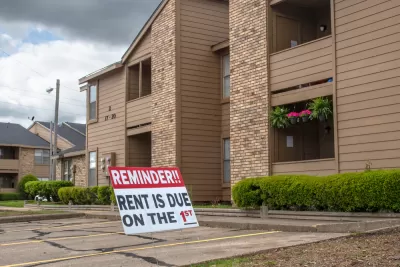
Henry Louis Taylor, Jr., a professor of urban and regional planning at the University of Buffalo, is featured in an ABC News article about the ongoing risk of mass evictions as the country's millions of renters collides with tens of millions of new unemployment claims across the country.
Taylor said that "federal and statewide eviction moratoriums are based on COVID-19 timetables that are 'too short' and don’t consider predictions from medical experts that the pandemic could persist into the fall and beyond, as public health officials have suggested," according to the article, written by Deena Zaru.
"More than 30 million Americans have filed for unemployment insurance since the COVID-19 crisis hit the U.S. in March, and despite a range of temporary federal and state eviction moratoriums, some Americans are still being served eviction notices amid a public health crisis that requires many people to stay at home," according to Zaru.
In April, a Planetizen article detailed the looming eviction crisis, as state, local, and national policies have only so far deferred the housing crisis. Since then, progressive members of Congress have pushed for more thorough forms of rent relief, while lawyers for landlords have achieved legal success against local eviction moratoriums.
Emily Benfer, a professor of clinical law and the director of Columbia University’s Health Justice Advocacy Clinic, is also quoted in the ABC News article, predicting a major spike in evictions simultaneous to the country finally achieving a decline in coronavirus infections.
As reported in a separate article by Marisa Peñaloza, the American Civil Liberties Union recently sent a letter to state governments asking for action to stave off mass evictions once eviction moratoriums end.
FULL STORY: 'Mass evictions' on the horizon as US confronts coronavirus housing crisis: Advocates

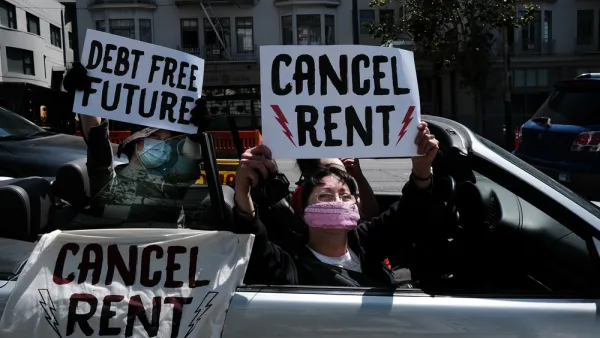
A Housing and Eviction Crisis Still Hangs Over the U.S., Just Like the Pandemic
Checking in with the numerous risks in the housing market as the economic fallout of the pandemic as approaches it approaches its second year.
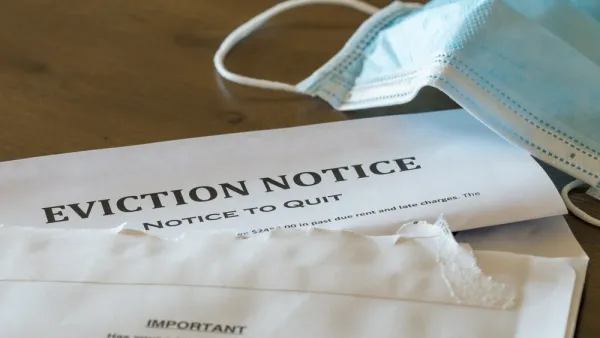
Evictions Caused 433,700 Excess Covid Infections, 10,700 Deaths, Study Says
A new study connects evictions to the spread of the coronavirus. Evictions continued in huge numbers during the pandemic despite a patchwork of eviction protections at multiple layers of government.
Ithaca Approves Historic #CancelRent Legislation
Ithaca, New York is the first city in the nation to go through with a plan to cancel rent, giving three-quarters of the residents in the city a needed safety net as the coronavirus pandemic and resulting economic crisis persists into the summer.

Planetizen Federal Action Tracker
A weekly monitor of how Trump’s orders and actions are impacting planners and planning in America.

The state-sanctioned urbicide of Austin
People don’t kill cities. Freeways do.

US to reduce Colorado River water deliveries to Mexico
A new Colorado Treaty amendment reduces Mexico’s Colorado River water allocation by 250,000 acre feet.

5 New England states march closer to 800 megawatt wind energy project
Securing federal approval for the project may be complicated under the Trump administration, which has historically been hostile towards domestic wind power.

Baltimore to break ground on $50 million Transit Priority Project
The project will bring faster bus trips, safer streets and better bike connections to Baltimore.

Airbnb launches $250 million 'last-dollar financing' housing accelerator, makes first investment in Austin
The company will put $6.4 million towards affordable housing development in Texas’ capital.

FREE Course: Walkable City 1: Why Walkability?
After describing his path towards focusing on walkability as the essence of good planning, Jeff Speck marches through his five principal reasons for making more walkable places.
Reinventing Malls: Planning Alchemy—Turning Gray Fields Into Gold
The course focuses on the opportunities and imperatives that shape reinvention of mall sites.

Eagle County Government
Harvard University Graduate School of Design
Nashville Planning Department
The Architects Foundation
University of Cincinnati Online
The Pocatello Development Authority
The Urban Renewal Agency of the City of Pocatello
Journal of the American Planning Association