Dallasites have a history of responding to times of crisis with plans for reinvention. What could the city do to improve public life after the coronavirus pandemic?


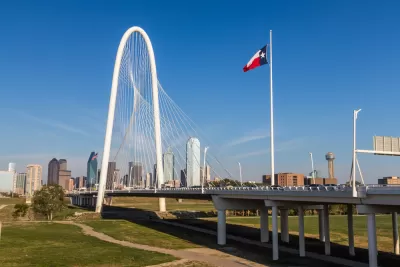
Dallas isn't known for being a particularly walkable city. Lockdown has brought more people into the streets, seeking solace in exercise and a reminder of social life in public spaces.
Mark Lamster envisions a future where this newfound fervor for pedestrianism reshapes the city: "When lockdown ends, and it will, our streets will reopen. But instead of returning them to the status quo ante, why not take this opportunity to rapidly paint in bike lanes and adapt our streets to better suit the needs of pedestrians. That means expanding sidewalks, squaring off those infernal 'radiused' corners — the corners rounded off to allow cars to turn faster — creating median strips and bump outs at crossings, and many other proven traffic calming techniques."
Building a stronger Dallas begins with modifying the streets, removing I-345, and creating additional pedestrian-friendly infrastructure, persuades Lamster pointing to Klyde Warren Park as a proof of concept.
What else can Dallasites do to improve urban infrastructure after the passing of the pandemic? Dallas could design public infrastructure with the concept of dual-use facilities in mind. Resilience planners are calling for flexible use of public buildings like the Kay Bailey Hutchison Convention Center, which was recently converted into a medical center to facilitate increased demand for medical care.
In Lamster's view, Dallas has two options: "better or worse for it, better prepared for the next disaster, or more susceptible than it is even now."
FULL STORY: With the coronavirus, an opportunity to reinvent Dallas

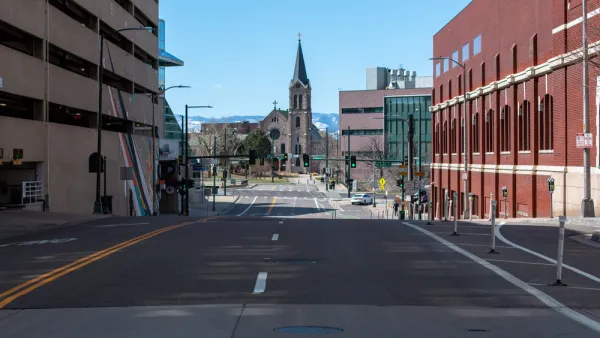
Denver, Minneapolis Lead Nation in Open Streets for COVID Response
Denver now has more than 13 miles of streets closed to car traffic. Only Minneapolis has more.
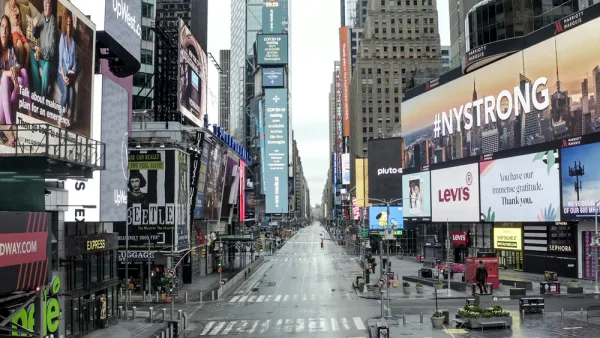
Biden Signs Legislation Ending Covid 19 National Emergency
The Covid 19 national emergency enacted by then-President Donald Trump in March 2020 was officially ended on Monday by President Joe Biden.
The Most Popular Articles on Planetizen in 2021
The most-read news, features, blogs, and Planopedia posts on Planetizen in 2021.

Planetizen Federal Action Tracker
A weekly monitor of how Trump’s orders and actions are impacting planners and planning in America.

The state-sanctioned urbicide of Austin
People don’t kill cities. Freeways do.

US to reduce Colorado River water deliveries to Mexico
A new Colorado Treaty amendment reduces Mexico’s Colorado River water allocation by 250,000 acre feet.

5 New England states march closer to 800 megawatt wind energy project
Securing federal approval for the project may be complicated under the Trump administration, which has historically been hostile towards domestic wind power.

Baltimore to break ground on $50 million Transit Priority Project
The project will bring faster bus trips, safer streets and better bike connections to Baltimore.

Airbnb launches $250 million 'last-dollar financing' housing accelerator, makes first investment in Austin
The company will put $6.4 million towards affordable housing development in Texas’ capital.

FREE Course: Walkable City 1: Why Walkability?
After describing his path towards focusing on walkability as the essence of good planning, Jeff Speck marches through his five principal reasons for making more walkable places.
Reinventing Malls: Planning Alchemy—Turning Gray Fields Into Gold
The course focuses on the opportunities and imperatives that shape reinvention of mall sites.

Eagle County Government
Harvard University Graduate School of Design
Nashville Planning Department
The Architects Foundation
University of Cincinnati Online
The Pocatello Development Authority
The Urban Renewal Agency of the City of Pocatello
Journal of the American Planning Association