A lot of long-term planning is underway in Washington, D.C.



"Along with submitting the final draft of amendments to the Comprehensive Plan to the DC Council, the Office of Planning (OP) has also submitted a report on how the city's single-family zones can accommodate more density and the resulting impact on affordability and equity," reports Nena Perry-Brown.
OP is hoping to achieve a much wider scale adoption of accessory dwelling units and other forms of missing-middle housing in single-family residential neighborhoods, according to Perry-Brown, but OP stops short of recommending District-wide by-right zoning for that kind of new density (following the models provided by Minneapolis and the state of Oregon).
"Because SFZ areas are some of the city's most racially-segregated, largely retaining the demographics established by restrictive covenants and discriminatory lending, the report recommends targeting gentle density for particular areas that would achieve equity goals," according to Perry-Brown.
A separate article by Alex Baca digs into the entire package of Comprehensive Plan amendments, referenced above. As noted by Baca, the timeline of adoption for these is still highly speculative.
FULL STORY: Office of Planning Report Recommends Introducing Gentle Density Changes to DC’s Single-Family Zones

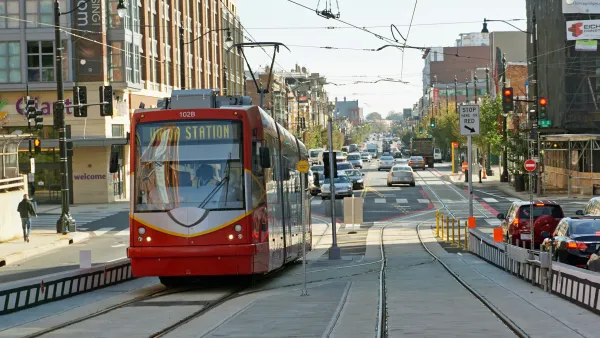
D.C. Comprehensive Plan Amendments Approved
New amendments to the D.C. Comprehensive Plan set goals for new housing development and fewer cars on the road.

Comprehensive Plan Update Stokes Controversy in D.C.
Complex political dynamics are mustering for a showdown over D.C.'s comprehensive plan.

How D.C.'s Comprehensive Plan May Change
Along with a commitment to produce more affordable housing, Washington D.C. is making general amendments to its Comprehensive Plan. The result may be more "honesty" and nuance around housing.

Planetizen Federal Action Tracker
A weekly monitor of how Trump’s orders and actions are impacting planners and planning in America.

The state-sanctioned urbicide of Austin
People don’t kill cities. Freeways do.

US to reduce Colorado River water deliveries to Mexico
A new Colorado Treaty amendment reduces Mexico’s Colorado River water allocation by 250,000 acre feet.

Mamdani overhauls NYC's Vision Zero plan with 100 new policy goals
The overhaul aims to reduce traffic deaths and make streets safer for pedestrians, cyclists and drivers through lower speed limits, new safety infrastructure and more.

Amtrak not solely to blame for New Jersey commuter rail's unreliability, report finds
A new study from the Garden State Initiative found that NJ Transit’s budget grew 20% across a 4 year period, but reliability declined significantly over the same period.

EPA erases limits on planet-warming pollution from power plants
Under Monday’s plan, power plants would still have some limits on how much mercury, arsenic and other contaminants they can emit.

FREE Course: Walkable City 1: Why Walkability?
After describing his path towards focusing on walkability as the essence of good planning, Jeff Speck marches through his five principal reasons for making more walkable places.
Reinventing Malls: Planning Alchemy—Turning Gray Fields Into Gold
The course focuses on the opportunities and imperatives that shape reinvention of mall sites.

Eagle County Government
Harvard University Graduate School of Design
Nashville Planning Department
The Architects Foundation
University of Cincinnati Online
The Pocatello Development Authority
The Urban Renewal Agency of the City of Pocatello
Journal of the American Planning Association