Emergency legislation has cleared the way for a virtual design review process to keep the wheels of the development industry moving in one of the nation's fastest growing cities.


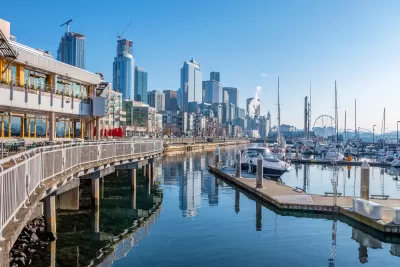
"[Mayor Jenny Durkan] released a draft of the emergency legislation that would permit design review to be conducted electronically by waiving the in-person meeting requirement for a six-month period," reports Doug Trumm.
Seattle's suspended its design review process in March as a result of social distancing measures—the state and the region were a hot bed of infection in early march, and thus took drastic action to slow the spread of the coronavirus before the rest of the country.
"Since setting up virtual design review will take time, the bill also shifts projects facing full design review (before the volunteer boards) to administrative review, which is conducted by Seattle Department of Construction and Inspection (SDCI)," explains Trumm. "Without the change, design review meetings were simply being postponed in hopes the risk of virus spread would dissipate."
Trumm characterizes the moves toward virtual design review as a means to keep the economic wheels in the city turning to alleviate some of the economic consequences expected to outlive the public health crisis.
FULL STORY: Digital Design Review Aims to Keep Housing Pipeline Flowing during COVID Crisis

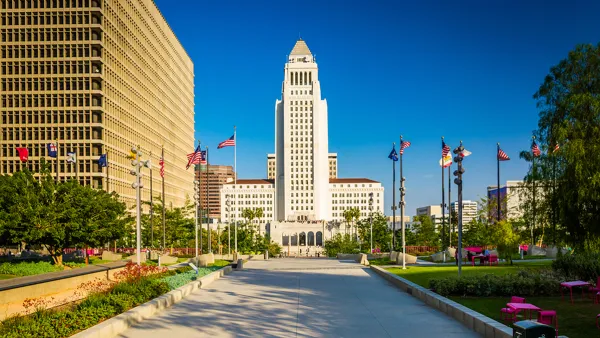
L.A. Department of City Planning Goes Remote
Los Angeles Department of City Planning Director Vince Bertoni shares the status of the planning department and the daily challenges of providing public-facing service and community meetings under social distancing orders.

D.C., San Francisco Lead Pandemic Work From Home Trend
Remote work increased threefold during the pandemic, but the numbers vary significantly from city to city and region to region. Almost half of D.C.-area employees, for example, worked from home in 2021, according to American Community Survey data.
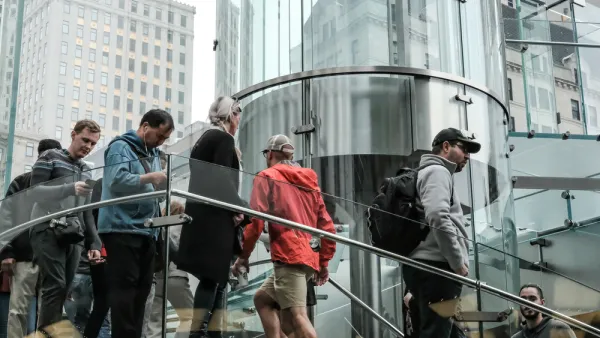
Long Commutes in Seattle Fell Sharply During the Pandemic
The number of people commuting 20 minutes or more each way dropped by close to half a million, while short commutes rose slightly.

Planetizen Federal Action Tracker
A weekly monitor of how Trump’s orders and actions are impacting planners and planning in America.

The state-sanctioned urbicide of Austin
People don’t kill cities. Freeways do.

US to reduce Colorado River water deliveries to Mexico
A new Colorado Treaty amendment reduces Mexico’s Colorado River water allocation by 250,000 acre feet.

5 New England states march closer to 800 megawatt wind energy project
Securing federal approval for the project may be complicated under the Trump administration, which has historically been hostile towards domestic wind power.

Baltimore to break ground on $50 million Transit Priority Project
The project will bring faster bus trips, safer streets and better bike connections to Baltimore.

Airbnb launches $250 million 'last-dollar financing' housing accelerator, makes first investment in Austin
The company will put $6.4 million towards affordable housing development in Texas’ capital.

FREE Course: Walkable City 1: Why Walkability?
After describing his path towards focusing on walkability as the essence of good planning, Jeff Speck marches through his five principal reasons for making more walkable places.
Reinventing Malls: Planning Alchemy—Turning Gray Fields Into Gold
The course focuses on the opportunities and imperatives that shape reinvention of mall sites.

Eagle County Government
Harvard University Graduate School of Design
Nashville Planning Department
The Architects Foundation
University of Cincinnati Online
The Pocatello Development Authority
The Urban Renewal Agency of the City of Pocatello
Journal of the American Planning Association