By providing support for workers and small businesses, local governments will play a crucial role in weathering the virus and stabilizing the economy.


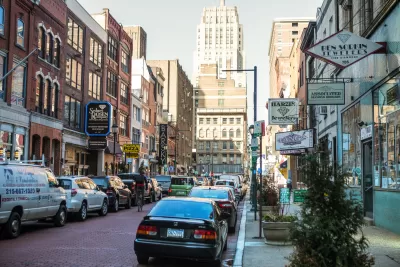
“[L]ocal governments are well-positioned to step in with economic aid in the near-term,” according to an article by Joseph Parilla for Brookings, filling in for federal and state levels of government in critical areas of economic stabilization.
“Worker protections are a critical first step in any city-level economic stabilization plan,” according to Parilla, who lists efforts in Washington, D.C., California, and Washington to provide unemployment insurance for workers who can’t work due to quarantine or shelter in place orders.
“The second major policy response among cities has been small business stabilization,” adds Parilla. Examples of small business stabilization listed by Parilla include a move by Seattle to defer business and occupation taxes for eligible businesses, expand its Small Business Stabilization Fund, and “provide technical assistance to business owners seeking relief from the U.S. Small Business Administration.”
Key to all local efforts, and Parilla lists more in the source article, is the need to move quickly. “According to the JPMorgan Chase Institute, 47% of small businesses have less than two weeks of cash liquidity on hand, with restaurants and retail operating at the slimmest margins.”
Read the full story: How cities are helping workers and small businesses during the coronavirus crisis

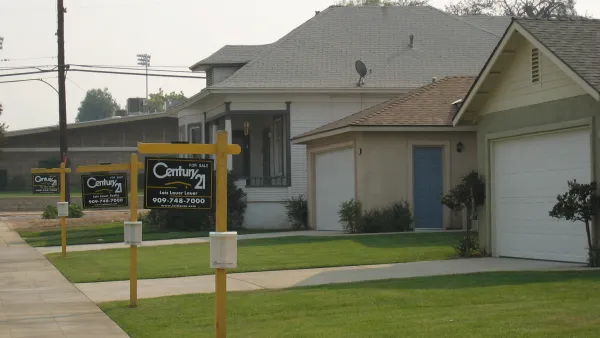
Housing Market Showing Signs of the Coronavirus Pandemic
A high-ranking federal official also issued a warning about the potential for the pandemic to affect mortgage borrowers.
Fiscal Effects of the Pandemic Depend on Tax Structures
Cities that rely on sales and income tax revenues to fund vital local services can expect immediate fiscal consequences from the coronavirus pandemic.
The Historical Effect of Pandemics on the Economy and the Housing Market
Research into previous pandemics, like SARS in 2003, the Spanish Flu in 1918, and the early months of COVID-19 in China, offers insight into what to expect for the economy and the housing market during and after the current pandemic.

Amtrak, CN end decades-long dispute with eight-year agreement
The new operating agreement establishes an updated framework for the companies to work together, including processes to resolve disputes.

Judges permit Denver to divert 77,000 acre feet from the Colorado River for reservoir expansion
Overuse and climate change have caused the Colorado River’s water levels to plummet.
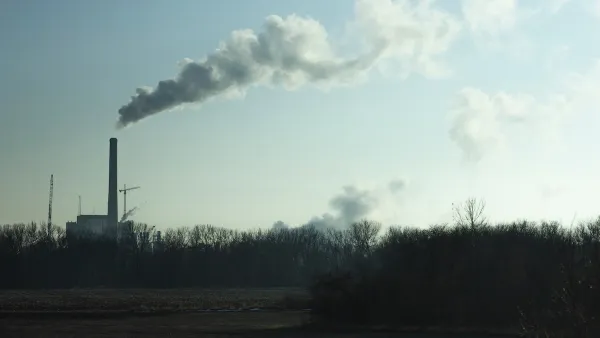
Nation's most wind-powered state turns to coal as data centers increase energy demand
For the first time in decades, Iowa has increased its generation of coal power.

Boston has spent millions making the Green Line more accessible — and there’s no end in sight
While the city has invested millions into expanding and adding platforms to the Green Line to make it more accessible, new train cars set to arrive next year will be too tall for disabled passengers to board without raising the current platforms.

Idaho may see an 18% drop in federal surface transit funding — the largest estimated cut in the US
Transit systems in rural communities are much more reliant on federal funding to provide their services.

How ‘post-disaster gentrification’ alters neighborhoods after natural calamities
After hurricanes, fires or other calamities, the original residents of a community are often replaced by younger, wealthier residents.

FREE Course: Walkable City 1: Why Walkability?
After describing his path towards focusing on walkability as the essence of good planning, Jeff Speck marches through his five principal reasons for making more walkable places.
Reinventing Malls: Planning Alchemy—Turning Gray Fields Into Gold
The course focuses on the opportunities and imperatives that shape reinvention of mall sites.

City of Wisconsin Rapids
Harvard University Graduate School of Design
KFH Group Inc.
The Architects Foundation
University of Cincinnati Online
The Pocatello Development Authority
The Urban Renewal Agency of the City of Pocatello