Seeing an opportunity for massive profits, private companies have snapped up homes and become corporate landlords in cities across the country.


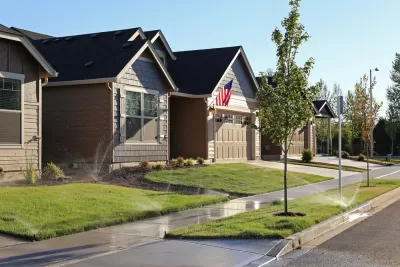
In a feature piece, Francesca Mari writes about the rise of the single-family-rental market, a vast network of private-equity firms drastically changing American cities:
Strategic Acquisitions was but one of several companies in Los Angeles County, and one of dozens in the United States, that hit on the same idea after the financial crisis: load up on foreclosed properties at a discount of 30 to 50 percent and rent them out. Rather than protecting communities and making it easy for homeowners to restructure bad mortgages or repair their credit after succumbing to predatory loans, the government facilitated the transfer of wealth from people to private-equity firms.
It is a $60 billion real estate industry that has taken control of hundreds of thousands of homes, pushed moderate-income and middle-income people out of the housing market, and left renters struggling with deplorable housing conditions.
Mari details the trials and tribulations of one renter in California, who ended up renting the San Fernando Valley home he previously owned. She also describes the efforts of tenants who have organized and fought back against excessive fees, lack of maintenance, and evictions.
"In some communities, [the housing grab] has fundamentally altered housing ecosystems in ways we’re only now beginning to understand, fueling a housing recovery without a homeowner recovery," says Mari.
FULL STORY: A $60 Billion Housing Grab by Wall Street

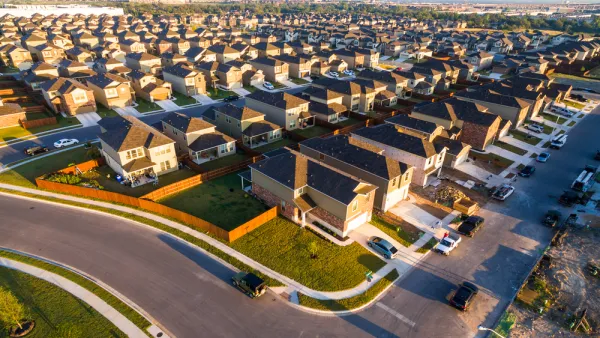
'Corporate Landlords and Market Power': Study Surveys the Single-Family Rental Boom
New research documents the growing footprint of large institutional investors in the housing market during the pandemic, converting more and more of the nation's single-family detached housing units into rental properties.
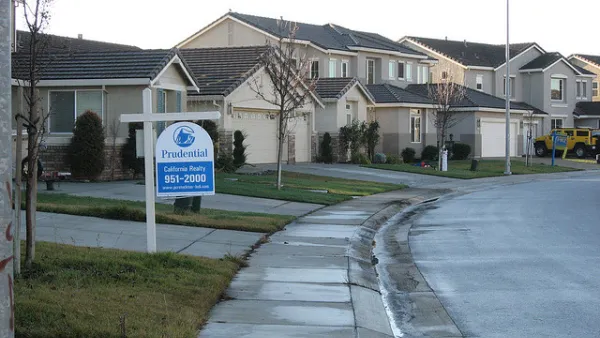
When Wall Street Controls the Housing Market
A debate about the effect of the increasing footprint of large, institutional investors in the housing market is further fragmenting the politics of development in the United States.

All About Single-Family Rentals
Single-family rentals are the fastest growing segment of the U.S. housing market—and they're not going away anytime soon, a new study suggests.

The state-sanctioned urbicide of Austin
People don’t kill cities. Freeways do.

US to reduce Colorado River water deliveries to Mexico
A new Colorado Treaty amendment reduces Mexico’s Colorado River water allocation by 250,000 acre feet.

New Jersey’s second-largest city bans standalone data centers
Jersey City will continue to allow co-location facilities, such as those meant for research institutions that store their own data.

Amtrak not solely to blame for New Jersey commuter rail's unreliability, report finds
A new study from the Garden State Initiative found that NJ Transit’s budget grew 20% across a 4 year period, but reliability declined significantly over the same period.

EPA erases limits on planet-warming pollution from power plants
Under Monday’s plan, power plants would still have some limits on how much mercury, arsenic and other contaminants they can emit.

Phoenix announces new on-demand transit service, more frequent RAPID buses
Both new services will launch in October, and are part of Phoenix's Project Effective Access Solutions for Easing Congestion.

FREE Course: Walkable City 1: Why Walkability?
After describing his path towards focusing on walkability as the essence of good planning, Jeff Speck marches through his five principal reasons for making more walkable places.
Reinventing Malls: Planning Alchemy—Turning Gray Fields Into Gold
The course focuses on the opportunities and imperatives that shape reinvention of mall sites.

Eagle County Government
Harvard University Graduate School of Design
Nashville Planning Department
The Architects Foundation
University of Cincinnati Online
The Pocatello Development Authority
The Urban Renewal Agency of the City of Pocatello
Journal of the American Planning Association