Urban growth in Anchorage was tied to restrictive covenants forbidding the sale of property to minorities.



Zachariah Hughes, a reporter with Alaska Public Media digs into a story that reveals that Anchorage, Alaska has thousands of parcels with deed restrictions against minority home ownership decades after the Civil Rights Act of 1965.
A local Anchorage historian investigated "hundreds of deeds that included discriminatory covenants barring the sale of homes to anyone who wasn’t white. He found them in neighborhoods all over town." The local governing body in Anchorage is developing a plan for dealing with those covenants.
Richard Watts is an African American who moved with his family to Anchorage when he was three years old in 1949. Watts is quoted in the article: "One thing about discrimination in Anchorage, Alaska, versus discrimination in the Lower 48: In the Lower 48, it was in your face. In Anchorage, Alaska, it was hidden."
"Watts said there were a number of ways this played out. Obtaining a bank loan ranged from difficult to impossible. Newspaper ads for rentals would often explicitly say “whites only.” Real estate brokers always seemed to have found a tenant just before you inquired about a place, Watts said.
“They wouldn’t say, ‘We don’t rent to blacks or Natives.’ They’d say, ‘We’ve already rented it,’” he recalled. “Everybody knew what was going on. That’s just the way it was.”
FULL STORY: Illegal for decades, many Anchorage homes still have covenants that prohibit sale to blacks and AK Natives


HUD Plans to Kill Key Fair Housing Rule
The department issued a proposal to eliminate the disparate impact rule, a cornerstone of some discrimination rulings under the Fair Housing Act.
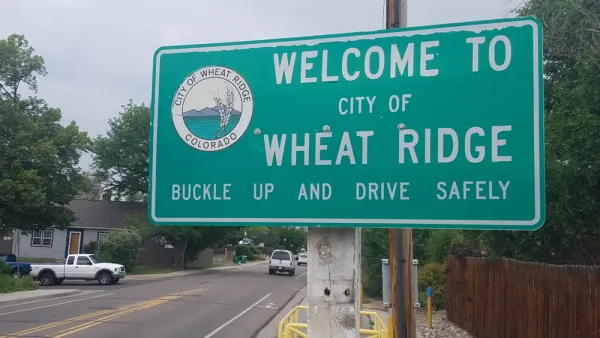
Denver Suburb Points Spotlight at Racial Covenants
A symbolic, but necessary, action.

Mapping Injustice Project Receives Grant to Fight Housing Inequality
A 'transformative' grant will help a University of Minnesota think tank foster conversations to address structural housing inequality in Minneapolis.

Planetizen Federal Action Tracker
A weekly monitor of how Trump’s orders and actions are impacting planners and planning in America.

The state-sanctioned urbicide of Austin
People don’t kill cities. Freeways do.

US to reduce Colorado River water deliveries to Mexico
A new Colorado Treaty amendment reduces Mexico’s Colorado River water allocation by 250,000 acre feet.

LA Metro’s ultimatum: no extra buses for LA28 if federal funding isn’t imminently secured
If Metro does not provide additional buses, LA28 organizers will have to find a new way to manage Olympic traffic. LA28’s budget does not include a line item for transit.

Colorado’s Largest Data Center Could Rise Next to Homes — Without a Public Hearing
The proposed campus would consume 11 times the power of Denver International Airport; as it has across the country, opposition mounts.

5 New England states march closer to 800 megawatt wind energy project
Securing federal approval for the project may be complicated under the Trump administration, which has historically been hostile towards domestic wind power.

FREE Course: Walkable City 1: Why Walkability?
After describing his path towards focusing on walkability as the essence of good planning, Jeff Speck marches through his five principal reasons for making more walkable places.
Reinventing Malls: Planning Alchemy—Turning Gray Fields Into Gold
The course focuses on the opportunities and imperatives that shape reinvention of mall sites.

Eagle County Government
Harvard University Graduate School of Design
Nashville Planning Department
The Architects Foundation
University of Cincinnati Online
The Pocatello Development Authority
The Urban Renewal Agency of the City of Pocatello
Journal of the American Planning Association