The city has reinvented itself in many ways, but its residents are not reaping those benefits equally.


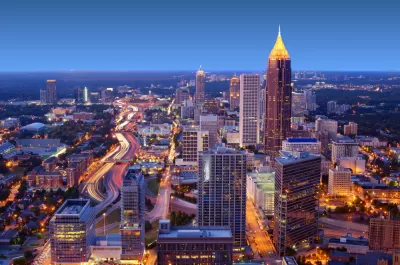
Atlanta has changed over recent decades and gone mainstream, with its thriving film industry, hip hop scene, upscale developments, and amenities like the BeltLine, writes Marsha Shalhoup. "However, in this majority-black city—one that has earned its prominence thanks in large part to the contributions of black Atlantans—it is still white Atlantans who are benefiting most."
She says that two factors contributed greatly to Atlanta’s transformation starting in the 1990s: the state’s HOPE scholarship program and the HOPE VI federal grant that replaced public housing with mixed-income developments. Ultimately, these programs did not help the Atlanta residents who needed it the most as income and college attendance gaps between blacks and whites widened.
Shalhoup returned to Atlanta in 2018 and says that she did not recognize parts of the city she knew well, previously rundown areas that gentrification wiped clean. "If this influx of wealth were benefiting people equally, or even sort of equally, these changes would be easier to accept. And they would be easier to accept if more had been done to preserve the affordability of these intown communities as they were transforming," she adds.
FULL STORY: It’s the best time to be an Atlantan. It might also be the worst.

The Uniquely Racial Dynamics of Gentrification in Atlanta
The Guardian published an in-depth exposé of the causes and effects of gentrification in the city of Atlanta.
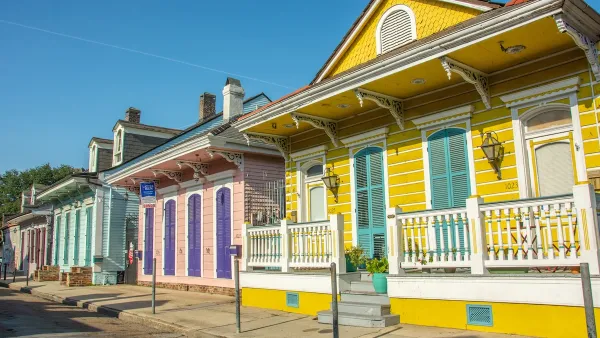
20 Years After Katrina, New Orleans is More Unaffordable Than Ever
The city’s post-hurricane redevelopment has failed to include its most vulnerable residents.

A Bronx Community Fights to Have its Voice Heard
After organizing and giving input for decades, the community around the Kingsbridge Armory might actually see it redeveloped — and they want to continue to have a say in how it goes.

Planetizen Federal Action Tracker
A weekly monitor of how Trump’s orders and actions are impacting planners and planning in America.

The state-sanctioned urbicide of Austin
People don’t kill cities. Freeways do.

US to reduce Colorado River water deliveries to Mexico
A new Colorado Treaty amendment reduces Mexico’s Colorado River water allocation by 250,000 acre feet.

Mamdani overhauls NYC's Vision Zero plan with 100 new policy goals
The overhaul aims to reduce traffic deaths and make streets safer for pedestrians, cyclists and drivers through lower speed limits, new safety infrastructure and more.

Amtrak not solely to blame for New Jersey commuter rail's unreliability, report finds
A new study from the Garden State Initiative found that NJ Transit’s budget grew 20% across a 4 year period, but reliability declined significantly over the same period.

EPA erases limits on planet-warming pollution from power plants
Under Monday’s plan, power plants would still have some limits on how much mercury, arsenic and other contaminants they can emit.

FREE Course: Walkable City 1: Why Walkability?
After describing his path towards focusing on walkability as the essence of good planning, Jeff Speck marches through his five principal reasons for making more walkable places.
Reinventing Malls: Planning Alchemy—Turning Gray Fields Into Gold
The course focuses on the opportunities and imperatives that shape reinvention of mall sites.

Eagle County Government
Harvard University Graduate School of Design
Nashville Planning Department
The Architects Foundation
University of Cincinnati Online
The Pocatello Development Authority
The Urban Renewal Agency of the City of Pocatello
Journal of the American Planning Association