The energy sector produced ten percent less carbon emissions in 2019 than the previous year—the largest drop in decades. Still, the decline of the coal industry is not enough to meet the goals of the Paris Climate Accord.


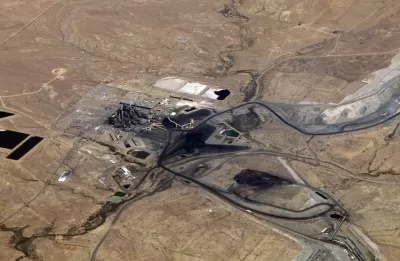
"Greenhouse gas emissions in the United States dropped last year after a sharp increase in 2018," reports Nicholas Kusnetz. The news arrives via data released by Rhodium Group. After an increase in emissions in 2018, 2019's emissions reductions resume a "long-term downward trend driven chiefly by a shift away from coal power generation," according to Kusnetz.
"The story of the emissions decline has largely been one of market forces—rather than policies—that have made utilities close coal plants in favor of cheaper natural gas and renewable energy," adds Kusnetz. The story is all about coal, according to the article.
A key caveat included in the article is that the 2 percent reduction is not enough to meet the targets of the Paris Climate Accord.
FULL STORY: U.S. Emissions Dropped in 2019: Here's Why in 6 Charts

Coal Industry: Down but Not Out
It's easy to focus on the shrinking market share and layoffs in the coal industry and see the demise of the industry, but construction of new coal burning power plants is still booming in countries like China and India.

FTA Kills ‘Social Cost of Carbon’ in Transit Grant Criteria
The Capital Investments Grant program will no longer factor in the future impacts of carbon emissions.
California’s Cap and Trade Program Up in the Air
The state’s carbon trading program is being attacked as ineffective from one side and overly onerous from the other.

Planetizen Federal Action Tracker
A weekly monitor of how Trump’s orders and actions are impacting planners and planning in America.

The state-sanctioned urbicide of Austin
People don’t kill cities. Freeways do.

US to reduce Colorado River water deliveries to Mexico
A new Colorado Treaty amendment reduces Mexico’s Colorado River water allocation by 250,000 acre feet.

5 New England states march closer to 800 megawatt wind energy project
Securing federal approval for the project may be complicated under the Trump administration, which has historically been hostile towards domestic wind power.

Baltimore to break ground on $50 million Transit Priority Project
The project will bring faster bus trips, safer streets and better bike connections to Baltimore.

Airbnb launches $250 million 'last-dollar financing' housing accelerator, makes first investment in Austin
The company will put $6.4 million towards affordable housing development in Texas’ capital.

FREE Course: Walkable City 1: Why Walkability?
After describing his path towards focusing on walkability as the essence of good planning, Jeff Speck marches through his five principal reasons for making more walkable places.
Reinventing Malls: Planning Alchemy—Turning Gray Fields Into Gold
The course focuses on the opportunities and imperatives that shape reinvention of mall sites.

Eagle County Government
Harvard University Graduate School of Design
Nashville Planning Department
The Architects Foundation
University of Cincinnati Online
The Pocatello Development Authority
The Urban Renewal Agency of the City of Pocatello
Journal of the American Planning Association