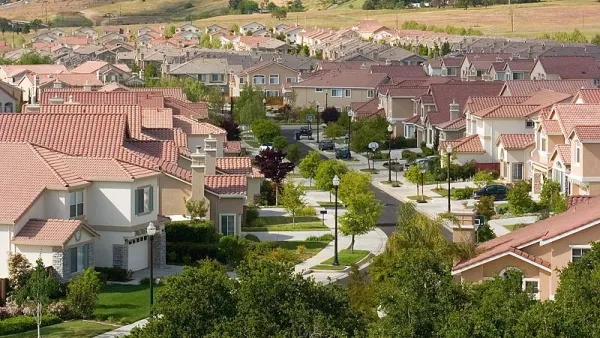
Much of the debate about housing shortages and rising housing costs focuses on single-family housing as the main culprit. But could it also be part of the solution?


Kate Wagner considers whether single-family homes really deserve all the blame they receive for the housing crisis in many American cities. Discussions about solutions focus on upzoning and increasing housing supply or instituting policies to ensure affordable housing.
"But the debate also raises larger questions about single-family homes: What is their value in this current political moment? And is it immoral for us to keep building them?" asks Wagner.
She argues that the diversity of single-family homes makes it difficult to understand them as one category, housing for one family or household. "Some single-family houses have history, but little economic value; some have economic value but little history," notes Wagner.
Wagner also believes that these homes are not solely the cause of crises like gentrification and climate change. "That many existing single-family homes could be densified by adding accessory dwelling units or by breaking them up into apartments makes it impossible to see single-family homes as either purely good or purely bad—or to ignore their potential to address some of the problems we face."
Read the full story: Should we still be building single-family homes?


How Cities Are Resisting State Efforts To Increase Density
Cities are attempting to wrest back local control over land use and zoning via some ingenious—and sometimes disingenuous—strategies.
More Evidence Upzoning Alone Won't Boost Housing
Experts caution that to encourage significant new housing production, other zoning reforms that reduce costs and streamline permitting should accompany increased density requirements.
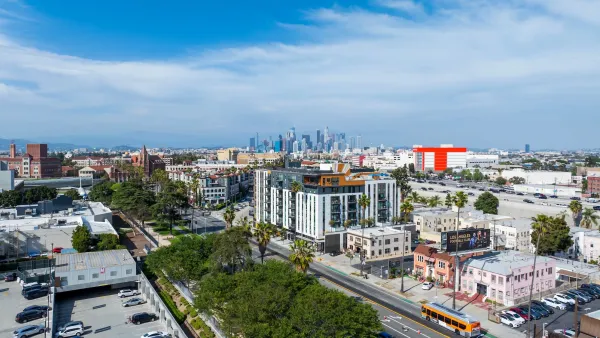
LA delays state housing mandate with 'low-rise ordinance'
The new ordinance allows the city to delay implementing SB 79, a state law requiring more density near transit.

Planetizen Federal Action Tracker
A weekly monitor of how Trump’s orders and actions are impacting planners and planning in America.

California plans to bury El Niño’s downpour
If the state plays its cards right, it may be able to store a billion acre-feet of El Niño’s water in aquifers.

Desperate measures: Advocates weigh draining Lake Powell to fill Colorado River
Draining the reservoir could reduce evaporation losses by a couple hundred thousand acre-feet.

How a Chicago-sized wind farm beat the odds and powered on
The project spanned five presidential administrations and a standoff with a U.S. military base.

MTA gives itself 30 days to transform pit into basketball court
The site has been under construction since 2022; the city originally estimated it would finish the court in 2024.

Non-stop party: Chicago voters weigh permanent festival grounds
A stable place for bleachers, stages and drainage may streamline the setup and teardown of large events.

FREE Course: Walkable City 1: Why Walkability?
After describing his path towards focusing on walkability as the essence of good planning, Jeff Speck marches through his five principal reasons for making more walkable places.
Reinventing Malls: Planning Alchemy—Turning Gray Fields Into Gold
The course focuses on the opportunities and imperatives that shape reinvention of mall sites.

City of Rosemead
Rutgers University, Edward J. Bloustein School of Planning and Public Policy
One Hundred Miles
Hunter College, City University of New York (CUNY)
The Architects Foundation
University of Cincinnati Online
City of Cambridge
Montrose County
The Pocatello Development Authority