New research is quantifying the environmental consequences of land use patterns and water diversions in Northern Utah.


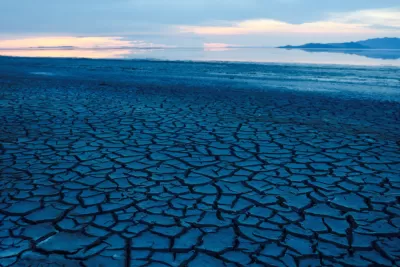
Brian Maffly shares news of new research led by Greg Carling, professor of Geology at Brigham Young University, quantifying the effects of a shrinking, drying Great Salt Lake.
Upwind from northern Utah’s urban centers is a network of lakebeds, dried-up remnants of a vast prehistoric inland sea that dominated the region when the climate was much wetter and cooler that it is today.
Now, as western Utah becomes even drier — from drought, water diversions and climate change — these playas have become a major source of dust settling on Wasatch Front cities and their mountain water sources, according to new research conducted by Brigham Young University geologists.
According to the study, 90 percent of the dust comes from the exposed beds of the Great Salk Lake, Sevier Lake, and other valleys. That dust, large particulate matter PM10, causes problems for snowpack and water supply in the Wasatch Front region. An emerging field of research is connecting land use practices and water diversions to the effects of dust on water supply. The picture that has emerged is "alarming," explains Maffly.
Read the full story: BYU study links shrinking Great Salt Lake, other vanishing water bodies to 90% of northern Utah’s dust

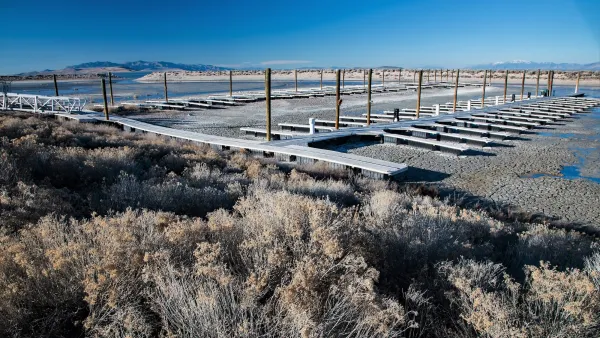
Dust From Exposed Great Salt Lake Bed Threatens Utah’s Air Quality
The lake ended 2025 with the third-lowest water level in a century.
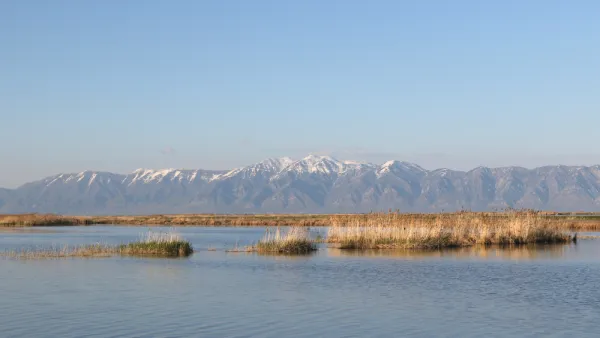
This Is What Really, Really Cheap Water Is Actually Costing Utah
The state's widespread practice of supplying unlimited untreated water to homes may be part of the reason it has to spend billions on a new pipeline and dam.
Shrinking Great Salt Lake Is a Ticking Time Bomb
Climate change and population growth are shrinking the Great Salt Lake. The environmental consequences are dire.

Planetizen Federal Action Tracker
A weekly monitor of how Trump’s orders and actions are impacting planners and planning in America.

California plans to bury El Niño’s downpour
If the state plays its cards right, it may be able to store a billion acre-feet of El Niño’s water in aquifers.

Desperate measures: Advocates weigh draining Lake Powell to fill Colorado River
Draining the reservoir could reduce evaporation losses by a couple hundred thousand acre-feet.

California city breaks ground on transit connector
The project includes three mobility hubs and a pedestrian bridge.

After public outcry, Massachusetts city releases housing development tracker
Cambridge’s tracker currently shows 250 housing projects in various stages of development.

40 years after approval, Chicago breaks ground on new park
The park honors Jean Baptiste Point du Sable, the city’s first permanent non-native settler.

FREE Course: Walkable City 1: Why Walkability?
After describing his path towards focusing on walkability as the essence of good planning, Jeff Speck marches through his five principal reasons for making more walkable places.
Reinventing Malls: Planning Alchemy—Turning Gray Fields Into Gold
The course focuses on the opportunities and imperatives that shape reinvention of mall sites.

City of Rosemead
Rutgers University, Edward J. Bloustein School of Planning and Public Policy
One Hundred Miles
Hunter College, City University of New York (CUNY)
The Architects Foundation
University of Cincinnati Online
City of Cambridge
Montrose County
The Pocatello Development Authority