The lake ended 2025 with the third-lowest water level in a century.


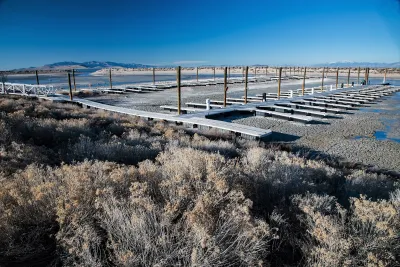
Utah’s Great Salt Lake ended 2025 with the third-lowest water level in a century, prompting concerns about dust from the exposed lakebed that can degrade air quality across the Wasatch Front.
As Nicholas Vincent explains in One Green Planet, the lake’s southern arm was at 4,191.1 feet at the end of December, and experts say it would take roughly 261 billion gallons of water to restore the lake.
Proposed solutions for reducing dust emissions include flooding exposed lakebed areas during cooler months, paying farmers to sell their water rights to the lake, and redirecting water from nearby basins. “Utah is also investing in dust monitoring and short-term mitigation projects to curb immediate risks.” According to an article in Deseret News, Utah is investing $150,000 in ongoing dust monitoring after an expert from the University of Utah noted that the state was “severely lacking” in monitoring infrastructure.
FULL STORY: Utah Faces Urgent Health Risks as Great Salt Lake Shrinks

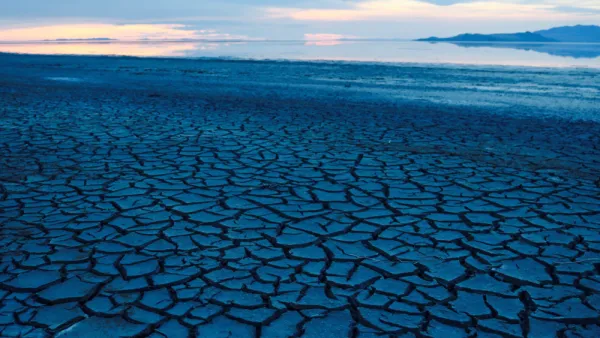
Great Salt Lake, Shrinking From Water Diversions for New Development, Spreads Dust Around Utah
New research is quantifying the environmental consequences of land use patterns and water diversions in Northern Utah.
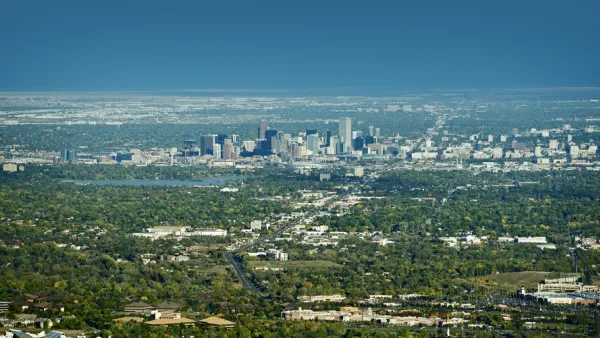
Denver Freeway Expansion Makes a Bad Situation Worse
The Interstate 70 expansion project is affecting air quality in surrounding neighborhoods, where chronic illness is prevalent and residents feel their health and safety have not been priorities.
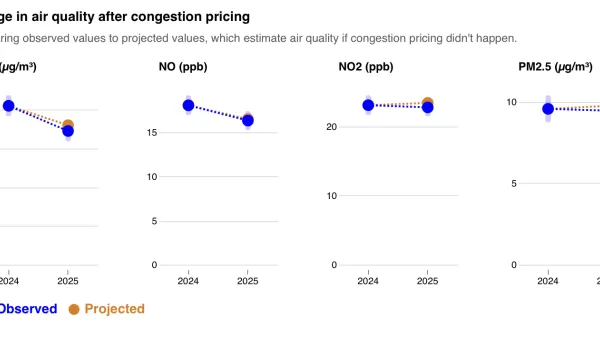
First study of NYC congestion zone’s air quality impact shows improvements
The study also examined air quality around freeways which experts worried would see increased traffic from people avoiding the tolls.

Planetizen Federal Action Tracker
A weekly monitor of how Trump’s orders and actions are impacting planners and planning in America.

The state-sanctioned urbicide of Austin
People don’t kill cities. Freeways do.

US to reduce Colorado River water deliveries to Mexico
A new Colorado Treaty amendment reduces Mexico’s Colorado River water allocation by 250,000 acre feet.

5 New England states march closer to 800 megawatt wind energy project
Securing federal approval for the project may be complicated under the Trump administration, which has historically been hostile towards domestic wind power.

Baltimore to break ground on $50 million Transit Priority Project
The project will bring faster bus trips, safer streets and better bike connections to Baltimore.

Airbnb launches $250 million 'last-dollar financing' housing accelerator, makes first investment in Austin
The company will put $6.4 million towards affordable housing development in Texas’ capital.

FREE Course: Walkable City 1: Why Walkability?
After describing his path towards focusing on walkability as the essence of good planning, Jeff Speck marches through his five principal reasons for making more walkable places.
Reinventing Malls: Planning Alchemy—Turning Gray Fields Into Gold
The course focuses on the opportunities and imperatives that shape reinvention of mall sites.

Eagle County Government
Harvard University Graduate School of Design
Nashville Planning Department
The Architects Foundation
University of Cincinnati Online
The Pocatello Development Authority
The Urban Renewal Agency of the City of Pocatello
Journal of the American Planning Association