A new report identifies looming challenges with the water supply enabling growth in Central Arizona suburbs.


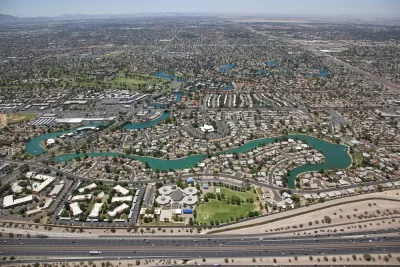
Ian James reports:
A set of water rules that has fueled rapid growth in Arizona’s suburbs is riddled with weaknesses, according to a new report by researchers at Arizona State University, who argue the system needs to be overhauled to protect homeowners from rising costs and to ensure sufficient water supplies for the future.
Kathy Ferris and Sarah Porter of the Kyl Center for Water Policy wrote the report, focusing on the role of Central Arizona Groundwater Replenishment District (CAGRD) in enabling new development in desert lands in the state since a 1993 law enabled groundwater replenishment to trigger new development, according to James.
CAGRD has grown beyond expectations, and has "begun to struggle to obtain additional water supplies from elsewhere in the state to replenish groundwater." Homeowners have begun to bear the brunt of increasing costs associated with replenishing the groundwater.
The report makes the case that the 1993 law that governs the actions of CAGRD should be rewritten to ensure more sustainable water supply practices.
FULL STORY: As developers built homes, Arizona groundwater levels dropped. It can't continue, report says.

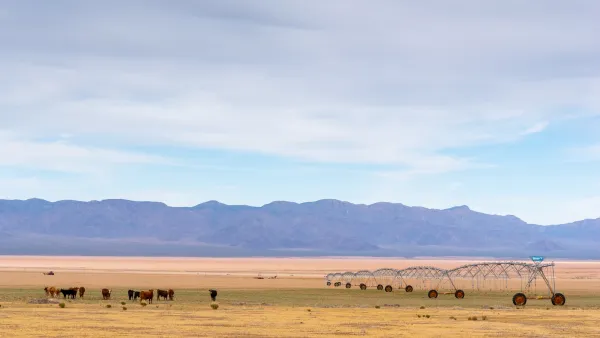
Arizona Tightens Groundwater Restrictions to Rein in Agribusinesses
The state is creating an ‘active management area’ in the western part of the state, where agribusinesses including a Saudi alfalfa exporter have practically free rein over water supplies.
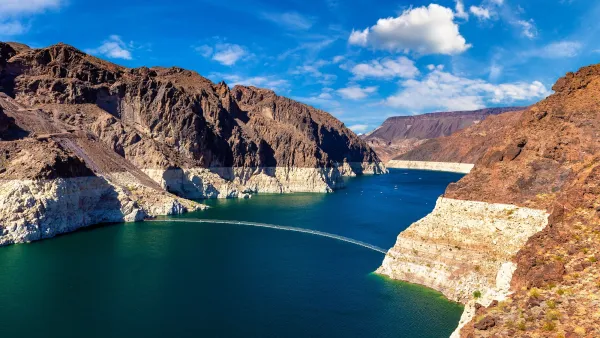
Deadline Nears for Colorado River Water Sharing Agreement
Water officials from the seven Colorado River Basin states are still at odds over how to manage dwindling water resources as current regulations are set to expire in February.
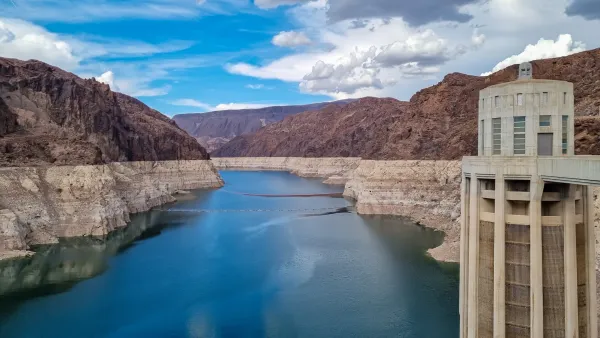
Shrinking Colorado River Aquifers Make up 65% of the Basin’s Water Loss
Satellite data reveals that the Colorado River’s groundwater has decreased dramatically since the start of the century.

Planetizen Federal Action Tracker
A weekly monitor of how Trump’s orders and actions are impacting planners and planning in America.

The state-sanctioned urbicide of Austin
People don’t kill cities. Freeways do.

US to reduce Colorado River water deliveries to Mexico
A new Colorado Treaty amendment reduces Mexico’s Colorado River water allocation by 250,000 acre feet.

Brightline West’s future may rely on $6 billion federal loan
The company has until Nov. 2 to make a $400 million equity investment into its proposed high-speed rail line.

LA Metro’s ultimatum: no extra buses for LA28 if federal funding isn’t imminently secured
If Metro does not provide additional buses, LA28 organizers will have to find a new way to manage Olympic traffic. LA28’s budget does not include a line item for transit.

Colorado’s Largest Data Center Could Rise Next to Homes — Without a Public Hearing
The proposed campus would consume 11 times the power of Denver International Airport; as it has across the country, opposition mounts.

FREE Course: Walkable City 1: Why Walkability?
After describing his path towards focusing on walkability as the essence of good planning, Jeff Speck marches through his five principal reasons for making more walkable places.
Reinventing Malls: Planning Alchemy—Turning Gray Fields Into Gold
The course focuses on the opportunities and imperatives that shape reinvention of mall sites.

Eagle County Government
Harvard University Graduate School of Design
Nashville Planning Department
The Architects Foundation
University of Cincinnati Online
The Pocatello Development Authority
The Urban Renewal Agency of the City of Pocatello
Journal of the American Planning Association