Low-density suburbs are on their way out, and the suburbs of the future will better address the present-day needs of the people living in them.


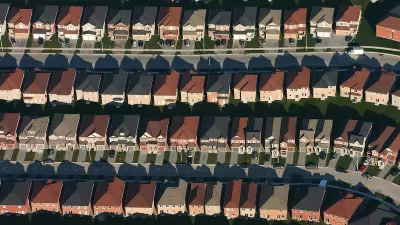
Duo Dickinson considers suburbia’s past and the changes on the horizon. "Life in suburbia requires a car for almost every adult residing in each home, who drives to work, drives to shop, and drives to find entertainment or meet up with friends. And yet this is seen as the 'norm' by most Americans."
The growth of suburbia was fueled largely by the expansion of the highway system and automobile use, notes Dickinson. But now low-density suburban developments are not accommodating more recent social and cultural shifts and the increasing need for affordable housing.
Density is the new norm, says Dickinson, where land use and development are more sustainable, transit is accessible, and people can afford to buy homes. "The old suburban zoning almost willfully separated 'home' from every other aspect of life: working, shopping, entertainment. It is an anachronism. The future of suburbia is shifting to a place that might end up returning us to the 19th century model: fewer cars, more buildings and people per acre."
Read the full story: The Invented Reality of Suburbia Is Not the Norm

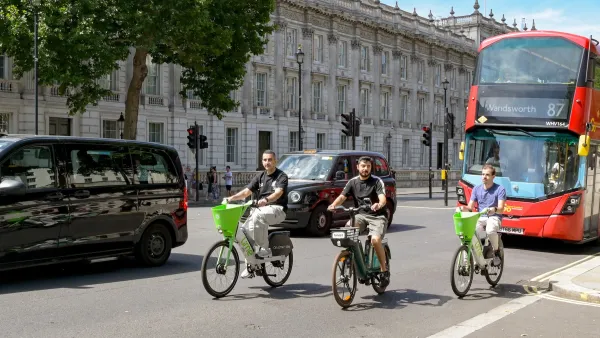
Bike use in London grew by 43% since 2019, but car use remains roughly the same
The city's efforts to reduce car use have stalled despite ambitious programs like congestion pricing and low-traffic neighborhoods.
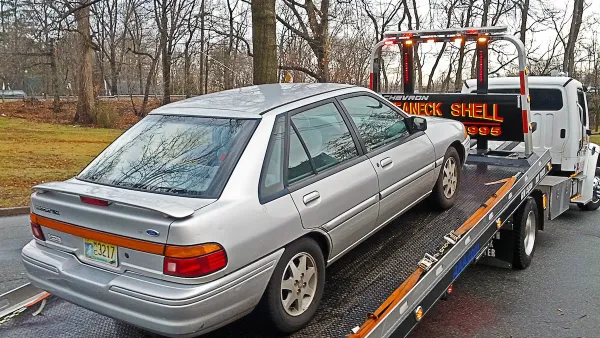
Car Loan Defaults Have Spiked 50%. With Repossession Rates Rising, How Will Americans Get to Work?
In 2024, 1.7 million cars were repossessed in the United States, the highest number since 2009.
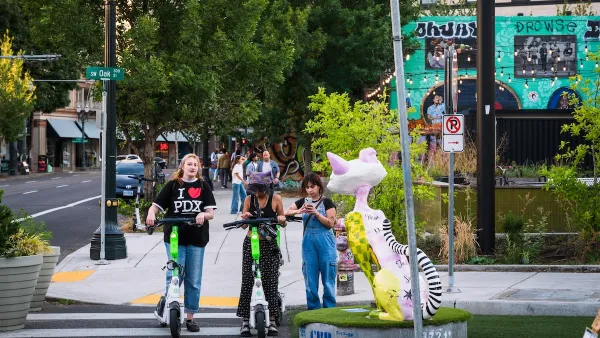
Study: Nearly Half of Portland TOD Residents Commute by Transit
People living in transit-oriented developments are more likely to ditch the car and opt for transit or walking, new research shows.

Planetizen Federal Action Tracker
A weekly monitor of how Trump’s orders and actions are impacting planners and planning in America.

California plans to bury El Niño’s downpour
If the state plays its cards right, it may be able to store a billion acre-feet of El Niño’s water in aquifers.

Chicago breaks ground on $3 billion megadevelopment
The new neighborhood, titled Foundry Park, will one day host 3,700 residences.

Satanic place names
From streams and lakes to valleys and canyons, I mapped more than 1,000 places named after the Devil.

California High-Speed Rail Authority CEO resigns after $600,000 scandal
Under Ian Choudri, the authority used taxpayer dollars to fund first class flights and trips to nightclubs.

Want to study the Missouri River? Soon, you may need unanimous approval from 10 states
Legislation would require 10 governors’ permission to study or build projects moving water outside the basin.

FREE Course: Walkable City 1: Why Walkability?
After describing his path towards focusing on walkability as the essence of good planning, Jeff Speck marches through his five principal reasons for making more walkable places.
Reinventing Malls: Planning Alchemy—Turning Gray Fields Into Gold
The course focuses on the opportunities and imperatives that shape reinvention of mall sites.


City of Rosemead
Rutgers University, Edward J. Bloustein School of Planning and Public Policy
One Hundred Miles
Hunter College, City University of New York (CUNY)
The Architects Foundation
University of Cincinnati Online
City of Cambridge
Montrose County
The Pocatello Development Authority