A recently published report finds more evidence to elevate heat as a matter of environmental justice.


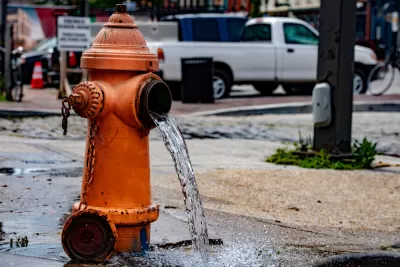
Meg Anderson and Sean McMinn report on the connection between urban heat islands and neighborhoods with high proportions of low-income people of color.
The article starts with the example of Baltimore, where the franklin Square neighborhood is "hotter than about two-thirds of the other neighborhoods in Baltimore — about 6 degrees hotter than the city's coolest neighborhood."
"It's also in one of the city's poorest communities, with more than one-third of residents living in poverty," according to Anderson and McMinn.
The article is sharing news of a recent investigation by NPR and the University of Maryland's Howard Center for Investigative Journalism.
"In dozens of major U.S. cities, low-income neighborhoods are more likely to be hotter than their wealthier counterparts," according to the article. "Those exposed to that extra heat are often a city's most vulnerable: the poorest and, our data show, disproportionately people of color."
The investigation echoes a report from earlier this year that connects shade with environmental justice, exemplified in that case by the city of Los Angeles. In the case of Baltimore, Anderson and McMinn make it clear that the city is not a special case: "NPR analyzed 97 of the most populous U.S. cities using the median household income from U.S. Census Bureau data and thermal satellite images from NASA and the U.S. Geological Survey. In more than three-quarters of those cities, we found that where it's hotter, it also tends to be poorer. And at least 69 had an even stronger relationship than Baltimore, the first city we mapped."
Read the full story: As Rising Heat Bakes U.S. Cities, The Poor Often Feel It Most
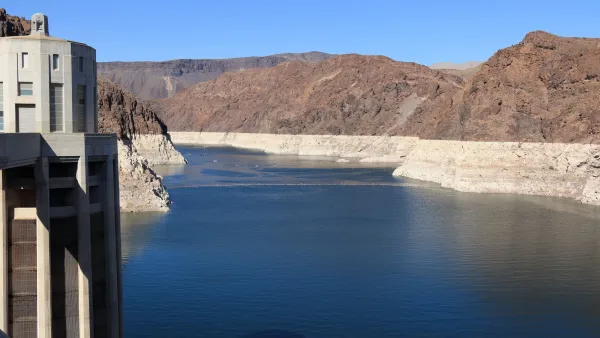
How Extreme Heat Threatens the Electrical Grid
Higher demand for electricity and lower capacity for production due to more intense heat waves are straining the power grid and causing concern for future energy production.
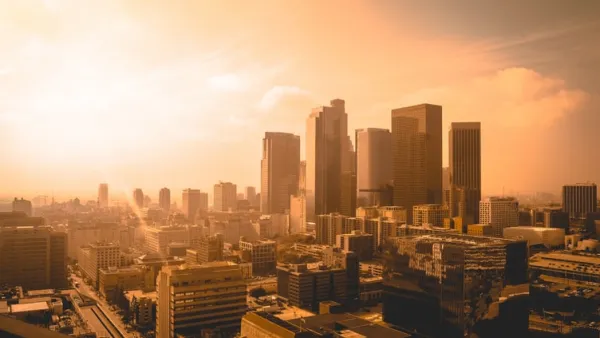
New Study Ranks the Urban Heat Island Effect in U.S. Cities
A new analysis by Climate Central evaluates the intensity of urban heat islands in cities around the United States—New Orleans tops the list.
Arizona had its hottest spring in 131 years
Average March temperatures across the state were 12.5 degrees above normal.

Planetizen Federal Action Tracker
A weekly monitor of how Trump’s orders and actions are impacting planners and planning in America.

California plans to bury El Niño’s downpour
If the state plays its cards right, it may be able to store a billion acre-feet of El Niño’s water in aquifers.

Desperate measures: Advocates weigh draining Lake Powell to fill Colorado River
Draining the reservoir could reduce evaporation losses by a couple hundred thousand acre-feet.

US buildings threatened, destroyed by fires set to triple by 2060
Researchers found a high fire risk for socioeconomically vulnerable neighborhoods in the American West.

LA residents may be allowed to paint their own crosswalks
Councilwoman Katy Yaroslavsky put out a motion instructing the Los Angeles Department of Public Transportation to study the feasibility of allowing volunteers to paint crosswalks.

Dallas moves to overhaul its zoning code
The city's zoning reform will allow more multi-family and mixed-use developments.

FREE Course: Walkable City 1: Why Walkability?
After describing his path towards focusing on walkability as the essence of good planning, Jeff Speck marches through his five principal reasons for making more walkable places.
Reinventing Malls: Planning Alchemy—Turning Gray Fields Into Gold
The course focuses on the opportunities and imperatives that shape reinvention of mall sites.

City of Rosemead
Rutgers University, Edward J. Bloustein School of Planning and Public Policy
One Hundred Miles
Hunter College, City University of New York (CUNY)
The Architects Foundation
University of Cincinnati Online
City of Cambridge
Montrose County
The Pocatello Development Authority