Skateboarding is becoming a legitimate part of the urban landscape by revitalizing public spaces and engaging young people and the broader community.


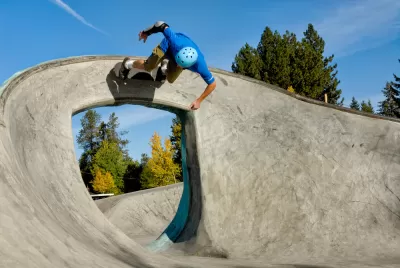
In many cities around the world, skateboarding was considered an activity on the fringes that should be prevented or policed. "But today, a growing body of evidence shows that skateboarding can help attract investment, reclaim public spaces and create resilient communities," writes Chris Lawton.
Skateboarding has empowered youth through after-school programs and partnership with municipalities to design and build infrastructure. In Tempere, Finland, skaters worked with the local government on a series of skatepark projects that also provided employment opportunities. "The city’s tourism agency now uses skateboarding in its marketing. Skater and academic Mikko Kyrönviita sees this as a wider example of 'DIY placemaking' – where local young people help shape the way the city is marketed to visitors, and how urban space is designed and managed," writes Lawton.
Proponents also argue that skateboarding helps foster more diverse, mixed-use cities. Skateboarding is an asset to cities that energizes public spaces and engages communities through planning and use, according to Lawson. "Michael Barker, a New York skater and architect, advocates soft-edged spaces ‘seamlessly integrated into the life of a city’ (as opposed to the ‘hard edges’ of traditional skateparks), to help address the loss of the urban commons."
FULL STORY: Skateboarding’s DIY ethos is kick-starting a new wave of urban regeneration

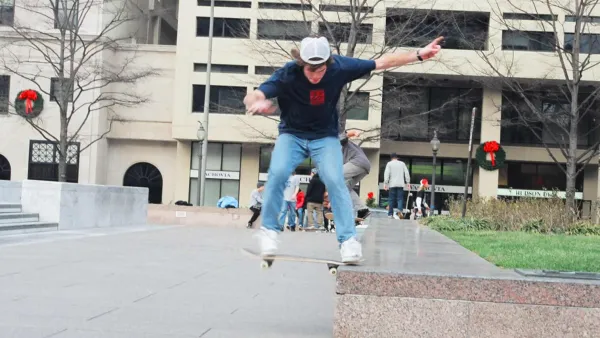
Trump's DC 'beautification' efforts threaten historic skate spots
The city is taking more aggressive measures to prevent skateboarders from using unsanctioned public spaces.
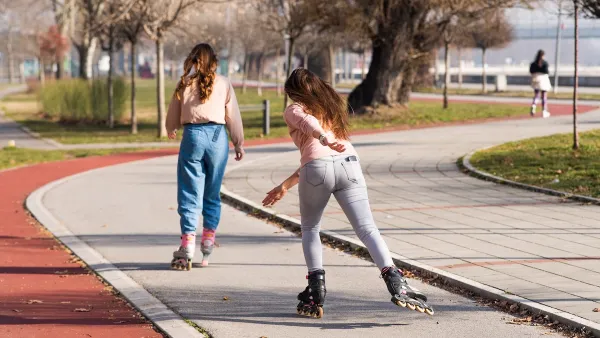
How Public Spaces Exclude Teen Girls
Adolescent girls face unique challenges and concerns when navigating public spaces. We can design cities with their needs in mind.
Can Urban Design Truly Impact Loneliness?
Some theorists want to design cities to reduce loneliness and isolation. Others want to accommodate them.

Planetizen Federal Action Tracker
A weekly monitor of how Trump’s orders and actions are impacting planners and planning in America.

The state-sanctioned urbicide of Austin
People don’t kill cities. Freeways do.

US to reduce Colorado River water deliveries to Mexico
A new Colorado Treaty amendment reduces Mexico’s Colorado River water allocation by 250,000 acre feet.

5 New England states march closer to 800 megawatt wind energy project
Securing federal approval for the project may be complicated under the Trump administration, which has historically been hostile towards domestic wind power.

Baltimore to break ground on $50 million Transit Priority Project
The project will bring faster bus trips, safer streets and better bike connections to Baltimore.

Airbnb launches $250 million 'last-dollar financing' housing accelerator, makes first investment in Austin
The company will put $6.4 million towards affordable housing development in Texas’ capital.

FREE Course: Walkable City 1: Why Walkability?
After describing his path towards focusing on walkability as the essence of good planning, Jeff Speck marches through his five principal reasons for making more walkable places.
Reinventing Malls: Planning Alchemy—Turning Gray Fields Into Gold
The course focuses on the opportunities and imperatives that shape reinvention of mall sites.

Eagle County Government
Harvard University Graduate School of Design
Nashville Planning Department
The Architects Foundation
University of Cincinnati Online
The Pocatello Development Authority
The Urban Renewal Agency of the City of Pocatello
Journal of the American Planning Association