The city is expanding outreach to homeless people in order to move them off the subway and steer them toward housing and social services.


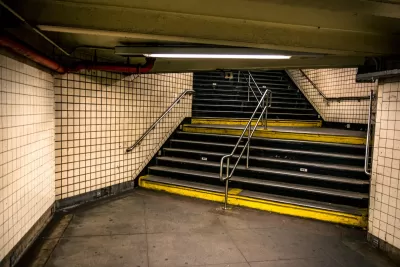
Katie Pyzyk reports that New York City plans to increase outreach to homeless people on the subway through the Homeless Outreach & Mobile Engagement Street Action Teams (HOME-STAT) initiative.
The HOME-STAT activities will include development of an interagency command center, an increase in outreach efforts, and a shared closed-circuit television feed to help teams with monitoring of the subway network.
"The initiatives are designed to get shelter and other supportive services to individuals experiencing homelessness, even if they have repeatedly refused those services in the past. The city's statements about the homeless solutions repeatedly reference efforts to get homeless people to 'accept services,'" says Pyzyk.
The New York Police Department also launched a Subway Diversion Project in June, an initiative that seeks to steer homeless people to outreach services and support programs.
FULL STORY: BRIEF NYC steps up outreach to homeless using subway as shelter

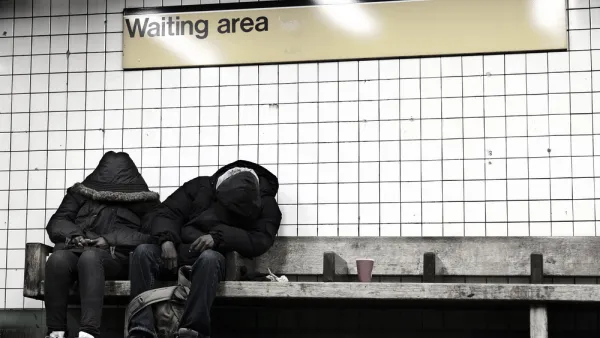
A New—and Hopefully Better—Way to Deal with the Homeless Crisis on the N.Y.C. Subway
More homeless people are using the subway as temporary housing, and the delays and disruptions have increased as well. A new city program will replace fines with outreach to provide better access to social services.
How "Train Nerds" Saved NYC's Subway from Sandy
It took an effort that was both well-planned and ad-hoc to save NYC's backbone from Hurricane Sandy, and have the city's transit system back up and running again soon after the storm. Robert Sullivan examines that effort and what happens next time.
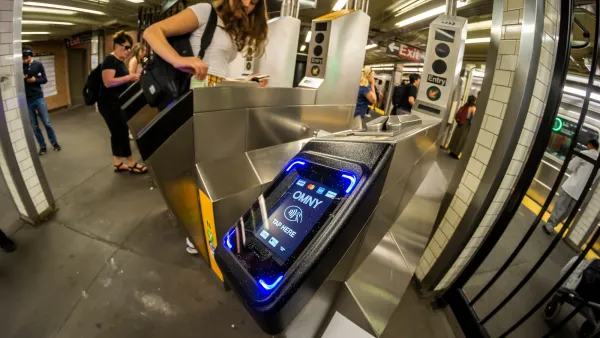
Popular transit payment system linked to Palantir could give ICE access to rider data
The tap-to-pay system is being used widely in transit systems including New York City, Boston and Chicago.

Planetizen Federal Action Tracker
A weekly monitor of how Trump’s orders and actions are impacting planners and planning in America.

The state-sanctioned urbicide of Austin
People don’t kill cities. Freeways do.

US to reduce Colorado River water deliveries to Mexico
A new Colorado Treaty amendment reduces Mexico’s Colorado River water allocation by 250,000 acre feet.

5 New England states march closer to 800 megawatt wind energy project
Securing federal approval for the project may be complicated under the Trump administration, which has historically been hostile towards domestic wind power.

Baltimore to break ground on $50 million Transit Priority Project
The project will bring faster bus trips, safer streets and better bike connections to Baltimore.

Airbnb launches $250 million 'last-dollar financing' housing accelerator, makes first investment in Austin
The company will put $6.4 million towards affordable housing development in Texas’ capital.

FREE Course: Walkable City 1: Why Walkability?
After describing his path towards focusing on walkability as the essence of good planning, Jeff Speck marches through his five principal reasons for making more walkable places.
Reinventing Malls: Planning Alchemy—Turning Gray Fields Into Gold
The course focuses on the opportunities and imperatives that shape reinvention of mall sites.

Eagle County Government
Harvard University Graduate School of Design
Nashville Planning Department
The Architects Foundation
University of Cincinnati Online
The Pocatello Development Authority
The Urban Renewal Agency of the City of Pocatello
Journal of the American Planning Association