Denmark's capital is a model city in terms of biking, but the reasons that bikes rule go beyond political leadership and robust infrastructure.


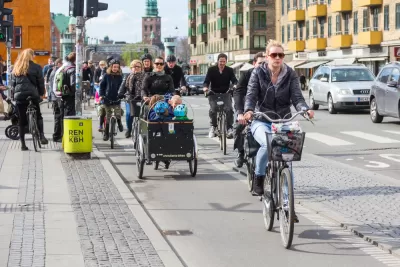
Joe Cortright explores the factors that have put Copenhagen at the forefront of cycling. Strong political support for biking and huge investments in infrastructure are significant, but policies related to driving and housing have also helped make biking the mode of choice.
Cortright points out that Denmark has a high gas tax as well as an excise tax of 150 percent on most new vehicles. "Making cars and driving more expensive creates powerful incentives for people to live in places where there are good alternatives to car travel (including transit, walking and cycling), and to utilize these modes regularly."
In addition, Copenhagen has different housing and home ownership patterns. Almost two-thirds of housing is multifamily, and the nation also supports a tenant-governed system of social housing. The resulting density makes cycling more feasible and attractive, says Cortright.
FULL STORY: Copenhagen: More than bike lanes

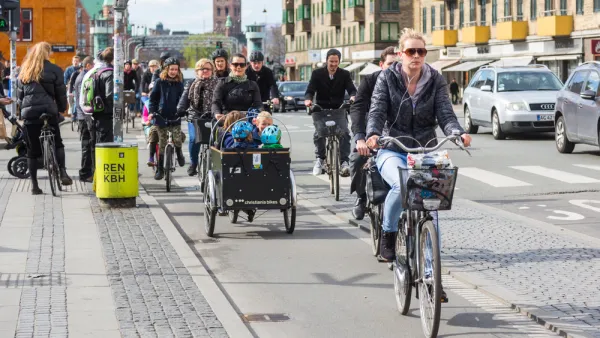
Copenhagen Update: On-Street Auto Parking Replaced by Bike Parking
Copenhagen may have already met its bicycling goal of 50 percent of modal share for commuting, but it needs to improve the share for all trips. With less funding available, the city is pursuing low cost strategies, such as auto parking removal.
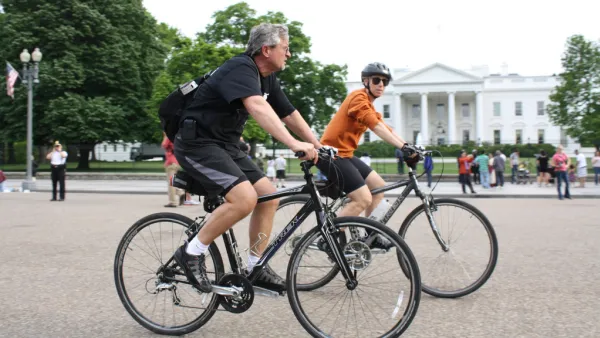
E-Bikes for an Aging Population
The bikes offer a transportation option for older people where other modes fall short.
Dispatch From Denmark
Executive director of the SF Bike Coalition, Leah Shahum on sabbatical in Europe, reports on a bicycle conference that she attended in Copenhagen as well as her impressions of bicycle culture in the Denmark capital in her first Streetsblog dispatch.

Planetizen Federal Action Tracker
A weekly monitor of how Trump’s orders and actions are impacting planners and planning in America.

The state-sanctioned urbicide of Austin
People don’t kill cities. Freeways do.

US to reduce Colorado River water deliveries to Mexico
A new Colorado Treaty amendment reduces Mexico’s Colorado River water allocation by 250,000 acre feet.

Mamdani overhauls NYC's Vision Zero plan with 100 new policy goals
The overhaul aims to reduce traffic deaths and make streets safer for pedestrians, cyclists and drivers through lower speed limits, new safety infrastructure and more.

Amtrak not solely to blame for New Jersey commuter rail's unreliability, report finds
A new study from the Garden State Initiative found that NJ Transit’s budget grew 20% across a 4 year period, but reliability declined significantly over the same period.

EPA erases limits on planet-warming pollution from power plants
Under Monday’s plan, power plants would still have some limits on how much mercury, arsenic and other contaminants they can emit.

FREE Course: Walkable City 1: Why Walkability?
After describing his path towards focusing on walkability as the essence of good planning, Jeff Speck marches through his five principal reasons for making more walkable places.
Reinventing Malls: Planning Alchemy—Turning Gray Fields Into Gold
The course focuses on the opportunities and imperatives that shape reinvention of mall sites.

Eagle County Government
Harvard University Graduate School of Design
Nashville Planning Department
The Architects Foundation
University of Cincinnati Online
The Pocatello Development Authority
The Urban Renewal Agency of the City of Pocatello
Journal of the American Planning Association