St. Louis’ Mosaic Project offers an example of how U.S. cities can welcome foreign talent and benefit from their skills.



How do you connect a city’s resources to the new talented people looking to locate or grow their businesses? The Brookings Institute has looked at a few different cities trying to do just that.
They started with the example of the Mosaic Project, a Saint Louis an initiative which engages in a number of different projects to grow and start businesses, including mentoring programs, support groups, and resources specifically aimed at helping immigrant talent. "The Mosaic Project was initially sparked by a concern that, relative to peer cities, St. Louis had a lower share of the skilled foreign talent that can fuel innovation and make a region attractive to global firms," Rachel Barker, Marek Gootman, and Max Bouchet report for Brookings.
Read the full story: Welcoming communities make for globally competitive city-regions

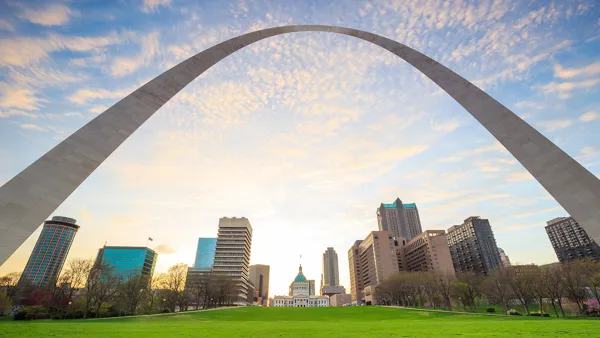
St. Louis Leading Large Metros in Immigration
Of the 20 largest metropolitan areas in the country, St. Louis had the largest percentage increase in foreign-born immigrants between 2014 and 2015.
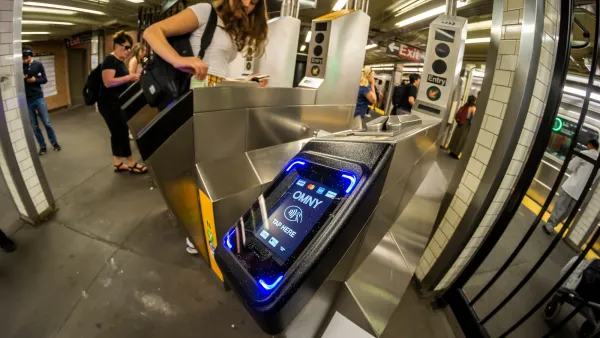
Popular transit payment system linked to Palantir could give ICE access to rider data
The tap-to-pay system is being used widely in transit systems including New York City, Boston and Chicago.
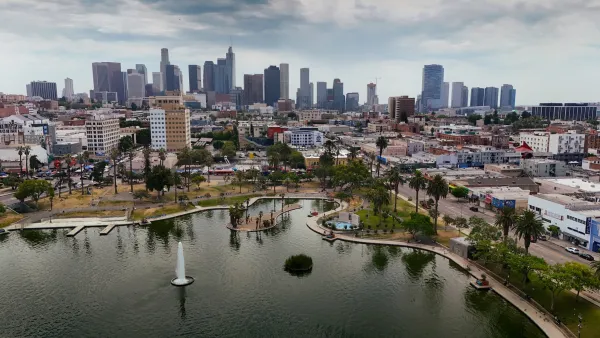
World Cup renews community spirit in LA's MacArthur Park
Soccer watch parties are bringing life back to the park that was recently the target of immigration raids and police actions.

Planetizen Federal Action Tracker
A weekly monitor of how Trump’s orders and actions are impacting planners and planning in America.

Amtrak, CN end decades-long dispute with eight-year agreement
The new operating agreement establishes an updated framework for the companies to work together, including processes to resolve disputes.

Judges permit Denver to divert 77,000 acre feet from the Colorado River for reservoir expansion
Overuse and climate change have caused the Colorado River’s water levels to plummet.

Philadelphia to invest $2 billion into upgrading city airports as PHL places last in customer satisfaction
Modernizations to Philadelphia's airports will include baggage system upgrades and a new automated parking garage guidance system.

The LA housing policies making developers turn away from the city
Despite LA’s housing shortage, developers say the city’s "mansion-tax" and pandemic-era policies make it an unappealing place to build housing.

New density bill would require 7 California cities to establish regional transit hubs
The bill would also require major cities in California to permit high-rise residential buildings.

FREE Course: Walkable City 1: Why Walkability?
After describing his path towards focusing on walkability as the essence of good planning, Jeff Speck marches through his five principal reasons for making more walkable places.
Reinventing Malls: Planning Alchemy—Turning Gray Fields Into Gold
The course focuses on the opportunities and imperatives that shape reinvention of mall sites.

City of Wisconsin Rapids
Harvard University Graduate School of Design
KFH Group Inc.
The Architects Foundation
University of Cincinnati Online
The Pocatello Development Authority
The Urban Renewal Agency of the City of Pocatello