In California, recovery after wildfires means many upfront investments by communities and the state.


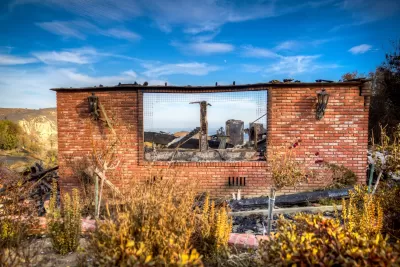
California residents and communities are finding that post-wildfire costs are astronomical, report Thomas Fuller and Ian Penn. Some municipalities are having to shell out hundreds of thousands of dollars for backup generators in anticipation of power shutoffs during high-risk periods. In addition, insurance rates have skyrocketed in fire-prone areas, and insurers are not renewing some policies as well.
"Pacific Gas & Electric, which already charges among the highest electricity rates in the country, is requesting that regulators approve an additional charge to customers of $2 billion over the next three years to help pay for wildfire safety improvements and other costs," write Fuller and Penn.
The state is also shoring up for the disasters to come. Earlier this month, Governor Gavin Newsom signed a bill for a $21 billion wildfire fund to cover future liabilities. "Made worse by climate change, wildfires are adding a mounting financial burden in California, a state where taxes are already high and housing costs exorbitant," note Fuller and Penn.
FULL STORY: California, Wary of More Wildfires, Is Paying for Them Already

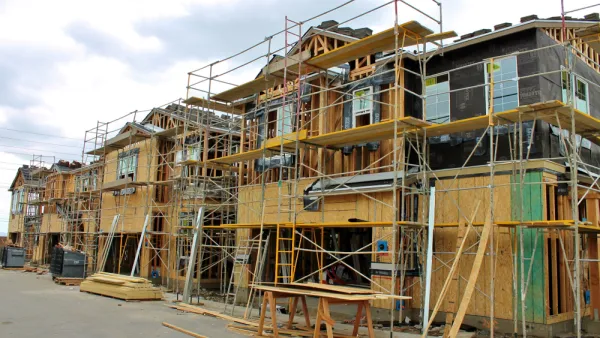
California Governor's Budget Supports Infill Development
Governor Newsom's new budget proposes incentives for developers to build housing in existing urban areas away from fire-prone zones to reduce fire risk and add to the state's insufficient housing stock.
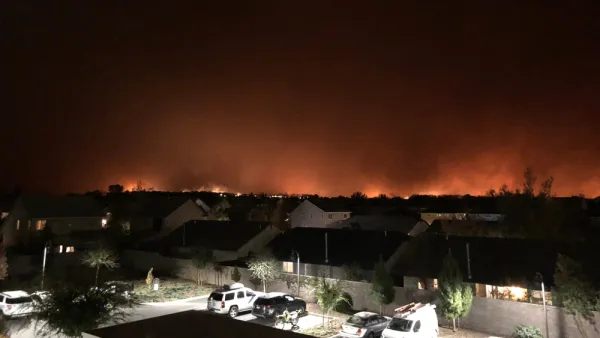
Paradise Was Prepared for the Camp Fire, Report Says. It Wasn't Enough.
Sobering findings from a thorough examination of the causes of the 2018 Camp Fire.
Poll: The Public Supports Development Limits in California's Wildfire Areas
An idea that is gaining support with the public as the state of California suffers through catastrophic fire season after catastrophic fire season is still a deeply difficult political proposition.

Planetizen Federal Action Tracker
A weekly monitor of how Trump’s orders and actions are impacting planners and planning in America.

The state-sanctioned urbicide of Austin
People don’t kill cities. Freeways do.

US to reduce Colorado River water deliveries to Mexico
A new Colorado Treaty amendment reduces Mexico’s Colorado River water allocation by 250,000 acre feet.

Mamdani overhauls NYC's Vision Zero plan with 100 new policy goals
The overhaul aims to reduce traffic deaths and make streets safer for pedestrians, cyclists and drivers through lower speed limits, new safety infrastructure and more.

Amtrak not solely to blame for New Jersey commuter rail's unreliability, report finds
A new study from the Garden State Initiative found that NJ Transit’s budget grew 20% across a 4 year period, but reliability declined significantly over the same period.

EPA erases limits on planet-warming pollution from power plants
Under Monday’s plan, power plants would still have some limits on how much mercury, arsenic and other contaminants they can emit.

FREE Course: Walkable City 1: Why Walkability?
After describing his path towards focusing on walkability as the essence of good planning, Jeff Speck marches through his five principal reasons for making more walkable places.
Reinventing Malls: Planning Alchemy—Turning Gray Fields Into Gold
The course focuses on the opportunities and imperatives that shape reinvention of mall sites.

Eagle County Government
Harvard University Graduate School of Design
Nashville Planning Department
The Architects Foundation
University of Cincinnati Online
The Pocatello Development Authority
The Urban Renewal Agency of the City of Pocatello
Journal of the American Planning Association