Sprawl might relieve the housing crisis, but it would also exacerbate the climate crisis. Tough choices will be necessary in regions like San Diego, where the question of where to accommodate growth is very much in question.


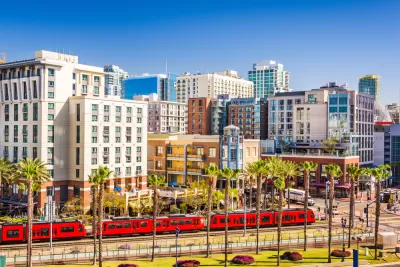
Joshua Emerson Smith locates the intersection of the competing dynamics of dual crises, of climate and housing, in the region of San Diego:
The San Diego region is on the front lines of a statewide push to abandon suburban development in favor of building denser urban communities — a vision many California leaders have called for to curb greenhouse gases from cars and trucks.
Forcing existing neighborhoods, however, to shoulder increasingly more development is proving expensive and slow at a time when San Diego and many other regions are suffering a severe lack of affordable housing.
Some policy makers in the San Diego region want to "[widen] highways and [build] large master-planned communities far from urban job centers," according to Smith, as a response to the ongoing housing crisis in San Diego. Some 10,000 units of greenfield development on the periphery of the region are currently under consideration for approval. Local politicians around the region are pushing for projects to state routes 78 and 56 to relieve congestion and accommodate growth.
Environmental grounds like the Sierra Club are pushing back on sprawl, according to Smith, while the regional planning agency that goes by the acronym SANDAG is having trouble convincing local officials to support an urban and transit oriented vision of growth for the region. An exception can be found with San Diego Mayor Kevin Falcouner, who has spearheaded and supported a series of pro-development reforms in the city, including a law approved in March 2019 that ends parking minimums for all future developments in the city.
The article includes soundbites and opinions on the development vision of the future for the region, and proposed solutions to the housing and climate crises, from politicians and advocacy organizations on all sides of the issues.
FULL STORY: How the fight against climate change is exacerbating San Diego’s affordable housing crisis


San Diego Regional Transportation Plan Shifts Away From Big Projects to Focus on Improving Existing Infrastructure
SANDAG’s 2025 Regional Plan scales down plans for new rail lines in favor of expanding rapid bus service.

San Diego High-Speed Rail Plan Counts on Future Density
Despite slowing population growth statewide, officials believe the region will "grow into" the new rail system if cities promote dense development around transit stations.
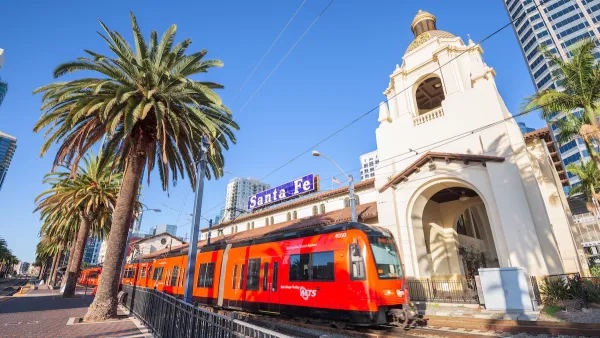
San Diego Region Developing Long-Range Transportation Plan
The new plan, set to take effect in 2025, accounts for changes in mobility patterns brought on by remote work.

The state-sanctioned urbicide of Austin
People don’t kill cities. Freeways do.

US to reduce Colorado River water deliveries to Mexico
A new Colorado Treaty amendment reduces Mexico’s Colorado River water allocation by 250,000 acre feet.

New Jersey’s second-largest city bans standalone data centers
Jersey City will continue to allow co-location facilities, such as those meant for research institutions that store their own data.

Amtrak not solely to blame for New Jersey commuter rail's unreliability, report finds
A new study from the Garden State Initiative found that NJ Transit’s budget grew 20% across a 4 year period, but reliability declined significantly over the same period.

EPA erases limits on planet-warming pollution from power plants
Under Monday’s plan, power plants would still have some limits on how much mercury, arsenic and other contaminants they can emit.

Phoenix announces new on-demand transit service, more frequent RAPID buses
Both new services will launch in October, and are part of Phoenix's Project Effective Access Solutions for Easing Congestion.

FREE Course: Walkable City 1: Why Walkability?
After describing his path towards focusing on walkability as the essence of good planning, Jeff Speck marches through his five principal reasons for making more walkable places.
Reinventing Malls: Planning Alchemy—Turning Gray Fields Into Gold
The course focuses on the opportunities and imperatives that shape reinvention of mall sites.

Eagle County Government
Harvard University Graduate School of Design
Nashville Planning Department
The Architects Foundation
University of Cincinnati Online
The Pocatello Development Authority
The Urban Renewal Agency of the City of Pocatello
Journal of the American Planning Association