Those hoping for resolution of a major controversy impacting the 2020 Census, and all of the governance and policy decisions that depend on it, will have to wait.


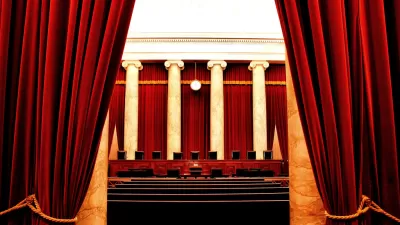
"In a setback for the Trump administration, the Supreme Court on Thursday sent back to a lower court a case on whether the census should contain a citizenship question, leaving in doubt whether the question would be on the 2020 census," reports Adam Liptak.
"Chief Justice John G. Roberts Jr., writing for the majority, said the explanation offered by the Trump administration for adding the question — asking whether a person is a citizen — was inadequate. But he left open the possibility that it could provide an adequate answer," according to Liptak.
As noted by Liptak, the "practical implication" of the decision in the United States Department of Commerce v. New York must still be determined. Census forms will have to be printed soon, so the Commerce Department, which oversees the Census Bureau, will have to make the case for the citizenship question quickly. Or it could just ignore the Supreme Court.
Update: The President of the United States has suggested delaying the Census as a reaction to the Supreme Court decision.
Seems totally ridiculous that our government, and indeed Country, cannot ask a basic question of Citizenship in a very expensive, detailed and important Census, in this case for 2020. I have asked the lawyers if they can delay the Census, no matter how long, until the.....
— Donald J. Trump (@realDonaldTrump) June 27, 2019
FULL STORY: Supreme Court Leaves Census Question on Citizenship in Doubt


Updated: Census Citizenship Question Officially Cancelled
The U.S. Department of Commerce was not successful in achieving a highly consequential change to the 2020 Census form, after the Supreme Court ruled it needed a better reason to make the change.
Prepping for Today's Big 2020 Census Release
Setting the table as the nation awaits the first results from the 2020 Census.
The Census Missed its Dec. 31 Deadline
The pandemic didn't help, but this moment has been a long time coming, and the delay is bad news for President Trump efforts to exclude undocumented immigrants from the count.

The state-sanctioned urbicide of Austin
People don’t kill cities. Freeways do.

US to reduce Colorado River water deliveries to Mexico
A new Colorado Treaty amendment reduces Mexico’s Colorado River water allocation by 250,000 acre feet.

New Jersey’s second-largest city bans standalone data centers
Jersey City will continue to allow co-location facilities, such as those meant for research institutions that store their own data.

Amtrak not solely to blame for New Jersey commuter rail's unreliability, report finds
A new study from the Garden State Initiative found that NJ Transit’s budget grew 20% across a 4 year period, but reliability declined significantly over the same period.

EPA erases limits on planet-warming pollution from power plants
Under Monday’s plan, power plants would still have some limits on how much mercury, arsenic and other contaminants they can emit.

Phoenix announces new on-demand transit service, more frequent RAPID buses
Both new services will launch in October, and are part of Phoenix's Project Effective Access Solutions for Easing Congestion.

FREE Course: Walkable City 1: Why Walkability?
After describing his path towards focusing on walkability as the essence of good planning, Jeff Speck marches through his five principal reasons for making more walkable places.
Reinventing Malls: Planning Alchemy—Turning Gray Fields Into Gold
The course focuses on the opportunities and imperatives that shape reinvention of mall sites.

Eagle County Government
Harvard University Graduate School of Design
Nashville Planning Department
The Architects Foundation
University of Cincinnati Online
The Pocatello Development Authority
The Urban Renewal Agency of the City of Pocatello
Journal of the American Planning Association