The construction industry is building less "attainable housing" than demanded by the market.


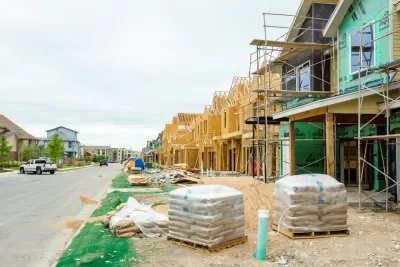
The Urban Land Institute’s (ULI) Terwilliger Center for Housing and real estate consulting firm RCLCO released a new report exploring the "shortage of housing affordable to moderate-income home buyers, including first-time buyers, and offers solutions to increase the supply," according to an article by Brenda Richardson.
The report defines "attainable housing" as "non-subsidized, for-sale housing that is affordable to households with incomes between 80 and 120 percent of the area median income." Given that definition, the report finds that "very little non-subsidized home-building activity is geared toward the middle-class price point."
Still, there are signs that the market is starting to respond to demand at the "attainable" price point. "Innovations are coming from publicly held home builders, developers of master-planned communities, neighborhood-based real estate investors and a new breed of entrepreneurs from other industries, the report states," according to Richardson.
The new report joins recent analysis from Brookings that examines housing stress in the middle class of the United States in providing new insights into the post-Recession housing market for earners historically primed to enter the home buying market.
Read the full story: Affordable Housing Is Doable For Builders And Buyers, But Here's The Problem


Checking in With the Wild Pandemic-Era Housing Market
Bidding wars, TikToks, and disparate impacts—every day there's more evidence that the pandemic has only worsened the nation's housing affordability crisis.

Double-Digit Housing Price Increases Tied to Supply Imbalance in Denver
Expensive homes dominated the metro Denver real estate market in 2020.
New Market-Rate Housing Lowers Rents for Everyone, According to New Research
A study published by a German researcher adds ammunition to the cause of improving housing affordability by legalizing and building new supply.

Planetizen Federal Action Tracker
A weekly monitor of how Trump’s orders and actions are impacting planners and planning in America.

California plans to bury El Niño’s downpour
If the state plays its cards right, it may be able to store a billion acre-feet of El Niño’s water in aquifers.

Chicago breaks ground on $3 billion megadevelopment
The new neighborhood, titled Foundry Park, will one day host 3,700 residences.

California High-Speed Rail Authority CEO resigns after $600,000 scandal
Under Ian Choudri, the authority used taxpayer dollars to fund first class flights and trips to nightclubs.

Want to study the Missouri River? Soon, you may need unanimous approval from 10 states
Legislation would require 10 governors’ permission to study or build projects moving water outside the basin.

Desperate measures: Advocates weigh draining Lake Powell to fill Colorado River
Draining the reservoir could reduce evaporation losses by a couple hundred thousand acre-feet.

FREE Course: Walkable City 1: Why Walkability?
After describing his path towards focusing on walkability as the essence of good planning, Jeff Speck marches through his five principal reasons for making more walkable places.
Reinventing Malls: Planning Alchemy—Turning Gray Fields Into Gold
The course focuses on the opportunities and imperatives that shape reinvention of mall sites.

City of Rosemead
Rutgers University, Edward J. Bloustein School of Planning and Public Policy
One Hundred Miles
Hunter College, City University of New York (CUNY)
The Architects Foundation
University of Cincinnati Online
City of Cambridge
Montrose County
The Pocatello Development Authority