Adding cashless and mobile options for purchasing transit tickets shouldn't necessitate the removal of cash payments.


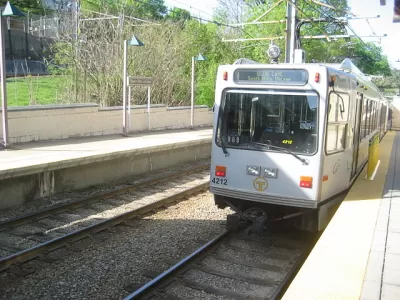
The editorial board of the Pittsburgh Post-Gazette writes in support of a new partnership between the Port Authority of Allegheny County and London-based company Masabi to introduce smartphone payments and home ticket printing.
According to the editorial board, the move adds new options without ending previous options for buying tickets.
"The digitization of the marketplace has led some services to remove cash as a payment option. But cashless businesses disproportionately affect minorities and low-income people. By expanding the payment options in ways that help everyone, not just those with access to expensive technology, [Port Authority Chief Information Officer Jeffrey] Devlin and the Port Authority have impressively threaded the needle," according to the editorial.
Read the full story: More equitable transit: Expanded fare options are a win for all
Pittsburgh-Area Buses Due for a Fare Overhaul
Public hearings have begun for a proposal that would implement a flat fare system on the Port Authority of Allegheny County transit system.
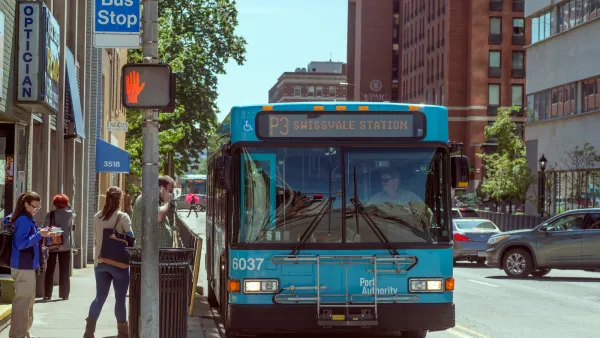
750 Pittsburgh city workers to get free transit passes
City employees working downtown will have access to free transit from Pittsburgh Regional Transit.

Port Authority Study Calls For More Equitable TOD in Pittsburgh
A study by the Port Authority of Allegheny County warns against displacement of low-income residents and calls for an increased focus on equity in developments around transit stations.

Desperate measures: Advocates weigh draining Lake Powell to fill Colorado River
Draining the reservoir could reduce evaporation losses by a couple hundred thousand acre-feet.

Eastern Nebraska is running out of electricity
Data centers and electrification are straining eastern Nebraska’s grid, throttling economic development.

Malls are becoming the midtowns of the future
Mall and office park redevelopments are a generational opportunity to create new nodes of urbanity.

NYC breaks ground on anti-flooding infrastructure project
New York City's new system will reduce stormwater flows to local sewers by 90%.

One Kentucky town’s secret to affordable housing
The Smoketown Community Land Trust has already built seven affordable homes for community members.

Houston gains petal-shaped cooling infrastructure to make streets more ‘delightful’
The city has installed the pavilions along 15 blocks in Houston.

FREE Course: Walkable City 1: Why Walkability?
After describing his path towards focusing on walkability as the essence of good planning, Jeff Speck marches through his five principal reasons for making more walkable places.
Reinventing Malls: Planning Alchemy—Turning Gray Fields Into Gold
The course focuses on the opportunities and imperatives that shape reinvention of mall sites.


City of Rosemead
Rutgers University, Edward J. Bloustein School of Planning and Public Policy
One Hundred Miles
University of Michigan School for Environment and Sustainability (SEAS)
Hunter College, City University of New York (CUNY)
The Architects Foundation
City of Cambridge
Montrose County
The Pocatello Development Authority