Transportation for America’s report argues that the growing cost of maintaining highways should refocus spending away from expansion projects, toward maintenance efforts.


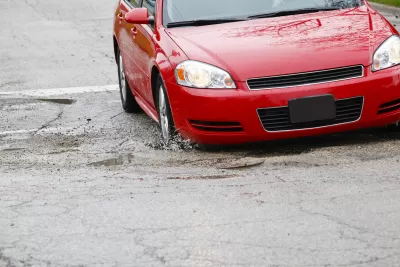
Road conditions are deteriorating in the United States, and a report from Transportation for America argues that too many new roads is a big part of the problem. "Between 2009 and 2017, states added 223,494 highway lane miles — enough to crisscross the United States 83 times, T4A says. Those new highways add to the already crushing maintenance burden," Angie Schmitt writes for Streetsblog USA.
Many have suspected that incentives push state governments to build new assets for ribbon cuttings, instead of maintaining existing resources. This report confirms that contention. "If Congress really wants to improve infrastructure, it should attach some strings to any funding to prioritize maintenance over new construction," Schmitt suggests. Without these strings, states create a vicious cycle where each administration creates more assets to maintain while letting the ones it inherited fall further and further into disrepair.
FULL STORY: The Real Reason Roads Are In Bad Shape

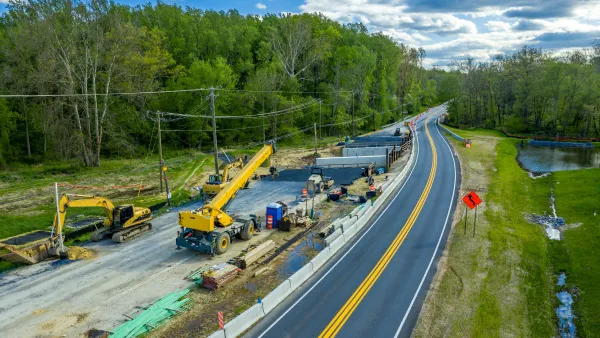
Survey: Americans Don’t Support Road Expansions
U.S. transportation policy, which still heavily centers automobile infrastructure, is increasingly out of step with the majority opinion, according to a new survey from Transportation for America.
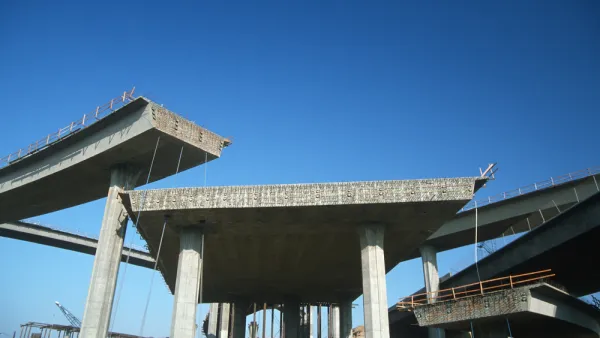
Federal Memo 'Gently' Discourages Highway Construction
The Federal Highway Administration is urging states to prioritize climate-friendly projects and put federal funds toward repairs and active transportation infrastructure.

Investing in a more Sustainable Infrastructure
Congress needs to do more than fund the status quo in its next infrastructure bill, whenever that long-promised bill becomes a reality.

Planetizen Federal Action Tracker
A weekly monitor of how Trump’s orders and actions are impacting planners and planning in America.

The state-sanctioned urbicide of Austin
People don’t kill cities. Freeways do.

US to reduce Colorado River water deliveries to Mexico
A new Colorado Treaty amendment reduces Mexico’s Colorado River water allocation by 250,000 acre feet.

Mamdani overhauls NYC's Vision Zero plan with 100 new policy goals
The overhaul aims to reduce traffic deaths and make streets safer for pedestrians, cyclists and drivers through lower speed limits, new safety infrastructure and more.

Amtrak not solely to blame for New Jersey commuter rail's unreliability, report finds
A new study from the Garden State Initiative found that NJ Transit’s budget grew 20% across a 4 year period, but reliability declined significantly over the same period.

EPA erases limits on planet-warming pollution from power plants
Under Monday’s plan, power plants would still have some limits on how much mercury, arsenic and other contaminants they can emit.

FREE Course: Walkable City 1: Why Walkability?
After describing his path towards focusing on walkability as the essence of good planning, Jeff Speck marches through his five principal reasons for making more walkable places.
Reinventing Malls: Planning Alchemy—Turning Gray Fields Into Gold
The course focuses on the opportunities and imperatives that shape reinvention of mall sites.

Eagle County Government
Harvard University Graduate School of Design
Nashville Planning Department
The Architects Foundation
University of Cincinnati Online
The Pocatello Development Authority
The Urban Renewal Agency of the City of Pocatello
Journal of the American Planning Association