Following a fatal collision between a motorist and a competitive cyclist, Montreal tried closing a stretch of roadway through Mount Royal Park. The pilot encountered fierce opposition.


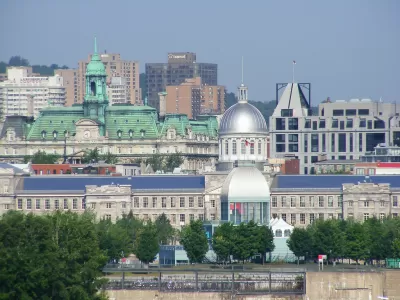
In late 2017, a fatal crash killed an 18-year-old cyclist along "Camillien Houde Parkway, a limited-access road that traces the northern edge of the Mount Royal Park, a 500-acre artificial wilderness in the middle of the city that’s home to Montreal's namesake dwarf mountain," Taylor C. Noakes writes.
Occurring just before municipal elections, the crash highlighted road safety issues as Montreal's first female mayor, Valérie Plante, entered office. "Early in their mandate, the Plante administration instituted a pilot project closing a 550-meter stretch of Camillien Houde Parkway to through traffic, except for buses and emergency vehicles, in an effort to improve cyclist and pedestrian safety."
The car ban lasted from June through October of 2018, but came up against heavy opposition. "Despite the city's well-deserved bike-friendly reputation, [...] opponents of the traffic study—many of them hailing from Montreal's suburbs—argued that motorists were being unfairly punished for a single accident."
Noakes discusses the long and contentious history of Mount Royal Park, designed by Frederick Law Olmsted and destined throughout its history to engender debate over the proper uses of urban public space.
Read the full story: Montreal Tried to Close a Popular Park to Drivers. Why Didn't It Work?

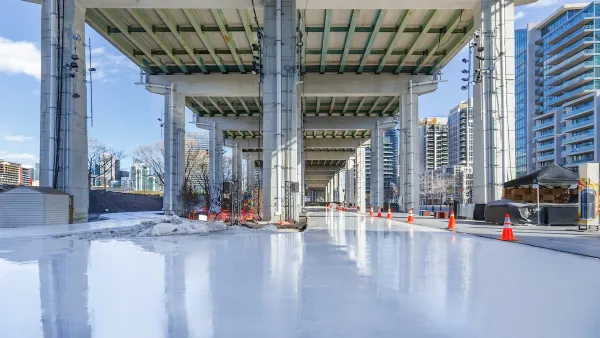
Montreal’s Gorilla Park Repurposes Defunct Railway Track
The park is part of a global movement to build public spaces that connect neighbors and work with local elements to serve as key parts of a city’s green infrastructure.

City Parks as Cooling Centers
Strategies for making parks cool, inviting community cooling centers during extreme heat.
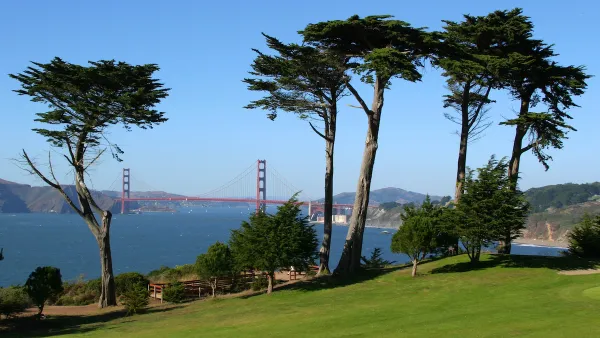
Urban Golf Courses: Publicly Subsidized, Privately Enjoyed
City golf courses, paid for by public dollars, are rarely used by the vast majority of residents. Some advocates want to see them opened to the public as parks or repurposed for housing.

Planetizen Federal Action Tracker
A weekly monitor of how Trump’s orders and actions are impacting planners and planning in America.

The state-sanctioned urbicide of Austin
People don’t kill cities. Freeways do.

US to reduce Colorado River water deliveries to Mexico
A new Colorado Treaty amendment reduces Mexico’s Colorado River water allocation by 250,000 acre feet.

Nation's most wind-powered state turns to coal as data centers increase energy demand
For the first time in decades, Iowa has increased its generation of coal power.

NYC cools commuters with city's first rain garden above a bus stop
New York City officials say the plants in the rain garden can absorb 16 gallons of rainwater during heavy storms.

Brightline West’s future may rely on $6 billion federal loan
The company has until Nov. 2 to make a $400 million equity investment into its proposed high-speed rail line.

FREE Course: Walkable City 1: Why Walkability?
After describing his path towards focusing on walkability as the essence of good planning, Jeff Speck marches through his five principal reasons for making more walkable places.
Reinventing Malls: Planning Alchemy—Turning Gray Fields Into Gold
The course focuses on the opportunities and imperatives that shape reinvention of mall sites.

Eagle County Government
Harvard University Graduate School of Design
Nashville Planning Department
The Architects Foundation
University of Cincinnati Online
The Pocatello Development Authority
The Urban Renewal Agency of the City of Pocatello
Journal of the American Planning Association