South Bend Mayor Pete Buttigieg is hoping to ride a track record of urban revitalization success to the Oval Office.


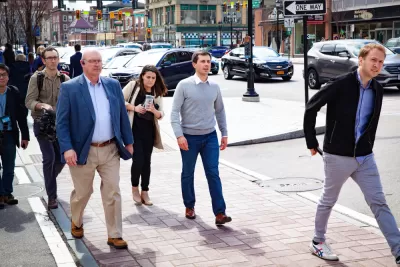
Patrick Sisson analyzes the track of South Bend Mayor Pete Buttigieg, who recently announced a campaign for the Democratic nomination for president.
Buttigieg's supporters often lionize him for helping to revive a dying town—a characterization many locals take issue with—or getting people to believe in South Bend again. But his impact on the northeast Indiana city, known by many as the current home of Notre Dame and the former home of Studebaker, has been a little more nuanced.
An analysis of his time in office does shows the millennial mayor adopting, and often successfully implementing, the contemporary strategies experts point to when advising locals on how to (re)build better urban communities.
Sisson's analysis is organized in the following categories, with a lot more detail included in the article.
- Placemaking and street redesign helped revitalize downtown
- Turning vacant lots into new development
- Building an economic base for the future
Planetizen is not endorsing Buttigieg’s candidacy for president, but continuing an ongoing effort to highlight the position of housing policy in the upcoming presidential election. Previous posts have focused on the campaign platforms of Senators Elizabeth Warren (D-Massachusetts), Corey Booker (D-New Jersey), and Kamala Harris (D-California).
- Kamala Harris Reintroduces 'Rent Relief Act'
- Elizabeth Warren Makes Housing a Cornerstone of Presidential Bid
- How the Next President Might Take on the Housing Crisis
- Democratic Presidential Contenders May Elevate Housing Policy
- Debating a Renters' Tax Credit at the Federal Level
Planetizen has been closely monitoring federal housing policy under the Trump administration, mostly organized under the U.S. Department of Housing and Urban Development tag.
Read the full story: How Mayor Pete used good urbanism to revitalize South Bend


South Bend Has Big Innovation District Plans
Public Radio International (PRI) surveys the keys to an ambitious plan to restore the industrial "temples" of South Bend, Indiana.
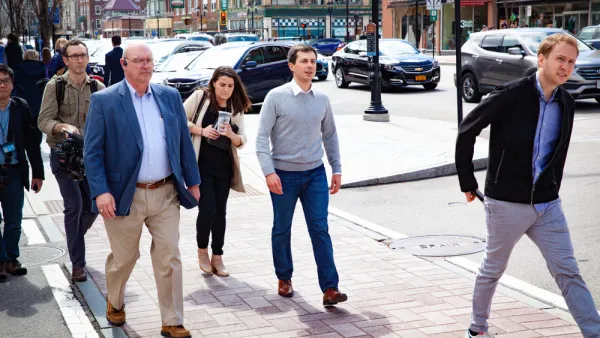
Mayor Pete Is Biden's Pick for Transportation Secretary
President-elect Joe Biden is expected to nominate a former rival in the Democratic presidential primary and the former two-term mayor of South Bend, the fourth largest city in Indiana, to head the Transportation Department.

We Are (Sort of) Less Polarized Than in 2016
After moving toward Democrats for decades, central cities moved toward Republicans in 2020.

Planetizen Federal Action Tracker
A weekly monitor of how Trump’s orders and actions are impacting planners and planning in America.

California plans to bury El Niño’s downpour
If the state plays its cards right, it may be able to store a billion acre-feet of El Niño’s water in aquifers.

Chicago breaks ground on $3 billion megadevelopment
The new neighborhood, titled Foundry Park, will one day host 3,700 residences.

California High-Speed Rail Authority CEO resigns after $600,000 scandal
Under Ian Choudri, the authority used taxpayer dollars to fund first class flights and trips to nightclubs.

Want to study the Missouri River? Soon, you may need unanimous approval from 10 states
Legislation would require 10 governors’ permission to study or build projects moving water outside the basin.

Desperate measures: Advocates weigh draining Lake Powell to fill Colorado River
Draining the reservoir could reduce evaporation losses by a couple hundred thousand acre-feet.

FREE Course: Walkable City 1: Why Walkability?
After describing his path towards focusing on walkability as the essence of good planning, Jeff Speck marches through his five principal reasons for making more walkable places.
Reinventing Malls: Planning Alchemy—Turning Gray Fields Into Gold
The course focuses on the opportunities and imperatives that shape reinvention of mall sites.

City of Rosemead
Rutgers University, Edward J. Bloustein School of Planning and Public Policy
One Hundred Miles
Hunter College, City University of New York (CUNY)
The Architects Foundation
University of Cincinnati Online
City of Cambridge
Montrose County
The Pocatello Development Authority