The Rent Relief Act would provide a refundable tax credit for renters who pay more than 30% of their income on rent.


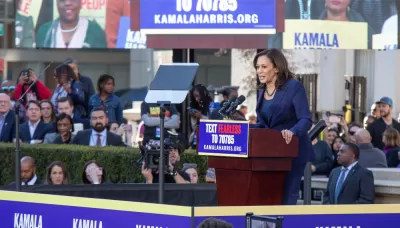
"Democratic presidential candidate Kamala Harris is reviving her proposal to provide new tax credits to help families with high housing costs," reports Niels Lesniewski.
"The California senator on Tuesday will reintroduce the Rent Relief Act, which would establish refundable tax credits in cases when rent and utilities exceed 30 percent of a household’s income," adds Lesniewski.
Senator Harris first proposed the idea last year, with co-sponsors that include fellow presidential hopeful Senator Kristen Gillibrand (D-New York).
Kriston Capps wrote in March 2019 to explain the concept of a tax credit for rental housing assistance.
Planetizen is not endorsing Harris's candidacy for president, but continuing an ongoing effort to highlight the position of housing policy in the upcoming presidential election. Previous posts have focused on the campaign platforms of Senators Elizabeth Warren (D-Massachusetts) and Corey Booker (D-New Jersey).
- Elizabeth Warren Makes Housing a Cornerstone of Presidential Bid
- How the Next President Might Take on the Housing Crisis
- Democratic Presidential Contenders May Elevate Housing Policy
- Debating a Renters' Tax Credit at the Federal Level
Planetizen has been closely monitoring federal housing policy under the Trump administration, mostly organized under the U.S. Department of Housing and Urban Development tag.
FULL STORY: Kamala Harris revives tax credit push to help people pay for housing costs

What to Expect When You're Expecting the Biden Administration
Commemorate Inauguration Day by digging deep into the promises and potential of the Biden Administration.

Dems Debated in the Perfect Place to Talk About Cities, But Didn't Talk About Cities
An opportunity missed in Detroit.

Debating a Renters' Tax Credit at the Federal Level
Senator Kamala Harris (D-CA) recently proposed legislation that would create a refundable tax credit for qualifying rental households.

Planetizen Federal Action Tracker
A weekly monitor of how Trump’s orders and actions are impacting planners and planning in America.

The state-sanctioned urbicide of Austin
People don’t kill cities. Freeways do.

US to reduce Colorado River water deliveries to Mexico
A new Colorado Treaty amendment reduces Mexico’s Colorado River water allocation by 250,000 acre feet.

5 New England states march closer to 800 megawatt wind energy project
Securing federal approval for the project may be complicated under the Trump administration, which has historically been hostile towards domestic wind power.

Baltimore to break ground on $50 million Transit Priority Project
The project will bring faster bus trips, safer streets and better bike connections to Baltimore.

Airbnb launches $250 million 'last-dollar financing' housing accelerator, makes first investment in Austin
The company will put $6.4 million towards affordable housing development in Texas’ capital.

FREE Course: Walkable City 1: Why Walkability?
After describing his path towards focusing on walkability as the essence of good planning, Jeff Speck marches through his five principal reasons for making more walkable places.
Reinventing Malls: Planning Alchemy—Turning Gray Fields Into Gold
The course focuses on the opportunities and imperatives that shape reinvention of mall sites.

Eagle County Government
Harvard University Graduate School of Design
Nashville Planning Department
The Architects Foundation
University of Cincinnati Online
The Pocatello Development Authority
The Urban Renewal Agency of the City of Pocatello
Journal of the American Planning Association